Polluted air 'puts Olympic athletes at risk'
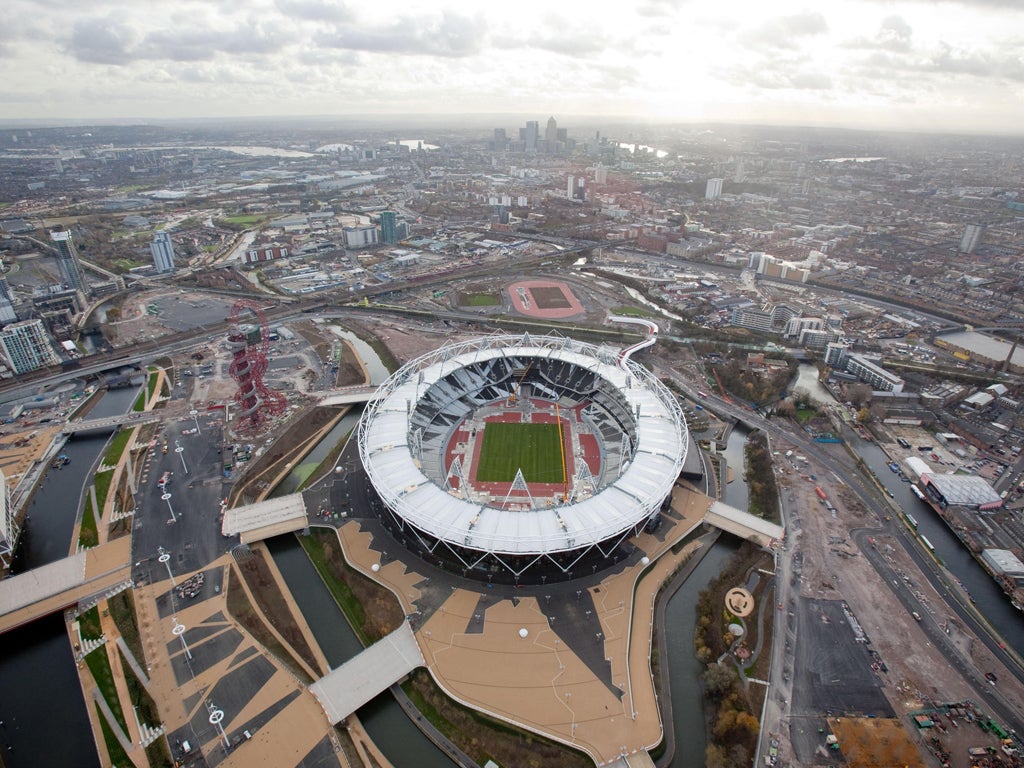
Olympic athletes could suffer impaired performance times and become ill as a result of London's unacceptably high levels of air pollution, leading respiratory scientists are warning.
Fears are growing that during the Games, beginning in July, athletes, who take in much more air than a sedentary person, will take in high levels of pollutants such as particulates, nitrogen dioxide and ozone, and could suffer pulmonary irritation, chest pain and decreased lung capacity. Such a situation would be a disaster for London when the city is on show to the world.
But it is considered a real possibility in certain weather conditions, as levels in the capital of several pollutants are so high that they are in breach of EU limits, putting the UK at risk of a £300m fine.
London has the highest levels of the toxic gas nitrogen dioxide (NO2) in the EU, and has received a series of legal warnings for failing to comply with European laws governing PM10s, tiny specks of particulate matter 10 microns across (a micron is a millionth of a metre). The capital's air quality is also affected by the gas ozone, created by pollutants from vehicle exhausts reacting with sunlight.
Experts say that the risk for the Games is that in certain summer weather conditions – in particular, a "temperature inversion" in which on still, hazy days, a layer of warm air traps pollutants close to the ground – the pollution levels could go so high as to affect athletes' health and performance.
Temperature inversions are common, and affect people more in the summer, according to the Met Office. "It's not a rare thing. It can happen all the time," a Met Office spokesman said yesterday. "If we have a high-pressure temperature inversion period, there may well be high levels of ozone and nitrogen dioxide and these could induce coughs, breathlessness and other problems," said Professor Sir Malcolm Green, spokesman for the British Lung Association.
Frank Kelly, professor of environmental health at King's College London, said: "If we're unlucky we're going to get bad publicity for our air quality. Athletes, such as marathon runners and cyclists, need to breathe very hard. If it's a high-pollution day, they will be taking in large amounts of pollution. Their chests may tighten up, they may feel pain and shortness of breath, and for certain conditions such as asthma they may need medication.
"A few athletes may not attain the performances they hoped to and they might spend a few days feeling unwell. From an athletic point of view, they will not be at the best of their ability."
Simon Birkett, director of the campaign group Clean Air in London, said yesterday: "The Mayor of London [Boris Johnson] needs to show the world that the Olympic city is determined to tackle this massive public health crisis by banning the most polluting vehicles from the Olympic route network."
However, there is no sign of London taking the drastic action that was seen at the last Olympics in Beijing, when the Chinese government issued a blanket ban on more than half the city's cars and shut down polluting industries, at a cost of £6bn.
Mr Johnson introduced a long-term air quality strategy for the capital in December 2010 but this is aimed at improvements in the medium to long term. An update to the strategy, introduced in May last year, includes several measures designed to have a shorter-term impact, including a ban on motor vehicle engine idling at priority locations, the use of dust suppressants and "green infrastructure", such as screens of trees.
Air pollution: London's record
Since EU limit values for particulate pollution (PM10s) came into force in 2005 – no more than 40 micro- grammes per cubic metre as an annual mean and no more than 35 days over a mean of 50 mcgs per m3 – London has exceeded them every year.
Since EU guidelines on nitrogen dioxide came into force in 2010 – an annual average of 40 mcgs per m3 and no more than 18 hours over 200 mcgs/m3 – London has exceeded the limit values by a factor of two, both in 2010 and 2011.
Join our commenting forum
Join thought-provoking conversations, follow other Independent readers and see their replies
Comments
Bookmark popover
Removed from bookmarks