Review of the environment in 2012: In the eye of the storm
'The world was treated to the spectacle of New York under water'
We began 2012 worrying about drought; we ended it worrying about flooding. Reviewing the year environmentally, nothing stands out so much as the topsy-turvy nature of British weather over the past 12 months, which not only caused irritation and real difficulties to people all over the country, but raised larger concerns about a changing climate.
It's easy to forget just how parched Britain was by the end of March, after two virtually rainless winters: uniquely, the headwaters of all seven of the chalk rivers in the Chiltern Hills had run dry, and as April arrived, water companies in the south began imposing restrictions on water use.
Yet barely had they been introduced when the heavens opened, and the wettest April on record followed, which was succeeded by the record wet June, and eventually the wettest summer for a century. Indeed, all six summers since 2007 have now been unusually wet, which suggests a climate shift which is consistent with predictions of what global warming will bring, although few people are making a direct link yet.
This great dousing of the land meant that water tables were very high as autumn arrived, and further very heavy rain in late November caused widespread flooding from the West Country and Wales to the north-east. And this drought/flood succession of 2012 was remarkably paralleled, although on a much larger scale, in the United States.
Through the middle of the year, the continental US experienced its worst drought for half a century, with 80 per cent of American arable and pasture land affected by the highest average temperatures between January and August ever recorded; crop yields tumbled and prices started to soar, and on 19 July, the price of a bushel of corn (maize) on the futures market climbed above $8 for the first time ever.
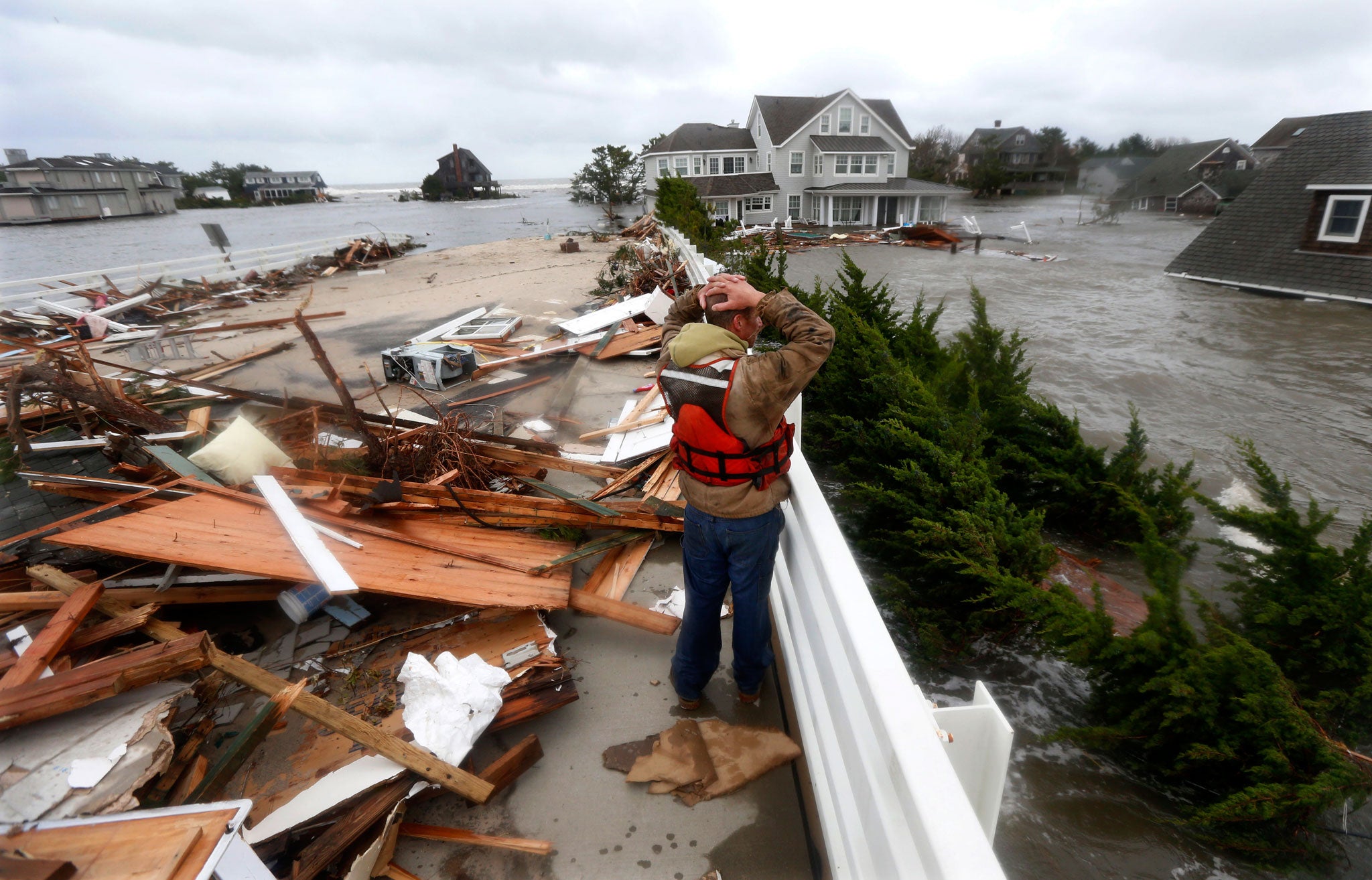
However, in this dustbowl year, the world was also treated to the unprecedented spectacle of New York City under water, as the storm surge from Hurricane Sandy burst into Lower Manhattan on the evening of 29 October, while much of the US north-east coast was devastated.
Both of these dramatic and very uncommon episodes raised more questions about climate change, although scientists remain reluctant to ascribe specific meteorological events to global warming. There was much more consensus that the record summer melt-back of the ice covering the Arctic Ocean, which occurred on 16 September when the ice shrank back to 3.41 million square kilometres, less than half its typical extent of three decades ago, was likely to be the direct product of a warming climate.
The year itself turned out to be the ninth warmest on record, said the World Meteorological Organisation, and most of the land surfaces of the globe experienced above-average temperatures – but emissions of the greenhouse gases such as carbon dioxide, thought to be causing the atmosphere to warm, themselves continued to soar, to a new high of 35.6 billion tonnes. The UN climate conference at Doha, Qatar, in December, succeeded in laying the ground for a new treaty which would make all countries cut their emissions, starting in 2020.
Environmental events in Britain were marked by a series of Government U-turns. In March, the radical new National Planning Policy Framework was watered down after a campaign led by the National Trust, so that the value of ordinary countryside would continue to be recognised; in May, a scheme to blast buzzards' nests with shotguns in the interests of research was scrapped a day after extensive criticism in The Independent; and in July, the controversial plan to sell off England's public forest estate was finally abandoned. A semi-U-turn followed in October, when the planned cull of thousands of badgers, in a bid to restrict the incidence of TB in cattle, was postponed – until next summer, the Government said.
Bovine TB was not the only major environmental disease giving cause for concern: in the autumn, a new disease of ash trees, caused by the fungus Chalara fraxinea, was discovered to be prevalent across the country; it quickly became clear that there was no cure, and the ash in Britain faced a grim future. The Government hastily set about organising a new biosecurity strategy for the import of trees and plants.
The year was perhaps most notable, in environmental terms, for being the 50th anniversary of the Green Movement, if we take that to begin with the publication of Rachel Carson's Silent Spring in 1962. The searing exposé of the mass killing of wildlife by pesticides began large-scale environmental consciousness, and its half-century was widely celebrated, though how much had been achieved, and how much had not, was very much a cause for debate.
@raymond_blanc In Britain, we have the strongest winds in the whole of Europe.Harvesting this natural resource to create renewable energy make sense
Raymond Blanc, chef
@ GeorgeMonbiot How come #climatechange ceases to be an issue as soon as someone needs to make the case for abandoning #nuclear?
George Monbiot, academic and writer
@DAaronovitch New streams appearing on Hampstead Heath. If 1976 was the Hot Summer and 1987 was the Great Hurricane, 2012 looks like being the Big Wet
David Aaronovitch, columnist
@DrBrianMay Cameron shows complete contempt for US, too. 158 thousand want him to stop the badger cull, and he cares nothing. They are ready to kill
Brian May, Queen guitarist
@GreenpeaceUK @waitrose are not listening to their human customers, so we sent a polar bear to tell them to #DumpShell
Greenpeace UK
@dare6626 Kanye West, Bush doesnt like black people during Katina, Whats he saying now about Sandy Victims, Obama Doesnt like White People?
Mike Dareing
@MarsCuriosity Today's wake up song: "Digging in the Dirt" by Peter Gabriel. Because no song says "Digging in the Regolith." <sigh>
NASA robot rover Curiosity
@DougCoupland [On the break-up of the Ilulissat glacier] It's like watching 'Manhattan breaking apart in front of your eyes'
Douglas Coupland
Join our commenting forum
Join thought-provoking conversations, follow other Independent readers and see their replies
Comments