UK told to prepare for mass floods in future
Study says flooding caused by climate change could affect 5 million a year by 2080
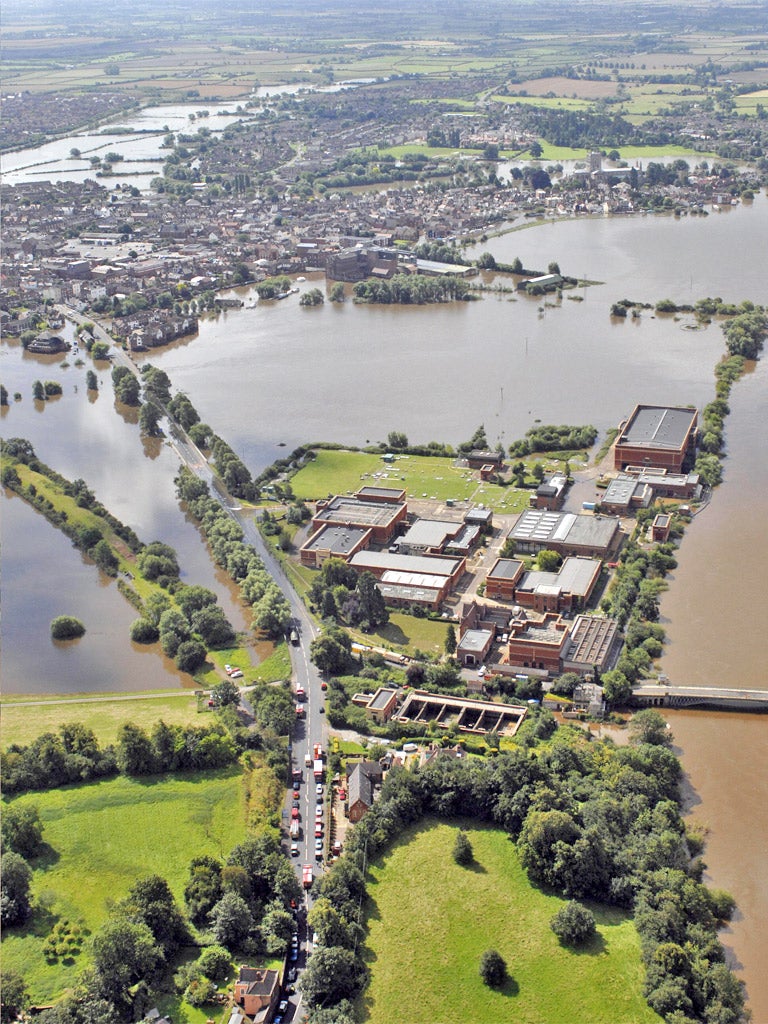
Flooding caused by heavier rainfall will be the major threat to Britain from climate change in the coming decades, potentially costing the country billions a year, a new assessment of the risks of global warming concluded yesterday.
New research commissioned by the Government shows that if no further plans are made to adapt to changing flood risks, as temperatures rise and population grows, by the 2080s damage to buildings and property could reach £12bn per year, compared with current costs of £1.2bn. In the worst-case scenario, five million people could be affected. Flooding is regarded as the most serious of 100 separate challenges from a changing climate to Britain's economy, society and natural environment, which have been identified in a comprehensive new study, the Climate Change Risk Assessment (CCRA).
These include increased health problems for vulnerable people in hotter summers, increased pressure on the UK's water resources, droughts affecting farmers and the potential introduction of new pests and diseases.
The study says that if no further precautions are taken, the number of people affected by flooding is likely to hit between 1.66 million and 3.64 million annually by the 2050s, and by 2.43 million to 4.98 million by the 2080s.
It is significant that of the many problems posed by climate change, flooding is now seen as the most important. The man behind the CCRA, Sir Bob Watson, Chief Scientific Adviser at the Department for Environment, Food and Rural Affairs, said. "I think the flooding issue is the most dominant."
However, this seems at odds with the Government's spending priorities, as expenditure on flood defence has been cut by 27 per cent from the last Labour administration's £354m annually, to £259m a year for the next four years. "Ministers are playing Russian roulette with people's homes and businesses by cutting too far, too fast," the shadow Environment Secretary, Mary Creagh, said.
The flooding threat comes mainly from the more intense rainfall predicted in a warmer atmosphere. "What the climate projections show, especially in winter, is significantly more precipitation, but also more heavy precipitation," Sir Bob said.
Such cloudbursts can cause river flooding, but also the new phenomenon of surface water flooding in towns when volumes of rainwater are too big for drainage systems to deal with. Both of these happened in the summer of 2007, which was Britain's wettest.
Sir Bob said the current risk assessment was based on modelling of river flooding and coastal flooding, which will be made worse by rises in sea-level. But it does not include the risk from surface water flooding, which is still being researched.
Summertime blues: The washout of 2007
If we want to get a feel for what the future may hold, in terms of flooding, we should look back at the washout summer of 2007. This was the wettest summer recorded in Britain since rainfall records began in 1766.
It was characterised not only by incessant rain, but especially by two stupendous downpours, the first coming on 24 June in Yorkshire, and the second on 19 July centred on the valley of the River Severn.
The former displayed the new phenomenon of surface water flooding, when the drainage in towns such as Hull and Doncaster simply could not cope; the latter downpour led the Severn to burst its banks and turned the town of Tewkesbury into an island.
I drove through the July downpour; it was the heaviest rainfall I have ever experienced in my life, including the Amazon in the rainy season.
Michael mccarthy
Join our commenting forum
Join thought-provoking conversations, follow other Independent readers and see their replies
Comments
Bookmark popover
Removed from bookmarks