The Big Question: Why is the world so slow to produce environmentally-friendly cars?
Why are we asking this now?
Because Britain's first hydrogen filling station opens today at the University of Birmingham. Researchers there will be assessing alternative fuel vehicles in search of greener motoring.
Is hydrogen the answer?
The hydrogen fuel cell is revolutionary. It supersedes the internal combustion engine and does away with fossil fuels. So there are vested interests involved. That said, it isn't so much a question of conspiracy as cost. Some of the world's leading energy and motor companies are developing alternatives to the conventional car. If the world wants hydrogen it will have to invest in it, scrapping existing technology, factories, refineries, infrastructure and know-how. That means consumers would have to pay for the leap forward. Will they? Besides, not everyone is convinced about the hydrogen fuel cell.
What's so good about hydrogen?
Hydrogen is green at the point of use. Hydrogen-fuel-cell vehicles emit no carbon dioxide, nitrous oxide or carcinogenic particles. All that emerges from the exhaust is water vapour. The hydrogen fuel, stored in pressurised tanks, is used to create a chemical reaction using catalysts. That is converted into electric power and drives a motor which moves the vehicle along. It is quiet, and performance is acceptable for many purposes; in any case it is early days yet. After all, we've had a long time to get from Karl Benz's 1886 Patent Motorwagen (top speed: 11mph) to today's Formula 1 wonders.
Do hydrogen fuel cells work?
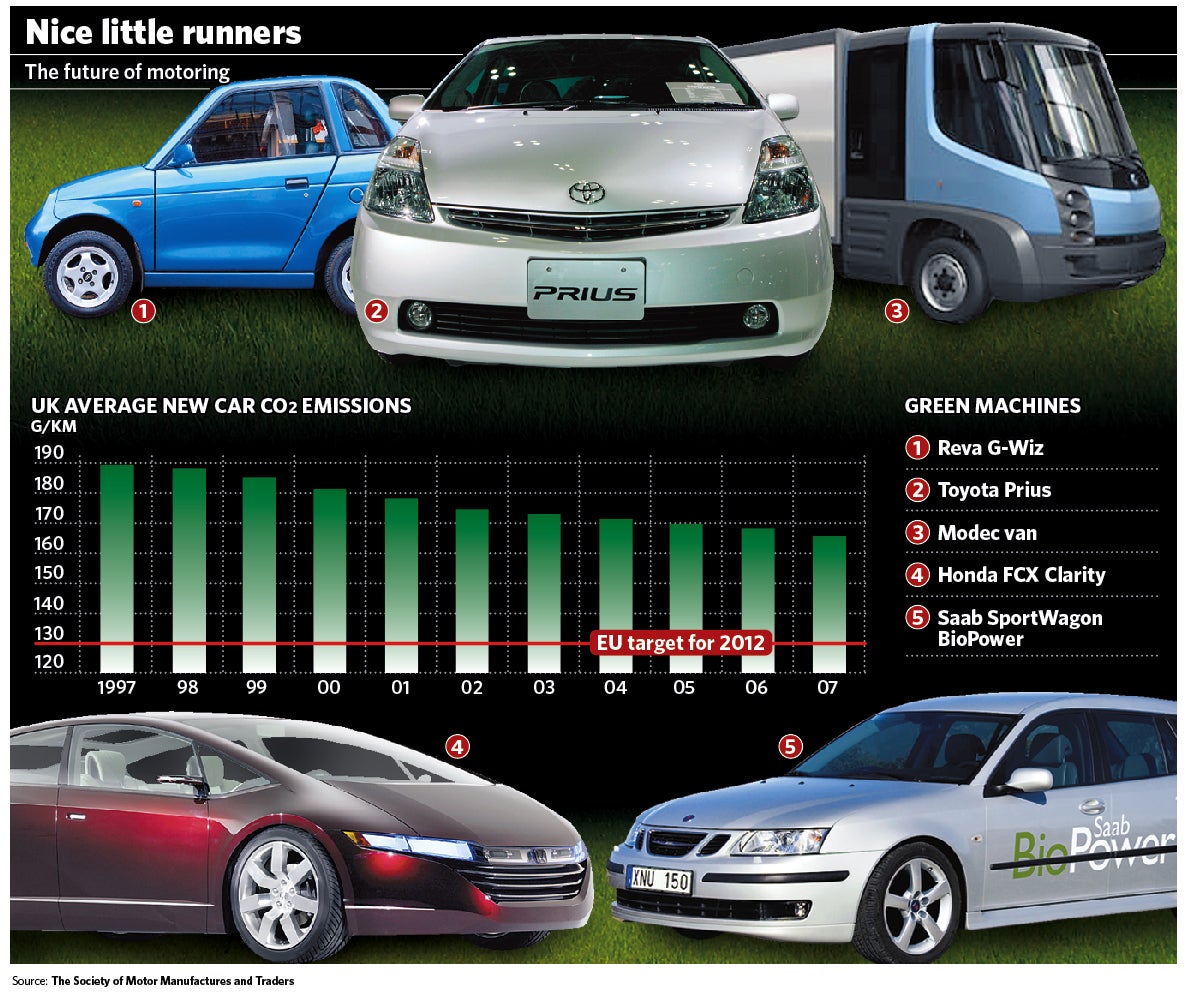
Yes. Buses powered by hydrogen fuel cells have been judged "really successful" by Transport for London. Californian and South Korean authorities have tested fleets of Honda and Hyundai fuel cell cars satisfactorily. Mercedes-Benz and General Motors are two other companies who've produced running everyday fuel-cell models (Mercedes A-Class and a Vauxhall Zafira, respectively). The Honda FCX Clarity, a "proper" executive fuel-cell car, will be available for lease in the United States this summer.
So what's the snag?
The greenness of hydrogen does depend on how much energy is inefficiently expended in generating it and moving it around. If, at one extreme, a much more efficient method of making hydrogen could be discovered, and if the energy used in it s manufacture and transport was sustainable (like from a power station using solar energy), then it might well be the greenest option. At worst there isn't much advance on fossil fuels. Storing hydrogen requires pressurisation or cooling, which can be troublesome. Hydrogen also tends to vaporise, so there can be losses in transit. Some, with the tragedy of the Hindenburg airship in mind, wonder whether this highly combustible fuel can ever be safe.
How about just using hydrogen as fuel?
Simply replacing fossil fuels with hydrogen in a conventional internal combustion engine can be done. BMW's Hydrogen 7 is almost as quiet and refined as its petrol-powered cousin. However, it needs a huge tank for the (unpressurised) hydrogen, and that tank of fuel can evaporate in as little as 10 days.
Are biofuels any use?
Biofuel versions of Saabs and Fords can be bought now, though there are few filling stations. This technology is also controversial. In theory, biofuels are carbon neutral, as the carbon dioxide used in producing them is "absorbed" by the plants grown to make create the biofuel. So-called first generation biofuels do suffer from drawbacks. First, they can displace food crops. Biofuels, even their best friends would agree, have had some effect on rising food prices. The EU wants to see monitoring systems to assure consumers that biofuels are not damaging the environment or food supplies, but those safeguards are yet to be implemented . Second, they can reduce biodiversity, as witnessed in the Indonesian rain forest, where palm oil crops for biodiesel have done much damage.
Third, critics point to the energy expended in producing and transporting the biofuels, the artificial fertilisers used, the western subsidies to grow them in Europe and the US, and so on. More defensible are second, third and fourth generation biofuels, which become progressively greener, though none are commercially available. The next stage will be to find ways to use the waste product of crops rather than the nutritionally valuable seeds and grains in biofuel production. One day, the scientists promise "carbon positive" biofuels – enzymes that can save the planet.
Why aren't there more hybrids?
Toyota's Prius leads the field, although Honda and Ford and General Motors in America are also on the scene. Using power wasted, for example in braking, and recycling that via an electric motor to supplement a petrol engine is a clever one. But many manufacturers say small, efficient diesels engines are just as effective and a lot cheaper to make, with no problematic batteries to dispose of. Japanese and US makers tend to favour petrol/electric hybrids because their main markets have very little appetite for diesel; European makes such as Mercedes and Peugeot are more traditionally committed to diesel. "Plug-in hybrids", where energy direct from the mains can add to the cars' range, are a step forward.
What happened to the electric car?
Nothing especially, though GM did can one of its more promising projects on the grounds of cost. However, the motor-show concept Chevrolet Volt (a "plug-in" hybrid) promises much, and GM are committed to making it. Electric cars can be extremely green, but again much crucially depends on how their power is generated. They used to be slow and fragile; mainstream makers are working on that. The Modec van is a fine example of a practical vehicle.
What can I do now?
Drive more carefully; downsize; use public transport more. There's an argument for keeping an old car on the road for longer, thus saving the resources and energy used in producing a new one. A Morris Minor Traveller even uses renewable ash in its bodywork. The car makers are doing their bit, too. Modern cars are much greener than their predecessors (see chart). Ford and Volkswagen are tuning existing models to return exceptional economy and low emissions, the VW Polo "Bluemotion" being an outstanding example. But manufacturers such as VW and Citroë*do tend to price their green or diesel cars on the high side compared to the equivalent petrol models.
Will cars be greener any time soon?
Yes...
* All new cars are greener than their ancestors, so it is a process of evolution
* Small diesels are the way forward at the moment, and there are plenty on sale now
* Everyone is downsizing anyway. That might be the immediate means of cutting vehicle emissions
No...
* The car makers and oil companies will try to protect their old 'brown' technologies
* Consumers aren't demanding them loudly enough, giving makers no incentive to crank up production
* 'Green' technologies aren't as clean as they say. A real solution has not arrived yet
Join our commenting forum
Join thought-provoking conversations, follow other Independent readers and see their replies
Comments