How to choose an eco-friendly TV
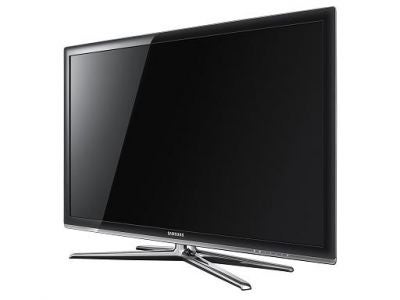
New European guidelines published on September 30 will change the energy-rating system for TVs. However, consumers intending to buy a new television this year can already look for certain symbols and types of television to ensure that their product is as environmentally friendly as possible.
The European Commission has published new regulations for the labeling of energy consumption of TVs sold in the EU: Under the new guidelines the 'G', 'F' and 'E' standards of energy efficiency will be phased out by 2014, 2017 and 2020 respectively, and three new labels - A+, A++ and A+++ - will be gradually introduced after December 2010.
Currently LED TVs are thought to be the most environmentally friendly, and are produced by Samsung, Panasonic and Fujitsu amongst others. Fujitsu claims that their L and SL line of LED TVs can reduce energy consumption by as much as 46 percent in comparison to standard models; Samsung's series 7 range of LED TVs use around 17 percent less raw material than other TVs and Panasonic VIERA TVs are highly energy-efficient.
The European Union website recommends that consumers look for the European eco-label, a flower stalk with the euro symbol (€) surrounded by the stars of the European Union on top. This symbol indicates that not only does the product have a high energy-efficiency rating but also that the product has been produced and can be disposed of in an environmentally friendly fashion. A catalogue of products that have been awarded this symbol can be found at http://www.eco-label.com.
Products with high efficiency ratings are also awarded 'Energy Star' status; this rating system is used throughout America and Europe and consumers can use websites such as www.energystar.gov in the United States, www.energysavingtrust.org.uk in the UK and www.ecolabel.eu throughout Europe to view products and research environmental ratings.
Research company Meko calculates that in one year, if every TV sold in the European Union improved its energy efficiency by one level Europe would save the energy equivalent to that generated by 1.66 nuclear power stations.
Join our commenting forum
Join thought-provoking conversations, follow other Independent readers and see their replies
Comments
Bookmark popover
Removed from bookmarks