'2013 will decide whether the Scottish wildcat lives or dies': Highland tiger on its last legs following persecution by gamekeepers and interbreeding with domestic cats
Control by gamekeepers and interbreeding with domestic cats means an historic species is dying
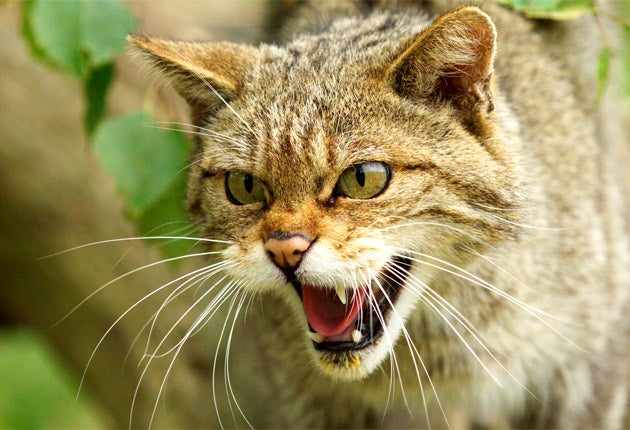
The Scottish wildcat, Britain’s rarest mammal and one of Scotland’s most iconic predators, will soon be extinct if a last-ditch effort to save the species in 2013 fails, conservationists have warned.
The wildcat, which once roamed throughout the British Isles but has been confined to strongholds in the Scottish highlands since Victorian times, has gone into near-terminal decline in recent decades.
Known as the highland tiger, persecution by gamekeepers and interbreeding with domestic cats has reduced the population of true wildcats to only a few hundred and conservationists believe that the coming year represents the last chance to save the species.
“2013 will decide whether the wildcat lives or dies,” said Steve Piper of the Scottish Wildcat Association (SWA). “It really is a deciding year. At present the consensus is that true wildcats still survive in Scotland, and that, with a significant and unified effort, they can still be saved and gradually brought back to a healthy population.”
A national action plan to protect the species will be launched in the new year by a broad spectrum of Government agencies, charities, gamekeepers and national park authorities – the first time that a truly national effort has been made to save the wildcat.
Experts from Scottish Natural Heritage (SNH), the Forestry Commission Scotland and the Royal Zoological Society of Scotland are already involved in field surveys to determine the precise size of the remaining population. The best estimates place it at around 400 true wildcats, but the species’ nocturnal and shy nature, and its similarities to domestic and hybrid cats mean that no one knows exactly how many there are.
“Once we have an idea of where there are populations of true wildcats we can target our actions in those areas,” said Jenny Bryce, wildlife ecologist at Scottish Natural Heritage. “That will include raising awareness of neutering domestic cats and working with landowners to reduce risks to wildcats.”
A captive breeding programme and the movement of wildcats to other locations to improve the species’ distribution is also being considered. The wildcats’ current stronghold is in the Cairngorm National Park, where there has been a conservation programme in place for the past three years that will serve as a model for the national plan.
The Scottish wildcat, Felis silvestris grampia, resembles a domestic tabby cat but is larger, stronger and very different in temperament. The true wildcat has a distinctive set of markings, including a distinctive blunt, black-banded tail. They were once renowned for their ferocity and their image features in the heraldry of many of Scotland’s oldest clans.
However, years of persecution by has led to them becoming Britain’s rarest mammal, and sightings have become extremely rare.
“We really needed progress on protecting the species eight years ago when a group of scientists drew up a very good action plan for wildcats that never progressed,” said Mr Piper. “So it’s important that the pressure stays on and this one really starts making a difference out in the Highlands. If we can find enough wildcats, they can be saved.”
The Scottish wildcat resembles a domestic tabby, but with a blunt tail, and is renowned for its ferocity
Join our commenting forum
Join thought-provoking conversations, follow other Independent readers and see their replies
Comments