Antarctic marine life threatened by crab invasion
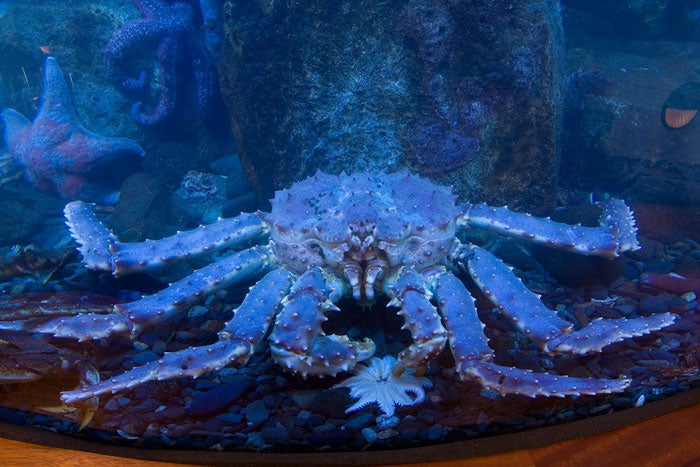
An army of shell-crushing crabs is poised to invade parts of the Antarctic Ocean that were off limits to the crustaceans for millions of years because of the intensely cold water.
Scientists believe that, as global warming causes sea temperatures in the region to rise, the unique shallow-water habitat of the Antarctic Peninsula will be transformed by the mass arrival of killer crabs.
Crabs are one of the top predators of the seabed but their enforced absence from the cold waters of the Antarctic has created an unusual community of shelled creatures that could disappear once the crabs invade, scientists said yesterday.
"The crabs are on the doorstep," said Sven Thatje of the National Oceanography Centre at Southampton University.
"Rapidly rising sea temperatures off the Antarctic Peninsula are creating conditions that favour the return of shell-crushing predators after an absence of tens of millions of years," Dr Thatje told the American Association for the Advancement of Science.
Sea-surface temperatures off the western Antarctic Peninsula have risen by 1C over the past 50 years, more than double the global average.
"Crab populations have already become established in deeper, slightly warmer waters. It is only a matter of time before they expand to shallow Antarctic habitats and radically alter community structure," he said.
Marine life on the Antarctic seabed is a rare combination of giant sea spiders, marine pillbugs and bottom-dwelling fish with antifreeze in their bloodstream to prevent them from freezing solid.
In the absence of crabs and other fast-moving predators, such as sharks and rays, the main seabed predators are slow-moving sea stars and giant, floppy ribbon worms. "Crabs cannot flush magnesium out of their blood, so when they are already moving slowly because of the cold, the magnesium makes them pass out and die," Dr Thatje said.
Clams, snails and other animals with hard skeletons have evolved into rare forms that are part of an unusual food web.
"Antarctic marine communities look like primeval communities from hundreds of millions of years ago because modern predators such as crabs and fish are missing," said Rich Aronson of the Dauphin Island Sea Laboratory in Alabama. An invasion of crabs could completely change the habitat, and "that would be a tragic loss for biodiversity in one of the last truly wild places on earth".
Join our commenting forum
Join thought-provoking conversations, follow other Independent readers and see their replies
Comments
Bookmark popover
Removed from bookmarks