Are we losing the fight to save our hedgerows?
A decade after the first legal moves to protect them, they are still under attack – and now they could fall victim to spending cuts
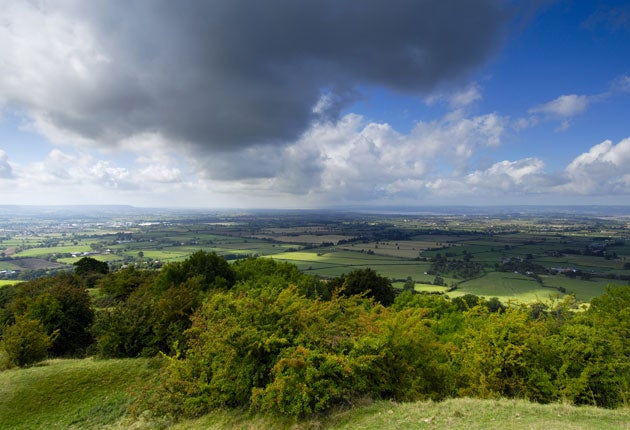
They are the living seams that have typified the British countryside for centuries. But now hedgerows are disappearing fast, and a report published tomorrow will say we are not doing enough to protect them.
Research from the Campaign to Protect Rural England has found that though hedgerows enjoy more protection than ever before, in England their overall length fell by 26,000 kilometres between 1998 and 2007. The study, England's Hedgerows: Don't Cut Them Out!, calls for current legislation to be strengthened.
As well as having a nostalgic place in the aesthetics of the countryside, hedgerows are a vital part of the ecosystem. Research by Hedgelink, a network of British hedge conservation groups, shows that without them some 130 species – from the hedgehog and the dormouse to stag beetles and the cuckoo – would be under threat.
Although "important" hedgerows are protected by law, the majority can be taken down if a landowner wishes, which has resulted in many being dug up to create larger fields that are easier to harvest. For the past 20 years, the Government has provided financial help to landowners to restore and manage hedgerows. But most have still been left unmanaged, sometimes growing into larger trees offering fewer benefits to wildlife because they are less dense at ground level.
The CPRE study focused on England, but the picture nationwide is similarly grim.
Nigel Adams, vice-chairman of the National Hedgelaying Society, said: "The hedgerow is the unsung hero of our countryside. It's often overlooked, but visitors to England say it's what makes it so special. The majority are not used for their original purpose [as an animal barrier], but people recognise their importance in terms of wildlife and history."
Since 1998, the number of legally protected hedgerows has risen by 18 per cent. Currently, 42 per cent of the UK's hedgerows are protected, but the CPRE fears that the narrow criteria required to register a stretch of hedge as "important" will mean many more are lost.
To qualify for legal protection, a hedge must be at least 20 metres long, 30 years old and meet strict criteria on heritage and numbers of animals and plants relying on it. Some hedges were easy to register, such as Judith's Head in Cambridgeshire, which is Britain's oldest, having stood for more than 900 years. But for non-celebrity hedges, the future is dicey. More than two-thirds of local authorities surveyed by CPRE said that the current Hedgerow Regulations needed to be simplified to make them more effective.
Emma Marrington, author of the report, said: "The length of hedgerows in the country is declining, which is worrying. They're a part of our heritage, but they also offer huge benefits to wildlife and the environment in general. It's over a decade since the introduction of the Hedgerows Regulations, and the time is ripe for the Government to make improvements that give local authorities the power they need to better protect the great diversity of England's hedgerows."
The CPRE is concerned that hedgerow protection programmes could be at risk when the Department for Environment, Food and Rural Affairs (Defra) makes spending cuts in the autumn. "The Defra spending cuts could affect the money for schemes like this," Ms Marrington said. "I can see how hedgerows could be overlooked; they're taken for granted as being a part of the English countryside, and people don't realise how much they're at risk."
If hedgerows in Britain decline further, so too will those species that depend on them. Jim Jones of the People's Trust for Endangered Species is running a study of the impact of disappearing hedgerows on dormice, a species whose population has declined by 40 per cent in 20 years. "Dormice have disappeared from seven counties where they existed in the 1800s, at the same time as hedgerows have declined," he said. "Hedgerow corridors are crucial because they allow them to forage and move around."
Species in peril: An ecosystem teeming with life
Mammals
Dormice, harvest mice, hedgehogs, six species of bat, and polecats are all at risk as hedgerows decline. They rely on the covered corridors that allow them to move around.
Plants
The copse bindweed and the Plymouth pear are among the plants that flourish in hedgerows.
Fungi and lichens
From the sandy stilt puffball to the weather earthstar fungus, many fungi do particularly well in hedgerows. Lichens such as the orange-fruited elm lichen and the beard lichen are also at risk.
Invertebrates
Stag beetles, brown-banded carder bees and large garden bumblebees are among those at risk. More than 20 of Britain's lowland butterfly species breed in hedgerows, including the brown hairstreak and the white-letter hairstreak butterfly.
Reptiles and amphibians
Hedgerows connecting with ponds are vital for great crested newts to move through the countryside. The common toad, grass snake, slow worm and common lizard are also at risk.
Birds
Many woodland birds rely on taller hedges for breeding. The turtle dove, grey partridge, cuckoo, lesser spotted woodpecker, song thrush, red-backed shrike and yellowhammer are all in danger.
Join our commenting forum
Join thought-provoking conversations, follow other Independent readers and see their replies
Comments
Bookmark popover
Removed from bookmarks