Ban on bluefin tuna would 'threaten Japanese culture'
Delegates from 175 countries debate a proposal to restrict the international trade in the sushi delicacy
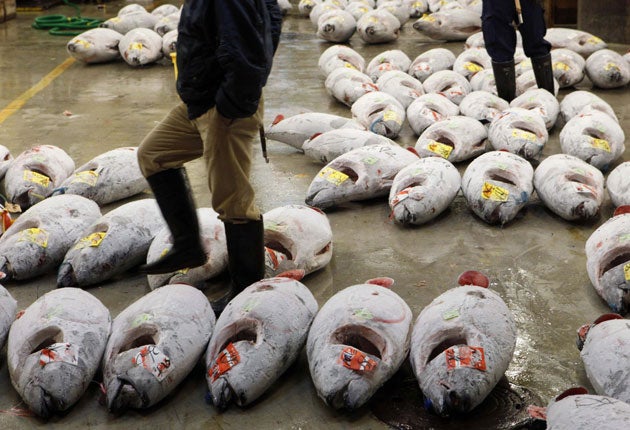
The fate of the Atlantic bluefin tuna – beloved by sushi gourmets and on the brink of extinction – could be decided within days.
The 175-nation Convention on International Trade in Endangered Species (Cites) opened yesterday in Qatar to debate proposals banning the international trade in the fish. Delegates will also discuss moves to restrict the sale of sharks' fins.
Cites has been successful in restricting trade in big cats; great apes and elephants but this is the first time a marine species has taken centre stage.
Willem Wijnstekers, the secretary general of Cites, said there was much more support than two years ago for restricting or banning trade in many marine species, including the bluefin. "I don't think anyone has an argument against the listing of Atlantic bluefin tuna. There is no scientific argument against that."
He added that countries were turning to his organisation because tools to manage stocks were not working and that many of the oceans' commercially fished species were under threat. The UN Food and Agriculture Organisation says more than half of all marine fish stocks are under threat.
Plans to ban fishing and the international trade of bluefin and sharks has prompted a bitter international tussle, with Europeans and Americans pitted against the fishing nations in North Africa and Asia, especially Japan, which has already vowed to ignore any bluefin ban. The Japanese consume 80 per cent of bluefin eaten worldwide, and the ban proposal has provoked public protests in Tokyo and other Japanese cities.
Opponents claim Japanese culture is under siege and that concerns about bluefin extinction are overblown. Sushi is a popular dish in Japan, where fatty bluefin – called o-toro – sells for as much as 2,000 yen (£13) apiece in high-end Tokyo restaurants.
Canada, which has a sizeable tuna fleet, is known to oppose export bans.
Monaco, the sponsor of the proposed ban, said bluefin numbers have declined by nearly 75 per cent since 1957. Despite quotas, high-tech fisheries have drained tuna stocks in the Mediterranean and western Atlantic. Such is the demand that one fish sold recently for £111,000 at market, according to the Marine Conservation Society.
Opponents of the trade are more hopeful after the US recently backed a ban. Supporters of the proposal are now watching closely to see whether other fishing countries will join Japan's rebuff – which would allow them to sell tuna to the Japanese.
Achim Steiner, the executive director of the UN's Environment Program, which administers Cites, said limiting the trade on a range of threatened species could go a long way to ensuring biodiversity. "By ensuring that the international trade in wildlife is properly regulated, Cites can assist in conserving the planet's wild fauna and flora from overexploitation and contribute to the sustainable development."
Sam Wilding, the fisheries officer for the British Marine Conservation Society, said: "These opportunities do not come around that often, and it is time for the majority to stand up to the minority that gain so much economic benefit from driving species towards the brink of extinction. We urge consumers to help by avoiding all fish on our red list and to ask where your tuna comes from, to ensure it's sustainable."
Other items on this week's Cites agenda include measures to combat ivory poaching in Africa, banning tiger farming in China, and the trade in polar bear skins. There is also a bid to regulate the trade in red and pink corals – harvested to make expensive jewellery.
Join our commenting forum
Join thought-provoking conversations, follow other Independent readers and see their replies
Comments
Bookmark popover
Removed from bookmarks