Bypasses seal deal for eels to return to Britain
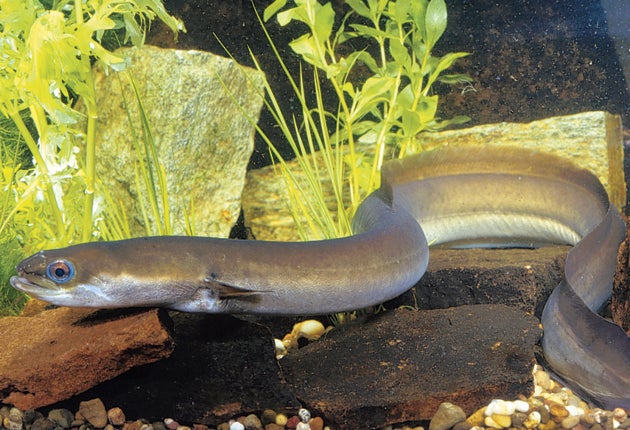
They are as fragile as their name suggests, yet glass eels survive being hurled about by terrifying storms as they evade sharp-toothed predators on a 4,000-mile, three-year odyssey from the North Atlantic. Then they arrive in Britain only to find that the barricades are up.
Concrete walls, tidal flaps, sluice gates and weirs are just some of the many obstacles these tiny creatures come up against as they try to swim up rivers to reach the inland waterways where they can grow to adulthood. Consequently, the number of eels in Britain's waterways has slumped.
Now a review of British rivers will identify structures that can be pulled down, or sites that are suitable for eel-friendly bypasses. In some cases, a pipe lined with grippy mesh is all that is needed for the eels to get past a man-made obstacle.
The worst-affected areas include historic eel habitats high up river systems such as Lake Ullswater, and new wetlands such as the Potteric Carr Nature Reserve in Yorkshire.
The problem is so acute that the River Severn, once regarded by wildlife experts as an eel motorway, is now a death trap. In July, conservationists watched with amazement and dismay as thousands of elvers (young eels) tried – but failed – to cross a flood defence at Tewkesbury by forming a living chain along its concrete sides.
Across Europe, eel populations have crashed by 95 per cent in the last 25 years. They begin their journey as centimetre-long newborns in the Sargasso Sea. After the gruelling journey to Britain, they have evolved to swim up rivers and streams to mature in fresh water before, sometimes decades later, returning to the sea to breed.
The modern use of concrete has been identified as one of the prime problems in the eels' decline, because they can neither climb nor wriggle their way past them. By contrast, old wooden and stone structures usually offered a few holes the tenacious creatures could push their way through.
Alistair Maltby, a fish biologist and director of the Association of River Trusts, is leading the new study for the Sustainable Eel Group (SEG), an umbrella group representing conservationists and industry, which is supported by the Environment Agency and the Living North Sea project.
"We may have done more damage to eels over the last 20 years than the historic weirs did since the Industrial Revolution," said Mr Maltby. "At the moment, we have very limited areas in which eels can grow to the size they need to in fresh water in order to return to wherever they breed, but we do have some big wetland nature reserves. If we can get eels into those reserves, we may be able to substantially boost migrating eel numbers."
Andrew Kerr of SEG said the project has potential to offer a "very big contribution" towards bringing about a great improvement in the eel's fortunes. One of the most worrying factors, he said, is that the number of glass eels reaching Britain's shores has slumped to just 5 per cent of the levels 30 years ago which, in the long term, is likely to have serious consequences for the adult eel population.
He said the problem eels face in the shape of flood defences and other structures are "a far bigger contribution to their decline than fishing".
A long, hard journey
* Baby glass eels can take years to swim the 4,000 miles from the Sargasso Sea to Britain, where they become elvers. They then travel up rivers to mature before returning to their breeding grounds.
* Eel populations across Europe have dropped by as much as 95 per cent in the past 25 years.
* The eel's decline started in the 1980s. Other threats to the creatures include fishing.
* Young glass eels and mature specimens are delicacies in some countries.
* Parasites have also been blamed for damaging eel populations.
Join our commenting forum
Join thought-provoking conversations, follow other Independent readers and see their replies
Comments
Bookmark popover
Removed from bookmarks