Chimpanzees used for medical testing 'show signs of torture'
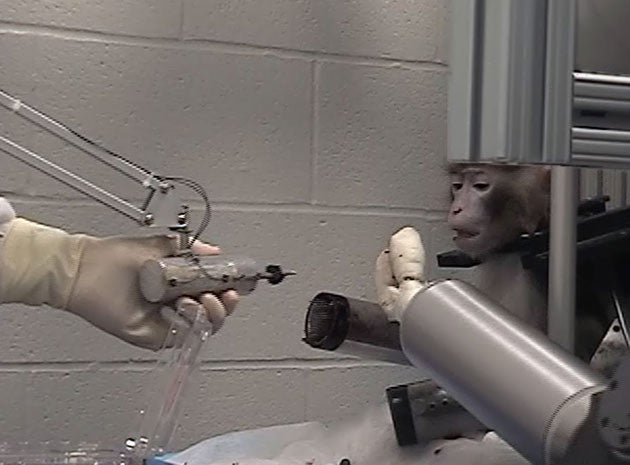
Chimpanzees subjected to medical experiments suffer similar psychiatric symptoms to those shown by tortured humans, according to a study to be released next week.
An assessment of the behaviour of 116 chimpanzees who have been involved in animal research found that 95 per cent display at least one of the distinctive patterns of behaviour that people show when suffering from post-traumatic stress disorder.
The chimps now live in a primate sanctuary in the United States but their unusual behaviour is still causing concern years after they were released from the animal-research laboratories in which they were experimented upon.
The findings, which will be made public at an international primate conference in Edinburgh on Monday, will be used to press for a Europe-wide ban on the use of great apes in medical research. Although experiments on chimps were banned in Britain in 1998, they are still legal in the rest of Europe even though the two research facilities where chimps had been kept have recently closed. However, in the US there is no such ban and about 1,200 chimps are still kept for medical research. Hope Ferdowsian, an American doctor who has treated torture patients from around the world, said that it is clear that chimps suffer many of the extreme psychological conditions shown by human torture victims.
"There are obvious differences between species but it's obvious that these chimps are suffering chronically," Dr Ferdowsian said.
The study involved asking the staff at the animal sanctuary in Louisiana to itemise the types of behaviour patterns shown by the chimps. The scientists then assessed the reports against criteria used to assess human patients.
Dr Ferdowsian said that as well as the signs of post-traumatic stress disorder, more than 80 per cent of the chimps had the symptoms of anxiety and at least half showed the sort of behaviour associated with depression. "The patterns of behaviour we are seeing in these chimps are not normal and not seen in the wild," Dr Ferdowsian said.
The types of behaviour shown by the chimps included "floating limb" displays said to be an expression of disassociating their body with the real world, which is much like the disassociation behaviour seen in people with post-traumatic stress disorder. Other behaviours were avoidance of certain areas of habitat, such as indoor enclosures, anger outbursts, failure to socialise and inability to sleep.
Join our commenting forum
Join thought-provoking conversations, follow other Independent readers and see their replies
Comments
Bookmark popover
Removed from bookmarks