Colossal squid goes under the knife in New Zealand
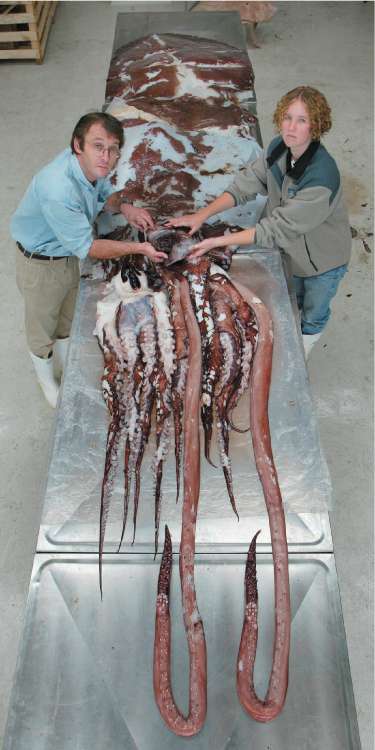
The sight of an enormous, tentacled creature splayed out on an operating table may seem like the stuff of science fiction, but for scientists in New Zealand tomorrow it will just be another day at the office.
The Museum of New Zealand Te Papa is about to begin experiments on one of the ocean's most enigmatic creatures: the colossal squid. Only dismembered or digested parts of the squid are ordinarily found, but this rare intact specimen was caught in Antarctic waters in February 2007.
Since then it has been entombed for more than a year in a walk-in freezer, and now the enormous sea creature is finally ready to go under the knife. The process of defrosting the 10-metre long, half-tonne squid began yesterday, ready for tomorrow's examination.
"They're incredibly rare; this is probably one of maybe six specimens ever brought up," said Carol Diebel, the museum's director of natural environment. "It's completely intact and in really fantastic condition."
The first thing the scientists plan to measure is the "beak" it uses to cut up its food. The largest so far recovered is 49mm long, and it is unclear whether this will beat the record. After that they will be determining the sex, which they believe is male.
Until dissection begins, the squid is being held in a giant bath of iced salt water.
Also known as Mesonychoteuthis hamiltoni, the oversized cephalopods have always been shrouded in mystery. They can grow to up to 15 metres in length – the length of two buses – and have only ever been spotted in the comparatively unexplored waters of the Antarctic.
Because of their large beaks, and the club-like hooks at the end of their tentacles, they are thought to be ferocious adversaries. There have been very few sightings of the colossal squid since it was discovered in 1925, and even then it was only identified as a new species from the dismembered tentacles found in a sperm whale's stomach.
This latest specimen will be preserved in formalin for posterity, and scientists will deliver a lecture on their findings on Thursday.
Join our commenting forum
Join thought-provoking conversations, follow other Independent readers and see their replies
Comments
Bookmark popover
Removed from bookmarks