Frantic fight to save frogs from killer fungus
Hundreds of species face extinction unless scientists' amphibian arks can save them
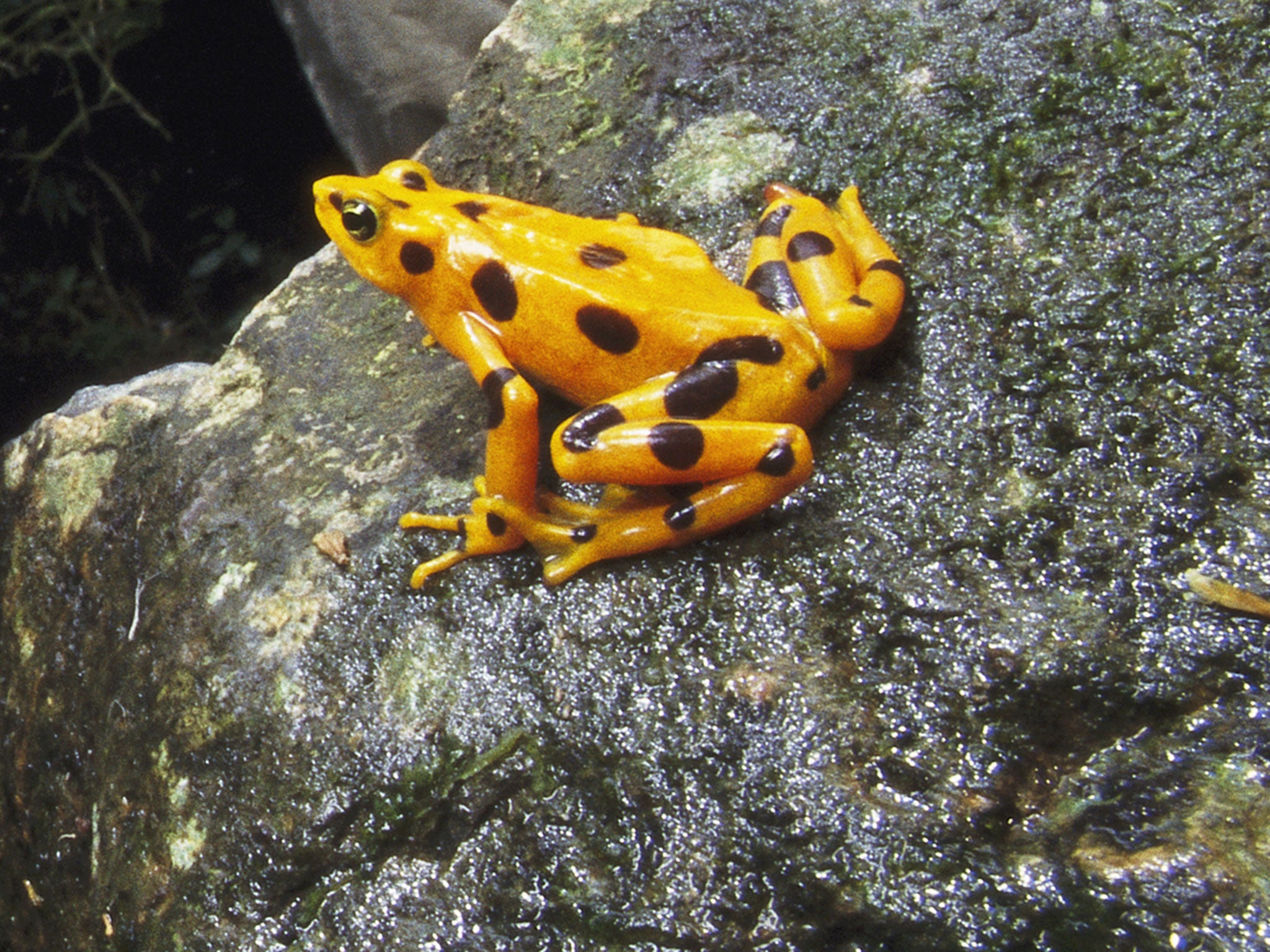
In moist, mossy rooms, rows of glass aquariums bathed in an eerie light shelter the last of the last of the frogs. It is a secure facility, for here reside the sole survivors of their species, rescued from the wild before a modern plague swept through their home forests and streams in a ferocious doomsday event that threatens these amphibians with extinction.
Time is running out. In what may be the greatest disease-driven loss of biodiversity in recorded history, hundreds of frog species around the world are facing extinction. Far from being obscure, many of those threatened are Class A amphibians – the kind of jewel-coloured frogs that adorn postage stamps and star in David Attenborough documentaries.
Frogs in the western United States are threatened, and Australia, Europe, Latin America and the Caribbean have been especially hard hit. Central American countries such as Panama are suffering a catastrophic decline.
The villain of the piece is a virulent fungus, an amphibian athlete's foot from hell, with an impossible name, Batrachochytrium dendrobatidis, which scientists call "Bd" for short. The organism clogs the frogs' pores, triggering a lethal heart attack.
In Panama, scientists are returning to sites where, just a few years ago, they observed frogs in abundance. Cori Richards-Zawacki, a professor from Tulane University, New Orleans, slogged a few hundred metres down a narrow gorge of the Rio Farallon, peering at the banks covered in moss and fern where water drips from springs and waterfalls. The last time she was here, in 2004, she remembers counting 15 golden frogs in two hours. A few times a year one could see them congregate by the hundreds at the water's edge to copulate. Today? "Nada. Zero. None," she said.
Scientists calculate that more than a third, and as much as two-thirds, of all frog species in Latin America are at risk. In Panama, the country's mascot, the golden frog, has not been seen in the wild since 2008. Scientists began to document a worldwide decline of amphibians in the 1980s. Many were the victims of habitat change, introduced predators, pollution, pesticides or over-harvesting by collectors. Yet frogs also vanished from pristine habitats such as those in Panama. One thing is certain: the Bd fungus is wiping out frogs.
In a pretty resort town nestled at the bottom of a volcanic caldera is El Valle Amphibian Conservation Center, known as EVACC, the original Amphibian Ark, supported by Houston Zoo. In 2006 and 2007, Edgardo Griffith, a founder of the centre, and his team, rushed to collect hundreds of frogs, representing a dozen species. In the beginning, they rented two rooms at the Hotel Campestre, where, day after day, they would rinse the frogs in an antifungal bath. They kept the survivors in the quarantine room before moving them to the clean room.
"It was a nightmare," Griffith said. "I saw frogs dying as we were collecting them. They would die in your hand."
Scientists aren't sure how long some frog species live, either in the wild or captivity, so they are not sure how much time they have. Before they can reintroduce frogs to their home streams, they want to have at least 400 or 500 healthy individuals. For some species, they have only a couple of males and females left. Frogs are sensitive creatures. They drink and respire through their skin. They need just the right amount of ultraviolet light. If they don't get enough vitamin B, they fail to thrive. If they don't get enough calcium, their legs break.
Some frogs prefer fast-moving water, others slow. So staff members turn cloud machines on and off, as well as humidifiers, and shower heads that mimic rainfall. Three people are on duty 24/7. Certain frogs fight in their tanks. They punch each other. High levels of stress hormones are found in their faeces – and, yes, someone is checking.
Encouraging them to breed in small, glass fish tanks, made homey with a moist paper towel and a rock or two, is harder than one might think. Frogs may require the right phase of the moon, or certain bugs, rainfall, songs, or other mysterious clues before they mate. After they reproduce, the hard work continues. Tadpoles are hatching with strange deformities.
Perhaps nature will take its course and some frog species will make it out in the wild, while others will be lost for ever.
"The quiet is incredible," said Jamie Voyles, a scientist at the University of California at Berkeley, who was the first to understand the precise mechanism of Bd death. She is standing in a silent stream in Panama. "I used to collect here, take samples, and it would be, please, not another frog! Now I'm begging them. Come back."
Join our commenting forum
Join thought-provoking conversations, follow other Independent readers and see their replies
Comments
Bookmark popover
Removed from bookmarks