GM crops set for role in Britain's food revolution
Environment Secretary says new techniques will help increase production
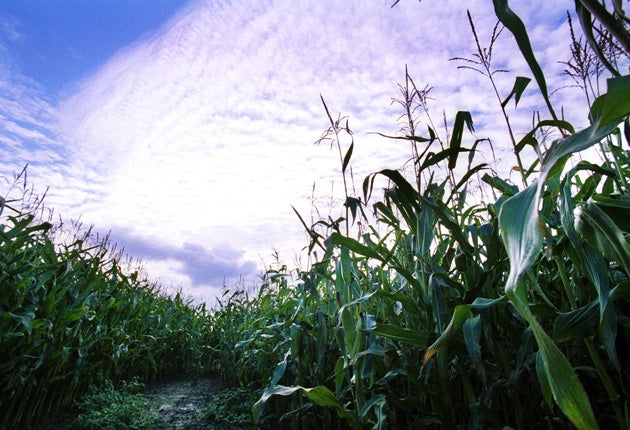
Ministers left open the door for the introduction of genetically modified (GM) crops yesterday as part of a new green revolution to transform food production.
Hilary Benn, the Environment Secretary, declined to rule out commercial GM planting in Britain as he stressed that new scientific techniques were needed to raise crop yields and ensure future generations could eat. His department published a food security assessment yesterday, warning that climate change, water and energy scarcity and low fish stocks were likely to place strains on the global food system that Britain could not ignore.
The Department for Environment, Food and Rural Affairs said the UK would "play a full part" in hitting a UN target of raising food production by 70 per cent by 2050 to feed a projected global population of nine billion.
Friends of the Earth and other green groups suspect the Government may see food security as an opportunity to introduce GM crops, which have so far proved unpopular with the public.
None are currently grown commercially here despite large-scale farm trials between 1999 and 2003. In 2004, ministers denied permission for GM beet and oilseed rape because they lessened food for farmland birds, while a herbicide-resistant maize they approved was later abandoned by its manufacturer.
Proponents of GM crops say they have the potential to raise yields dramatically by making crops resistant to drought, herbicides and pesticides. However, they have been fiercely opposed by environmentalists who say higher yields have not been proven and fear they could cause uncontrollable damage to animals and other plants.
Asked whether GM crops were part of the solution to what he called "a new green revolution," Mr Benn said that farmers would decide what to grow but stressed the importance of new techniques. "If GM can make a contribution, then we have a choice as a society and as a world about whether to make use of that technology – and an increasing number of countries are growing GM products," he told the BBC Today programme.
"And the truth is we will need to think about the way in which we produce our food... because one thing is certain: with a growing population, the world is going to need a lot of farmers and a lot of agricultural production in the years ahead."
As a result of public opposition, no major British supermarket stocks own-brand products with GM ingredients, although non-GM ingredients are becoming increasingly expensive because the US produces so many GM crops.
The Government will publish its plans for inceasing production this Autumn. In a draft document, Food Matters: One Year On, Defra said the Food Standards Agency would "take forward a programme of consumer engagements on genetic modification over the next 12 months." The section was omitted from the published version.
"Every time the UK gets the opportunity to vote on GM at European level, it votes in favour. We have no doubt that the Government is fully behind GM growing," said Clare Oxborrow, senior food campaigner at Friends of the Earth.
Pete Riley, of GM Freeze, said: "The Government has always been very pro-GM. They would like to see GM crops grown here. I suspect they will say we need GM crops on a case by case basis and will base it around science," he said, adding that there were political and economic arguments against GM.
Join our commenting forum
Join thought-provoking conversations, follow other Independent readers and see their replies
Comments
Bookmark popover
Removed from bookmarks