Gorillas: still wild at heart
A pioneering project to reintroduce traumatised gorillas to their natural habitat is bringing extraordinary success. Chris Green reports on how British conservationists are achieving what few thought was possible
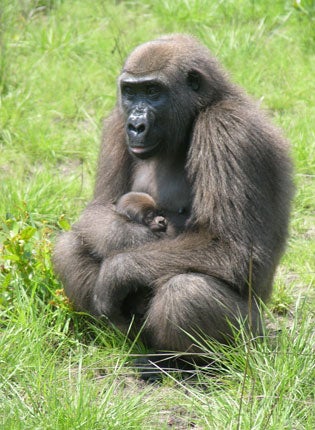
The two terrified baby gorillas, both female, were brought to the Lesio-Louna reserve in the Congo Basin shortly after witnessing the brutal slaughter of the rest of their family group at the hands of some poachers. They were so traumatised by what they had seen that they clung to each other in fear and bared their teeth at anything or anyone who ventured close.
At the time, few thought it possible that the two sisters, named Likendze and Matoko, would ever be successfully reintroduced into the wild. But seven years later they have been, and something even more extraordinary has happened: the two have given birth within three weeks of each other, producing the ninth and tenth babies born to "rewilded" gorillas.
The births are viewed as a milestone for the Aspinall Foundation, a British charity which for more than 20 years has managed two gorilla rescue and rehabilitation projects, one in Congo-Brazzaville and another in the neighbouring state of Gabon, where wild populations were almost hunted to extinction in the 1950s. "We are delighted by the news of the birth of Matoko's infant, and indeed Likendze's before that," said James Osborne, chairman of the Aspinall Foundation.
"A mere seven years ago, the infants were so traumatised that they refused to move. Now they have both given birth. Each birth reinforces the success of the reintroduction, and we now have three viable groups of gorillas within the Lesio-Louna reserve."
The success of the foundation has gone some way towards reversing the slide of the Western Lowland gorilla towards extinction, an assault which has seen their numbers dwindle from millions to as few as 150,000. If the decline continues at its present rate, it is likely that the animal will be extinct by 2020, zoologists say.
The fall in numbers has been fuelled by deforestation, the deadly Ebola virus and the bush meat trade, with gorillas being captured by poachers before being slaughtered and their meat sold at markets in the capital, Brazzaville – a fate which befell Likendze and Matoko's family. The sisters were rescued by local ministry officials and handed to the Aspinall Foundation's reserve.
When the project's director, Amos Courage, saw the condition of the two young gorillas, his first thought was that they would never reach the stage of being able to go back to the wild, because they were too traumatised by what they had experienced.
The two were immediately assigned a dedicated human carer each, to look after them 24 hours a day with the aim of teaching them how to trust again – a process Mr Courage describes as having been "invaluable" to their survival. "They really do respond to devoted surrogate love," he said.
"Without it, they would just die, because they go into a spiral of depression and illness. And when they get into the forest, and see other orphans who have been in a similar situation to them, they join a sort of nursery group – which forces them to interact and gets them to stop thinking about the horror of their capture."
In 2006, The Independent reported the story of Massabi and Koto after those two apes became only the second and third gorillas to produce offspring after being carefully restored to their natural habitat. Three years down the line, the charity has successfully reintroduced to the wild more than 50 gorillas, 43 of which were orphans whose parents had been killed for bush meat. The latest birth is the third in 2009.
The project initially focused on providing shelter and care to young orphans, but over the years it has grown to include rehabilitation, ecosystem management, tourism and local community development.
The Lesio-Louna Gorilla Reserve is 170,000 hectares in size and enclosed by three rivers, which are natural barriers that prevent the animals escaping the reserve and coming into contact with nearby villages. Outside the main site is a nursery area where the young orphans learn the basics of foraging. Each night they are placed in an enclosed dormitory until they start trying to break down the door – a sure sign they are ready to be reintroduced to the wild. "Inevitably they'll meet up with other reintroduced gorillas in the reserve, and there'll be a lot of swapping of females. It's a very fluid situation between the groups, and although we've been doing this for more than 20 years we're still amazed at what happens – it's like a constant soap opera every day, said Mr Courage.
"The fact that the mothers are now raising these babies is fascinating because they're all orphans – we don't know how much experience of mothering they would have remembered from their early memories."
In 2005, an international treaty outlining a strategy to save the world's great apes was signed by the 23 states that have primate populations within their borders, as well as donor countries led by Britain.
The deal, which was billed as the last chance to save humanity's nearest relatives, set the target of significantly slowing the loss of great apes and their habitat by 2010, and securing the future in the wild of all this endangered species by 2015. The birth of Likendzé and Matoko's babies has, in one small way, helped towards this goal.
Join our commenting forum
Join thought-provoking conversations, follow other Independent readers and see their replies
Comments
Bookmark popover
Removed from bookmarks