Hope of freedom for orang-utans dashed
48 endangered primates left in cages after mining company pulls out of rescue
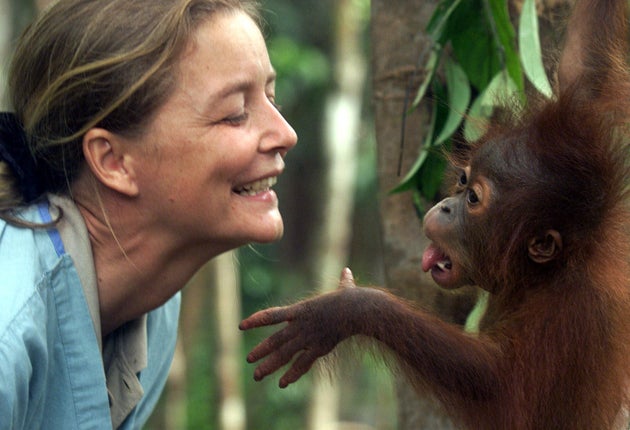
A world-renowned programme to return hundreds of orang-utans threatened with extinction to the wild has been thrown into disarray by the withdrawal of Britain's biggest mining company from Borneo.
Dozens of orang-utans that had been due to be released this month have been left locked in cages after BHP-Billiton warned it could no longer guarantee the safety of the animals on forests it had been surveying for coal.
With BHP's support over the past two years, orang-utans from a rehabilitation centre – made famous by the BBC TV series Orang-utan Diary – have been released onto BHP's land in Kalimantan. But last month the world's largest mining company told investors it was withdrawing from the area for "strategic reasons" which it declined to explain.
A planned airlift of 48 adult orang-utans scheduled to take place on 20 July was cancelled a week before it had been due to take place.
Lone Dröscher-Nielsen, the former air stewardess who cares for 650 orang-utans at the Nyaru Menteng Orang-utan Rehabilitation Centre, said BHP had warned that the Indonesian government was likely to hand its coal concessions to other companies who would not match its environmental stewardship of the land.
She added that it now seemed unlikely the Anglo-Australia mining giant would fund a plan to a create a 250,000-hectare wildlife reserve in central Borneo that could have sited 1,000 orang-utans, a genetically viable long-term population.
Some conservationists fear that orang-utans could be wiped out in the wild in little more than a decade due to the destruction of their habitat for logging, mining and palm oil plantations.
After cancelling the airlift, Ms Droscher -Nielsen, who has spent years trying to re-introduce animals rescued from destroyed habitats elsewhere on Borneo, sent supporters an anxious message saying she was at the end of her tether.
Workers at the sanctuary, funded by the Borneo Orang-utan Survival Foundation (BOSF), spend months preparing for the release of orang-utans, ensuring they are free of illness and scouting for remote forests free of other orang-utans, poachers and human contact.
An emergency working party of British conservationists has been meeting at Prince Charles's official residence in London, Clarence House, backed by the Prince's Rainforests Project to try to save the airlifts. The group hopes BHP-Billiton will still assist BOSF despite pulling out of the area.
With the company's helicopters, mapping and other logistical support, BOSF released 36 orang-utans in 2007 and 25 last year.
Speaking to The Independent on Friday, Ms Droscher-Nielsen said: "There has been a lot of stress, because BHP is pulling out. We have got 650 animals and 48 we wanted to release. They are wild animals. They have been in cages for over a year waiting to be released. It's very difficult to find sites, because when you do they are usually have a logging or mining concession."
BHP has been considering if it can help with an airlift next month, providing the right homes for animals can be found. "BHP Billiton made an offer to the Nyaru Menteng Orang-utan Rehabilitation Centre to potentially assist with their planned relocation at a more suitable time in August, and have also assisted in the identification of suitable relocation sites," the company commented.
Tree fellers: The story of orang-utans
*Orang-utans once lived across swaths of south Asia. Now two species remain, the Bornean orang-utan (pongo pygmaeus) and the Sumatran orang-utan (pongo abelii).
*Sharing 97 per cent of their DNA with humans, orang-utans keep detailed mental maps of the location of forest fruit, and they can distinguish between 1,000 plants.
*It is believed they can spend their lives without touching the ground, but their highly arboreal nature makes them vulnerable to deforestation for logging, mining and palm oil plantations. Babies are often sold as pets.
*Between 2004 and 2008, their numbers fell to 49,600 on Borneo and to 6,600 on Sumatra.
Join our commenting forum
Join thought-provoking conversations, follow other Independent readers and see their replies
Comments
Bookmark popover
Removed from bookmarks