Ladybird invasion hits Norfolk
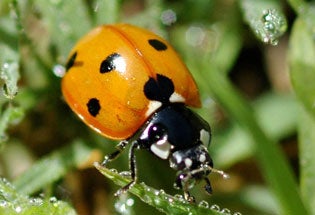
Hordes of ladybirds have swamped cars, plants and homes in Norfolk after the biggest boom in ladybird numbers for over 30 years. Tourists and residents have found themselves wading through “many millions” of ladybirds, after the local coccinellida population “exploded” across the north Norfolk coast.
Council roadsweepers have been forced to mount a clean-up of piles of corpses that have “carpeted” the worst affected areas. The influx - which has been caused by an abundance of aphids, the favourite food of ladybirds - is predicted to last between a fortnight and six weeks.
Pockets of the ladybirds are believed to be moving inland, away from the coast where they have thrived in recent days. Brendan Joyce, director of the North Norfolk Wildlife Trust, said: “Around the coast, the numbers of ladybirds are phenomenal. I’ve heard stories of people sweeping huge heaps out of shop doorways. It’s been really quite spectacular – though apparently there aren’t as many as in 1976, when there were even more.”
“When people have got them crawling in through all their windows, getting everywhere, they get a bit annoyed,” he added.
Marilyn Humphrey, of the North Norfolk Information Centre in Cromer, said: “They land on every part of your body. In your face and in your eyes. It’s horrible.”
Tourists visiting Norfolk for holidays had complained about being bothered by the insects, she added, saying: “I do hope the tourists will keep coming. The worst is over, and this is just such a lovely place.”
North Norfolk District Council has allocated “additional resources” for street-cleaning teams to remove dead insects cluttering public areas. Known locally as ‘bishy-barney-bees’, the ladybirds could be “a slight inconvenience, especially when they fly into your hair", said council spokesman Peter Battrick.
The surge in ladybird numbers is the result of the warm weather throughout July, which has led to an explosion in the population of aphids. Ladybird swarms have also been sighted in other areas of East Anglia and as far west as Somerset. Suffolk’s ladybird population has increased markedly in recent days, especially in coastal areas. Suffolk resident Asa Morrison said that though the insects were very visible, the area had experienced no swarming. He said the “friendly little beasts” remained “more of a curiosity than a nuisance."
Ladybirds lay around 1,000 eggs at a time. Zoe Bunter, from insect charity Buglife, said: “Ladybirds feed on aphids – greenfly and blackfly – and they’ve done very well due to the consistently mild weather. Because aphids are food for ladybirds, the ladybirds are taking advantage of that which is why there’s such a large population.”
The swarms are good for gardeners, though. Ms Bunter said: “These are amazing animals that do an amazing job for us. They eat all our pests."
Ladybird factfile
* Ladybirds belong to the coccinellidae family of beetles, with over 3,500 known species worldwide.
* Britain is home to as many as 46 different kinds, though only 26 of these are readily recognisable as ladybirds.
* Ladybirds prey on pests such as aphids (greenfly and blackfly), scale insects, mealybugs and mites.
* Farmers and gardeners have used the bugs as a natural form of pest-control since the 19th century.
* They often display brightly coloured wing covers. These exude toxic akaloids to ward off predators. This is known as aposematism, and puts off predators which associate some colours with poisonous and badly tasting food.
* Wing covers are usually scarlet, orange or yellow and feature the black spots for which ladybirds are famous.
* Ladybirds are hunted by birds, spiders and larger beetles.
* They are no pushovers. Ladybirds can defend themselves against other mammals and insects by firing jets of a venomous toxin at them.
* The harlequin ladybird (harmonia axyridis) is a large, aggressive ladybird which has invaded much of Britain. As a prodigious consumer of aphids, it poses a threat to the indigenous ladybird population.
* Ladybirds are commonly associated with good fortune. Children in North America traditionally hold the bugs while making a wish, before gently blowing them away.
Join our commenting forum
Join thought-provoking conversations, follow other Independent readers and see their replies
Comments
Bookmark popover
Removed from bookmarks