Now horses are threatened by deadly foreign virus
As alien disease hits sheep and cattle in England, fears that climate change could also bring in equine threat
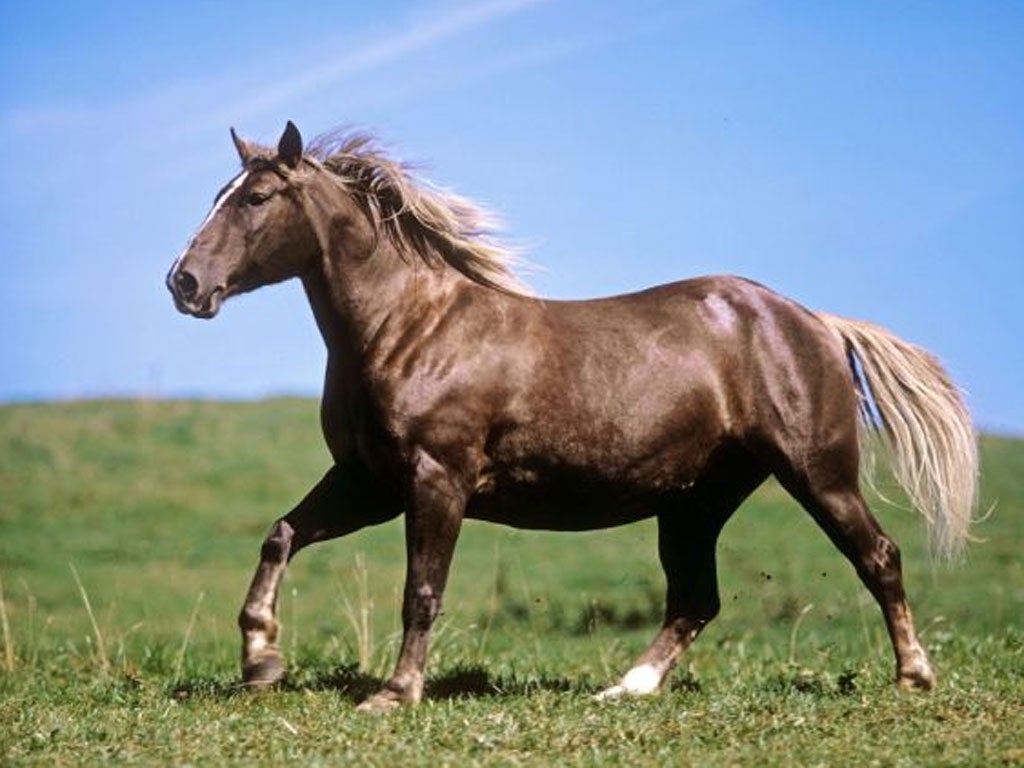
A severe disease of horses may be the next new infection to hit Britain after the Schmallenberg virus causing birth defects in sheep and cattle on English farms, scientists said yesterday.
Concern is growing that African horse sickness, which kills 95 per cent of infected animals, may be brought to Britain by wind-borne insects, just as the Schmallenberg virus was last year, and the Bluetongue virus before that in 2007.
Until these two pathogens arrived in Britain, carried by biting midges blown on the wind from continental Europe, Britain had been free of midge-borne diseases. But scientists are warning that they may be only the first of a considerable number of new infections, including some affecting humans, which are being helped to spread north through Europe by the warming climate.
The danger was spelled out at an expert briefing in London on the progress of the Schmallenberg infection, which is affecting 83 farms in southern England, five of them cattle farms and the rest sheep farms. The disease, which appears to have no effect on humans, makes livestock ill for a few days, after which they recover and are subsequently immune – but if it is caught by pregnant animals, it can severely deform or kill their foetuses.
A large number of lambs are being born dead or deformed on farms, mainly in East Anglia and the south-east.
Professor Peter Mertens, research leader for vector-borne viral diseases at the Institute for Animal Health, said that a Schmallenberg vaccine was now being developed by commercial companies and would be ready in 18 months to two years.
It was possible, he added, that the current bout of the disease would "fizzle out" this year – it depended on whether or not it was still sufficiently present in the summer for a new generation of biting midges to pick it up and transmit it.
However, Professor Mertens, and his colleague Professor Matthew Baylis, Professor of Veterinary Epidemiology at the University of Liverpool, were more concerned at even more severe pathogens which might be brought to the British Isles by insects carried by the wind, including West Nile virus, which affects animals, birds and people.
"Until the 1990s we did not have midge-borne viruses in northern Europe," Professor Baylis said, "They were confined to the far south-west and the far south-east of the continent – to Spain and some of the Greek islands. But in 1998 Bluetongue virus began to spread north, and it has never gone away."
Research had shown that Europe's warming climate was making the spread more possible.
The possible arrival of African horse sickness was "the main worry," Professor Baylis said. There is a vaccine for it, but it is a live-virus vaccine which carried its own risks, he said,
Join our commenting forum
Join thought-provoking conversations, follow other Independent readers and see their replies
Comments
Bookmark popover
Removed from bookmarks