Slaughter of the cane toads: sport for all, Aussie-style
Hated amphibians will be turned into fertiliser for the farmers they have plagued
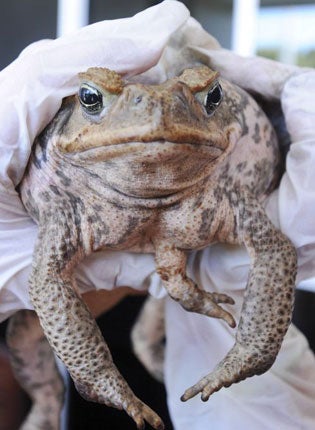
Thousands of poisonous cane toads met their fate yesterday as gleeful Australians gathered for a celebratory mass killing of the hated amphibians, with many of the creatures' corpses being turned into fertiliser for the very farmers they plague.
Hundreds of participants in five communities across northern Queensland snacked on sausages, sipped cold drinks and picked up prizes as the toads were weighed, measured and killed in the state's inaugural "Toad Day Out".
"To see the look on the faces of the kids as we were handling, weighing and euthanising the toads was just..." Townsville councillor Vern Veitch said, breaking off to let out a contented sigh. "The children really got into the character of the event."
The toads were imported from South America to Queensland in 1935 in an attempt to control beetles on sugarcane plantations. Trouble was, the toads couldn't jump high enough to eat the beetles, which live on top of cane stalks.
Now millions of them threaten many local species across Australia. They spread diseases, such as salmonella, and produce highly toxic venom from glands in their skin that can kill would-be predators. The toads are harmful to humans only if their poison is swallowed. Queensland politician Shane Knuth, who came up with the Toad Day Out idea, figured the best way to combat the problem was a mass hunt.
On Saturday night, participants fanned out to hunt down the toads. On Sunday, the toads – which had to be captured unharmed – were brought to collection points to ensure they were not harmless frogs. The creatures were then killed, either by freezing or by being placed in plastic bags filled with carbon dioxide. Some of the remains will be ground into fertiliser for sugarcane farmers. The RSPCA has applauded the effort, provided the toads are killed humanely.
Most of the 3,600 toads will be donated to nearby James Cook University, with the biggest ones turned into souvenirs by local taxidermists.
Join our commenting forum
Join thought-provoking conversations, follow other Independent readers and see their replies
Comments
Bookmark popover
Removed from bookmarks