The long march of the penguins
Exhausted birds are washing up on Brazil's tropical beaches, thrown off course by changing currents. Claire Soares reports
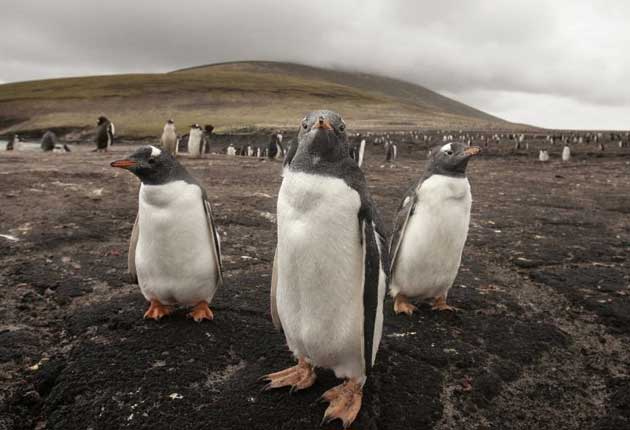
In between the bronzed bodies in skimpy thongs soaking up the rays on Copacabana beach, a tiny black and white bundle of feathers struggles to emerge from the surf. Exhausted and emaciated, its bones poking through the blubber, the young penguin finally collapses on the sand. It has strayed thousands of miles from home, one of more than 1,000 penguins to have washed up on the Brazilian coast this year.
They have come ashore not just in the shadow of Christ the Redeemer in Rio but further north than ever before, with some making landfall just 400 miles from the Equator. Brazilian coastguards have abandoned their Baywatch-style posing and found themselves acting as penguin first-aiders, protecting them from an over-enthusiastic public whose first instinct is often to stick the birds in an ice bucket.
The Magellanic penguins hail from southern Argentina, with the biggest colony just off the Valdes Peninsula. During winter, the birds usually head north in search of more fish-rich waters. Rarely, however, do they stray as far north as Rio, and to reach the waters around Natal is pretty much unheard of. "It's an extremely unusual event," said Valeria Ruoppolo, a vet with the International Fund for Animal Welfare, who has being helping rescue the stranded birds. "We have never seen anything on this scale before. It's normal for them to migrate north but this year they just kept going and going."
No one is really sure what has caused the Brazilian exodus – at the moment, the focus is on saving the penguins rather than explaining how they have ended up in this predicament – but the prevailing theory is that changes in water temperatures have caused confusion on the migratory routes. Fish like cold water and so South American penguins in search of food usually ride the cold Malvinas Current north, gobbling as they go. When they hit the warmer Brazil Current, they know it's time to stop and head back. Only this year, the Malvinas Current has been warmer than usual, meaning the penguins couldn't appreciate the difference.
"The penguins didn't realise when they hit the meeting point so they forged on, and, of course in warmer waters there's not as much fish, and then suddenly the birds were like 'Uh-oh! We don't have any more food'," explained Ms Ruoppolo. "If they don't have enough to eat, they lose blubber, then they start to feel cold in the water and that's when they come ashore to get warm."
Backing up this theory is the fact that most of the penguins that have got lost are juveniles, embarking on their first migration without a wealth of life experience to fall back on when faced with uncharted waters. However more analysis is needed before making a definitive conclusion. "This is extreme, but we don't have statistics on the number of penguins and the ocean temperatures," Jose Marengo, a Brazilian climatologist and a member of the UN Intergovernmental Panel on Climate Change, told the Washington Post. "Some of the most important uncertainties we have are on the oceanic currents."
Other experts have suggested that melting ice in Antarctica has strengthened the Malvinas Current, which has then spirited away the younger, weaker and more vulnerable penguins. Another theory is that oil spills and over-fishing have combined to deplete the penguins' fish stocks, forcing them to movefurther afield to feed.
Of the 1,000-plus penguins that have been recovered on land, about a fifth have died of starvation, exhaustion and other illnesses, and experts reckon they are just a fraction of the number of penguins that have perished out at sea.
Brazilian zoos have been inundated with the surviving birds, some of whom who have lost three-quarters of their body weight; are wracked with parasites and diarrhoea; sporting broken flippers, and severely malnourished. By 21 September, Niteroi zoo had received 556 penguins, compared with just seven in the whole of 2007. "We find lots of penguins here with catfish bones in them, which they normally don't eat," explained Thiago Muniz, one of the zoo's vets. "That suggests they're not finding their normal fish."
Rescued penguins have been nursed back to health up and down the coast, first with rehydration fluids, before graduating to fishy milkshakes and then finally whole sardines. Now moves are afoot to return them back to the wild.
The first batch of 400 survivors flew yesterday from Salvador to Rio Grande – with the help of the Brazilian air force – and were then loaded onto trucks and taken to a rehabilitation centre on the coast for final check-ups. Today, the young penguins will be released back into the Atlantic waters along with four adults, who should act as guides for the long swim home to Argentina.
"We are giving these guys a second chance," said Ms Ruoppolo. "Hopefully they'll learn their lesson and not make the same mistakes next time around."
Some of their fellow wanderers have decided to stay put in Brazil, however. Fernandinha, Claudinha, Queridinho, Pity, Predileto, Tutuca, Colhidora and Smarty have been taken under the wing of a retired photographer, Cecilia Breves. "I was very happy when I had one or two, because they are so cute. They'd follow me around everywhere," the 57-year-old told the Washington Post. "It's much harder when there are eight of them."
But the birds seem happy, roaming about her Rio penthouse, chilling out among the palm trees on the veranda or taking a dip in the roof-top hot tub. The red plastic igloo their adoptive mother has bought for them remains untouched.
Join our commenting forum
Join thought-provoking conversations, follow other Independent readers and see their replies
Comments
Bookmark popover
Removed from bookmarks