The natural world's very own 4x4s
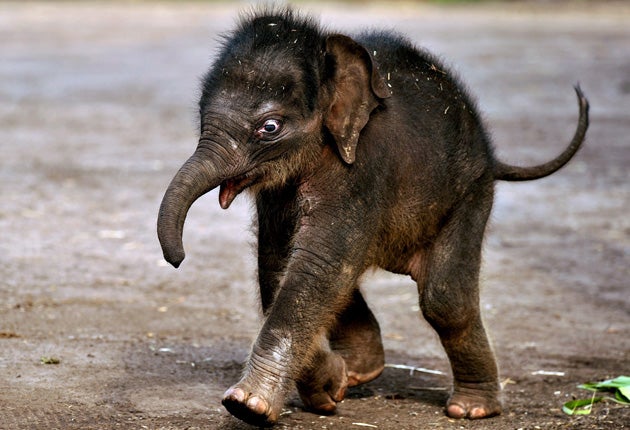
Elephants move like a 4x4 vehicle with all four legs used to accelerate and brake rather than the "rear-wheel" drive and "front-wheel" braking of other animals.
Scientists have discovered that elephants have eliminated the separation of functions of the front and back legs despite having an anatomy very similar to other four-legged animals.
"It's a surprise finding because no one thought that animals would operate in this way. Most four-legged animals are 'rear-wheel' drive, but elephants are clearly four-wheel drive," said John Hutchinson of the Royal Veterinary College in London, who led the study into elephantine motion.
"We have developed some new techniques for looking at animal movement that may change the way that we view the locomotion of other animals. We have shown that elephant legs function in a very strange and probably unique ways," Dr Hutchinson said.
The study, which monitored the pressure forces on the ground produced by an elephant's limbs, was based on the locomotion of six captive Indian elephants captured on video camera. It found that an elephant's legs produce slightly "bouncy" movements to aid fast walking and running where at least one, and usually two legs are always planted firmly on the ground.
It was thought that elephants had "pillar-like" legs that are very rigid and strong in order to support their weight. However, the scientists found that in fact elephants have quite flexible legs that, compared to other animals, produce a relatively small leverage (a measure of how much force is exerted by the muscles) – which is between two and three times smaller than researchers had predicted.
"Their anatomy is like that of other animals, with the same basic arrangement of limb muscles, so there was no hint that they were using their limbs and muscles differently to other animals," Dr Hutchinson said.
All four-legged animals, from cats to horses, tend to use their back legs for acceleration and their front legs for slowing down and stopping, which appears to make elephants unique. The study is published in the Proceedings of the National Academy of Sciences.
Join our commenting forum
Join thought-provoking conversations, follow other Independent readers and see their replies
Comments
Bookmark popover
Removed from bookmarks