Vietnam's taste for exotic meat threatens species
Prosperous middle class contributing to a growing appetite for 'forest food'
As any visitor to Vietnam can confirm, its people have a remarkable taste for meals made from each and every creature. From snakes and spiders to monkeys and rats, there are few wild animals not prized when it comes to the cooking pot.
But there is a price for this extreme omnivorousness. Experts have warned that the Vietnamese appetite for rare and exotic meat is threatening to eat many wild species into extinction.
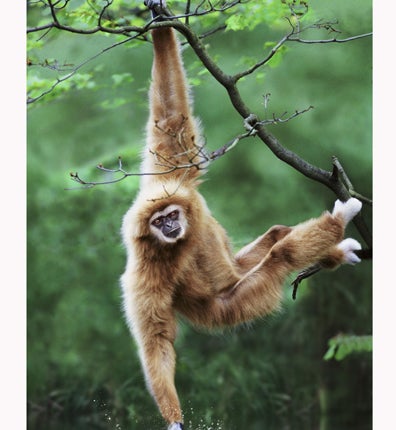
Among the animals most seriously at risk from the burgeoning demand for "forest food" are the rhino, the white-handed gibbon and the civet.
"With the current situation of illegal hunting and trapping of wildlife, even hundreds of thousands of nature reserves fail to supply the demand," Professor Dang Huy Huynh, chairman of the Vietnam Zoology Association, told a conference this week.
The professor said up to 200 species are regularly traded, either for food or medicine, including lizards, wild cats, tigers, elephants and deer. Of these, around 80 species are threatened ones. In all, this trade results in 3,400 tonnes of wild meat – or a million individual animals – being consumed every year. Around 18 per cent of this meat is illegally hunted, he told the conference at the Van Long Wetland Nature Reserve in northern Vietnam.
Experts say this trade in wild meat exists on two levels.
Many rural Vietnamese still hunt wild animals on a subsistence basis, as they have for generations. But the biggest threat to wild animals is the growing demand from a newly wealthy, urban middle-class who often frequent restaurants that specialise in exotic and even protected creatures.
James Compton, a spokesman for Traffic, a British-based organisation that works to prevent trade in wild species, said this demand dates back 10 years to when Vietnam's economic growth accelerated.
A survey by Traffic and the World Wildlife Fund (WWF) found that the largest consumers of wild meat in the capital, Hanoi, were civil servants and business people. "That is the socio- economic context for this," he said.
Mr Compton said that in the past Vietnam may have acted as a conduit for rare and exotic animals exported to China, where they are prized for medicinal and cultural reasons. However, the demand within Vietnam itself for such animals has now reached the point where local supply is being outstripped. As a result, such animals are now being sourced in neighbouring countries such as Cambodia and Laos. "Just last year a shipment of 24 tonnes of pangolin, a rare scaly anteater, was intercepted on its way to Vietnam from Indonesia," he said.
Ian Walker, a British chef and author who on a recent culinary tour of Vietnam vowed to eat everything put in front of him, said the Vietnamese have a very different way of looking at food to most Westerners: "It is utterly different. Everything is edible." Mr Walker, who documented his discoveries in a book, Against the Flow, said he met on his Vietnamese travels many people who still hunt wild animals for survival.
"The trouble is when some animals become valuable. That is when it starts to become unsustainable," he added.
Vietnamese officials maintain that laws have been introduced to protect wild species but that, as in many parts of Asia, these laws are not enforced. Pham Manh Hung, a senior member of the communist government's Central Committee for Propaganda and Education, cited a resolution passed five years ago to protect wildlife.
Perhaps with an eye to that survey that suggested bureaucrats' tastes are partly to blame for the demand for wild meat, he said awareness needs to be raised among civil servants of the importance of protecting threatened species rather than eating them.
Join our commenting forum
Join thought-provoking conversations, follow other Independent readers and see their replies
Comments
Bookmark popover
Removed from bookmarks