Why protecting the world's wildlife is good for our wallets
New body aims to promote economic as well as ethical side of biodiversity
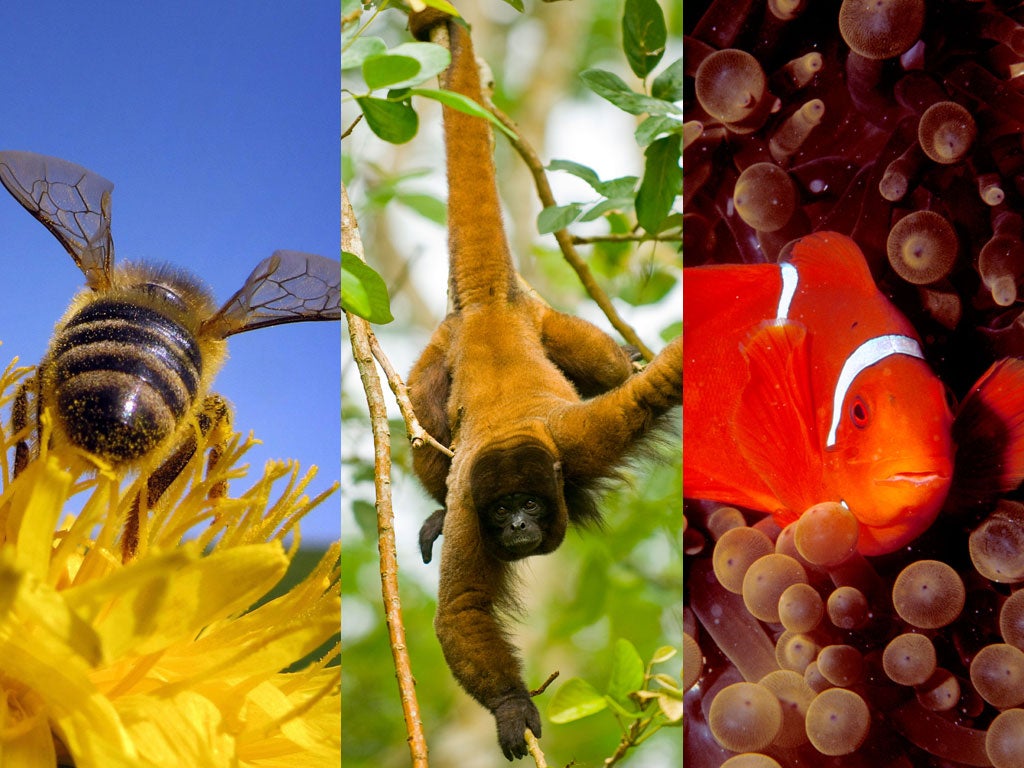
A new world body on wildlife and ecosystems protection being set up by the UN must avoid blaming developing nations, where most of the world's biodiversity loss is occurring, says a top British scientist.
Overconsumption by rich western nations is as big a driver of global environmental degradation as the rapidly growing populations of developing countries, says Professor Bob Watson, a leading figure in setting up the Intergovernmental Platform on Biodiversity and Ecosystem Services (IPBES).
The new body – modelled on the UN's Intergovernmental Panel on Climate Change (IPCC) – will assess how and why the natural world is being degraded, what it will cost society, and what can be done to halt the process.
But it must avoid rows between rich and poor countries, says Professor Watson, an ex-head of the IPCC, who is Chief Scientific Adviser to Britain's Department for Environment, Food and Rural Affairs. "If they think this is just the white world, the developed world, telling them what to do, that'll be the end of it ... The climate debate has been, 'you rich countries got rich by using cheap fossil fuels, and now you're telling us not to use them.' We must not get into that," he said. Regional assessments of biodiversity problems must be "owned" by the regions concerned, he said. So if there is a regional biodiversity assessment of Latin America, scientists from Latin America will carry it out, not foreign scientists.
Professor Watson will play a key role at a Nairobi meeting today which will decide how the new body can be formed, probably next year. Hopes are high that the IPBES might help halt the loss of global wildlife and habitats.
The IPBES is based on the increasingly influential concept of ecosystem services, that forests rivers or peat bogs are not just parts of the natural world, but produce oxygen, provide food and store atmospheric carbon, vital in the fight against climate change.
The new body, which all the major global nations back, follows on the heels of two reports: the Millennium Ecosystems Assessment of 2005, which showed that most of the world's ecosystems are in serious decline, and the report on The Economics of Ecosystems and Biodiversity released last year, which estimated that nature and the services it provides are worth trillions of dollars annually to society.
The IPBES will aim to show the value of biodiversity both in ethical or social terms, and in economic terms.
Professor Watson is seen as the ideal person to oversee the UN's biodiversity body, as he has led international environmental assessments of all major global concerns: ozone depletion, climate change, ecosystem change and agriculture and development.
In fact, the 63-year-old atmospheric chemist, from Romford, east London, who still speaks with an East End accent, is the world's leading authority on policy responses to global change. Yet he is far from being a household name in Britain since he spent 34 years of his career in the US, where he held senior positions in NASA, the Clinton White House, and the World Bank. He chaired the IPCC from 1997 to 2002.
He says global ecosystems face a "headlong assault" from five drivers – land conversion (such as deforestation), over-exploitation (such as overfishing), the introduction of exotic species, pollution, and climate change.
And he does not think climate change can be stopped at a rise of two degrees Celsius, which is the goal of most world climate policy. "We had better be prepared to adapt to four degrees," the professor commented.
What the ecosystem is worth
Ask yourself what human society gets from a forest and the obvious answer is wood. Another obvious answer might be wildlife. Or perhaps, a pleasurable stroll. But that doesn't begin to list the benefits provided to us by a great aggregation of trees.
Forests such as the Amazon are ecosystems which provide the world with tremendous services that are essential to the continuance of human life. These include vast amounts of oxygen, and fresh water, and a beneficial climate, as well as the storing of billions of tonnes of the carbon dioxide which human industry is pumping into the atmosphere and which is causing the world to heat up, with potentially disastrous consequences. And at last, the real value of these ecosystem services is being realised.
Last year the UN released a ground-breaking report on The Economics of Ecosystems and Biodiversity which put monetary value on the benefits the natural world provides us with. It runs into trillions of dollars annually, the report said.
For example, it suggested that the value of human welfare benefits provided by coral reefs was up to £109bn annually. The destruction of coral reefs is not only damaging to marine life but also poses risks to communities, the report said. Some 30 million people around the world rely on reef-based resources for food production, and for their livelihoods.
In another example, the report said that the economic value of insect pollinators, such as honey bees, in global crop production was £134bn a year.
Damage to natural capital including forests, wetlands and grasslands was valued at between $2trn and $4.5trn annually. But these figures are not included in economic data such as GDP, or in corporate accounts.
Now the hope is that with the IPBES, they will be taken into account, and a true picture of how much biodiversity loss is costing the world will emerge.
Join our commenting forum
Join thought-provoking conversations, follow other Independent readers and see their replies
Comments
Bookmark popover
Removed from bookmarks