Out of fashion: Designers finding new ways to sell their style
Today the show season starts in New York. But is the spectacle of models on a catwalk losing its allure?
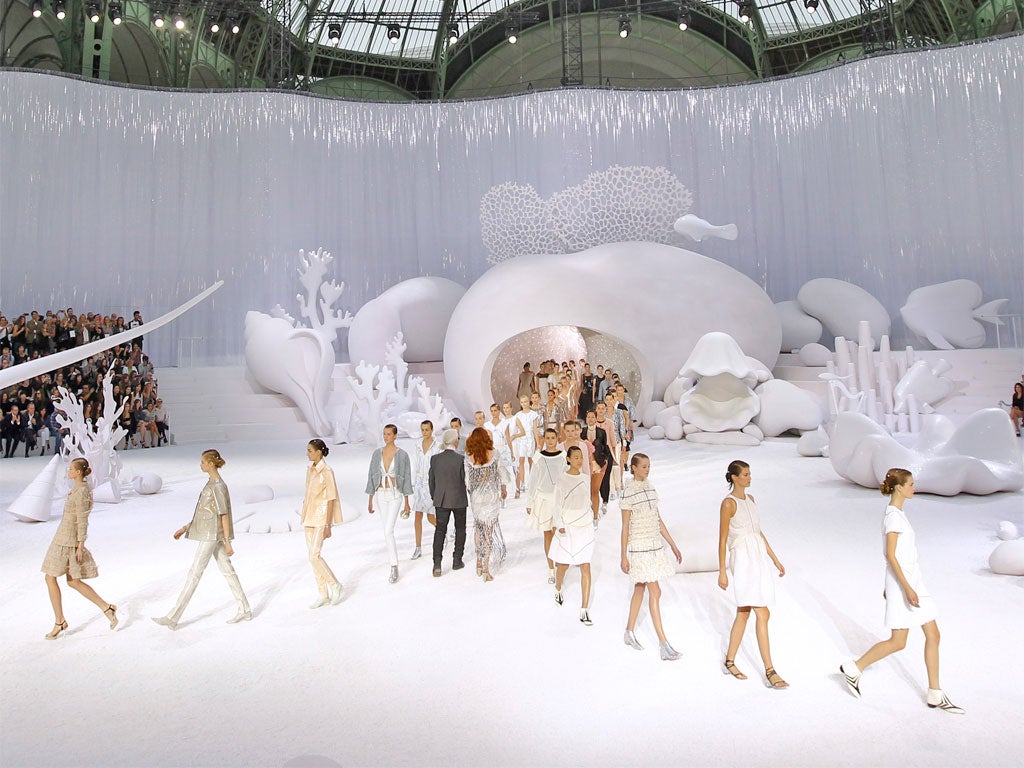
The opening of New York Fashion Week today kicks off a month of models striding the international catwalks. The loping sashay, the glamorous turn, the retreating back, impossibly nimble on six-inch heels: all have become a familiar archetype, a synecdoche for the fashion industry itself.
But, as the autumn 2012 collections are unveiled, more and more designers are questioning the format; seeking something new in an age where digital culture means every image is beamed straight to an audience at home and cloistered, exclusive runways are no longer the most practical way of promoting their labels.
"There has been a massive change," says photographer Nick Knight, founder of SHOWstudio.com, which live-streams shows as well as interviews and fashion shoots. "The public are seeing clothes as they are shown, rather than in magazines three months later. And they want them when they see them."
The industry has been slow to react to the immediacy afforded by Twitter, where pictures from shows are uploaded in their thousands, but the revival of resort and pre-collections (which bridge the gap between summer and autumn, and are often cheaper) has proved a successful way of connecting with customers in real time. Burberry collections can now be pre-ordered online directly from the catwalk show, and pieces arrive up to six weeks later.
But shows remain the primary way of communicating one's vision or message. When London Fashion Week opens next week, more than £100m-worth of orders will be placed. It will host 5,000-plus visitors at more than 70 shows and 40 presentations – all of those who enter the site must be accredited, with a professional reason to be there.
But does that make sense in the age of the amateur, where any fashion-obsessed teenager can create their own blog and online following, and when some of them end up on the front row?
Designer Richard Nicoll's shows have been a highlight of the capital's schedule for several years, but this season will show his collection as a live digital installation. "I started to feel limited by the traditional catwalk format," he explains. "The way we are presenting our autumn collection allows us to engage in a more intimate way. It's not about it being 'better' than a catwalk show – more about this new format feeling more relevant to my collections, now that they are so regular and are equally commercially important."
Nicoll's view is becoming increasingly prevalent at a time when many labels are launching up to six collections a year, sometimes more. At Chanel, Karl Lagerfeld oversees the label's main collections, as well as resort, pre-fall, couture and an annual metiers d'art exposition to showcase the craftsmanship of the atelier. There are sumptuous events for each – an under-the-sea wonderland, flying guests to Cannes, a couture show presented on a catwalk made to look like the innards of a private jet – but many labels do not have the capacity for such largesse, so the shift away from catwalks could have a happy side-effect for bank accounts.
"Catwalk shows cost a lot," says Rosie Vogel, Vogue's fashion bookings editor, who produces London shows, including Meadham Kirchhoff (whose presentation last season opened with can-canning Courtney Love lookalikes and closed with pirouetting pre-teen ballerinas) and Topshop Unique, one of the biggest events on the schedule. "A venue might cost £30,000 or £40,000; production costs will be tens of thousands. Then there's the set, £400 to £500 hundred pounds per model and they'll need fifteen of them. You might be able to get hair and make-up sponsored by someone like MAC, but you need to pay assistants. So you need sponsors – but then there's the question of how much integrity you lose." It's no wonder some designers are outfaced by the scale of things. But there are reasons other than cost that might mean they opt out of the traditional format. Tom Ford's shows are held for small audiences, very few members of the press, with a strict "no photographs, no reviews" policy. His designs are bought by a small but reliable coterie of private customers, many of whom attend the show and he is vocal about the fact that designers' wares are shown six months ahead of hitting the shops, giving the high street ample time to copy pieces and release them before the originals. Catwalks in an internet age are almost an invitation for copycatting.
Before the web took hold, high-street designers used to cadge and bargain for showreels. Now they can just look online.
To this end, Céline's creative director, Phoebe Philo, has banned photography and tweeting backstage at her shows and from showroom appointments. The designer surprised press last month with the announcement that she would not being holding a catwalk show in Paris this season because she is pregnant, opting instead for a smaller presentation format. "Phoebe is in a position to do whatever she wants," adds Rosie Vogel. "It's very admirable to scale things down so she doesn't feel pressured. After all, John Galliano was sacked immediately and the show still went ahead. It reflects her and is testament to how involved she is."
Likewise, other names have shunned the catwalk for a medium more suited to their own vision. Helmut Lang was the first to live-stream his collection without putting on a show in 1998, inviting editors and buyers to see the pieces first-hand at appointments. And Gareth Pugh creates video installations with film-maker Ruth Hogben each season.
They're certainly a change from his formative London shows: characterised by a scrum of (usually uninvited) fans and peppered with whoops and screams at his more outlandish pieces, they felt like moments, embodiments of a zeitgeist.
In cyberspace, of course, no-one can hear you cheer. In that way, fashion has become more democratic – that everyone might experience the thrill and innovation of designers such as Pugh and Alexander McQueen (whose final show before his death was one of the first to be live-streamed on SHOWstudio) – but it makes it much less easy to keep tabs on who's viewing it and what nascent tastes approve of. And, whatever the current feeling, these are not reins that the industry really wants to let go of.
Join our commenting forum
Join thought-provoking conversations, follow other Independent readers and see their replies
Comments