Food & Drink

Mostly Cloudy with Showers 15° London Hi 15°C / Lo 8°C

Organic food debate boils over

Scientist behind study that said organic products were no healthier becomes victim of hate campaign. Whole Foods boss suffers a 'Ratner moment' with admission that flagship store sells unhealthy products
By Martin Hickman, Consuer Affairs Correspondent

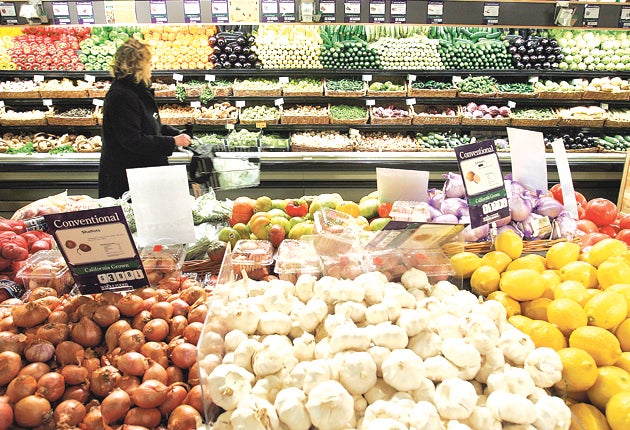
Fruit and vegetables on display at a Whole Foods store

GETTY IMAGES

Fruit and vegetables on display at a Whole Foods store

The scientist who concluded that organic food is no healthier than conventional produce has been bombarded with abusive messages from zealous environmentalists.

Dr Alan Dangour, a nutritionist at the London School of Hygiene and Tropical Medicine, told The Independent that hundreds of people had contacted him since his work was published, with many accusing him of dishonesty and incompetence in emails peppered with swear words.

"A lot of them have been unpleasant reading," said Dr Dangour, whose controversial study found no evidence that organic food was significantly healthier than food produced using chemicals. "They were saying I'm a quack [and that] I should do something else and stop wasting my time, but also a lot of stuff saying I must have been funded by Monsanto or big industry."

The academic said that, although he was not upset by the correspondence, he was surprised by the strength of feeling on the issue. His research, funded by the Food Standards Agency, could hit the £2bn-a-year organic industry, which is already losing sales in the recession.

In another blow to its reputation yesterday, John Mackey, the boss of Whole Foods Market, criticised his US company's flagship British store in Kensington, west London, for selling too many fatty organic products. "We sell a bunch of junk," he said, admitting the need to concentrate on health at his UK division, which lost £36m last year despite the considerable public interest in organic produce.

Research shows that nine out of 10 British shoppers buys organic, but debate has long raged about whether it is healthier for shoppers as well as better for the environment.

Dr Dangour's study, published last week in The American Journal of Clinical Nutrition, has polarised opinion between those for whom it has confirmed long-held suspicions and those who believe it was one-sided. In an article in The Daily Mail the food writer Joanna Blythman, branded the study a "cancerous conspiracy".

Dr Dangour, whose team reviewed 50 years of scientific papers, estimated he had been sent between 250 and 300 emails, with hundreds more arriving at the FSA and his university. Among the more printable comments were: "Shame on you and this bogus so-called study," and: "To the quacks who wrote the study and concluded that organic foods have no health benefits over conventional foods: you blokes are freakin' whacky."

Dr Dangour, who said he found the abuse "mildly entertaining", added: "I have received an awful lot of emails. Half have been positive, saying we really needed this, and I have received a lot of negative emails, some of which have been abusive. I'm not sure I expected that. I was quite taken aback.

"Some have questioned my integrity and independence; whether I am funded by big agriculture or industry. It's professionally hurtful for people to say: 'You must be funded by industry or otherwise you wouldn't have come up with that finding'."

Organic supporters have complained that Dr Dangour's study should have looked at the impact of pesticides on health, while others pointed out that the work did not nullify the environmental benefit of organic farms, which are generally acknowledged to be good for wildlife. Others said they bought organic food because it tasted better.

The Soil Association, Britain's main organic certification body, pointed out that while all 162 relevant studies reviewed found organic to be higher in many nutrients such as beta-carotene, the review concluded there were no important benefits from only 55 "high-quality" studies.

Dr Dangour called the group unfair, saying: "They obviously have their own point of view but in certain circumstances the way they tried to make their point has not been entirely appropriate. If you pull random numbers from the report and claim that they are significant, that is not helpful."

Peter Melchett, policy director of the Soil Association, distanced the organisation from any personal attacks. But, in a sign that the public debate on the topic is unlikely to be quelled soon, he described the study as "bad science". "It is the nature of science that bad science doesn't last and I'm convinced that this is bad science," he said.

"Over the weekend, a number of scientists around the world have read the papers, and the fury that's building against the study from serious and reputable scientists is enormous."

The Soil Association has long suspected that the FSA is anti-organic, a view fuelled by criticism of the organic movement by the agency's first chairman, Sir John Krebs. Yesterday, the FSA stood by its research, describing it as "the most scientifically rigorous, independent review of research ever carried out in this particular area". "Opinion has, at times, been rather polarised," it added. "The FSA is neither pro- nor anti-organic food and recognises that people choose to eat organic for many different reasons."

One source in the organisation said that it had been surprised by the "near religious" tone of some of the criticisms of its research.

Dr Dangour insisted: "I'm not pro- or anti-organic. I'm a scientist and I pulled together a leading team of nutritionists for this research. We have done it entirely properly and correctly and it has been peer-reviewed."

He said he would have liked to have included new EU-funded research into organic nutrition by Newcastle University published in April last year – after the February cut-off date for his research period set by the FSA. Another report from the EU study, which has provisionally found that organic food is healthier, is due to be published in an academic journal later this year.

Dr Dangour said the existing evidence was robust enough to come to a judgement about the nutritional content of organic food and said the number of studies was better than for many other meta-analyses.

Professor Anthony Trewavas of Edinburgh University, an ardent critic of organic food, backed him, saying: "The trouble is that ideologues have propounded the idea that organic must be better for you simply because it's more natural. Nothing really could be further from the truth."

Conclusive proof about the differences between the two farming systems could come only from cohort studies of illnesses over a long period of time – like the 200 studies done to prove the link between diet and cancer – and these were unlikely to be funded, added the Professor Trewavas, an expert in plant biochemistry. "If you are eating the recommended diet of five portions of fruits and vegetables a day that is designed to saturate you in minerals and vitamins, there is no benefit from eating more," he said. "The fact is that the five a day from conventional farming is perfectly adequate for our health."

Nutritionists pointed out that, whatever the truth of the organic debate, Britons still ate too few portions of fruit and vegetables. Adults eat an average of 2.7 portions a day against a Government recommendation of five.

Helen Tracey, of the British Dietetic Association, said studies showed that some organic products, such as milk, were significantly higher in nutrients. "We don't always recommend organic as better," she added. "We say it is much better to have a good range of fruit and vegetables that you can afford."

Organic food: Is it worth it?

* Shoppers buy organic food for several different, sometimes overlapping reasons. Some say it is healthier on the basis that it contains extra vitamins and minerals, or because it uses fewer pesticides than other food, which can contain pesticide residies. Others feel organic is better for the environment, because organic farms do not use nitrogen fertiliser derived from petro-chemicals or they are richer in wildlife. Others say it tastes better.

* The FSA's 50-year review of scientific literature deals with only one of these reasons, albeit an important one: nutrients. The study concluded that there were no important health benefits of organic food in relation to vitamins and minerals. To the anger of some, the study did not address the controversy surrounding pesticide residues. The official Government position is that the vast majority of pesticide residues are safe for human health

* One significant drawback of the research is that its period of analysis meant that it did not take account of a four-year EU study, which has provisionally found that organic food is significantly richer in vitamins.

Organic debate: The shoppers' verdict

Frank Naba, 17, student

I eat organic food about four or five times a week. Mostly vegetables, chicken, eggs – that stuff – it's healthier. My mum has always given me organic food since I was a baby. Now, the older I get, the more organic food I want. It's healthy. It builds me up strong. Well, I thought it was healthy until recently when they said it made no difference.

Jim Rogers, 34, business and finance manager

I do eat organic food. Generally, it tends to be better quality. If you want to eat organic chicken, you have to pay the price. There's always a level of concern about how organic the food really is. But still, regardless of what they say the health benefits are, you can eat that meal and know that nothing artificial has gone into the process of making it.

Wendy Parker, 28, council worker

I try to buy organic food. Fruit and veg mostly. I try to cut down on how much meat I eat – just a couple of times a week now so I can afford the organic stuff. I think it's healthier and I think it tastes better. It's better for the farming economy and the environment as well. From what I've read previously, I certainly have the feeling organic would be better for you.

Lillie Nodar, 50, manager of a software company

The taste is different, obviously, and there are too many poisons around anyway. It's good for the earth and there are no chemicals used in the production cycle of organic food, so it's win-win. I'm not really surprised [by the FSA findings]. It's to do with perception. There's a lot of brainwashing that goes on. It's a fashionable way of doing things.

Jane Parks, 64, Retired

I don't eat organic food. There's so many arguments for and against, and there's a risk of some of it not actually being organic. Some things, frankly, don't obey trade descriptions. It's too expensive and it's pointless. It isn't any better for you. I don't think it's any worse. If you want to be precious, be vegan, but you're taking the joy out of life.

Interviews by Elliot Ross

£36m

Whole Foods losses last year.

Post a Comment

View all comments that have been posted about this article.

Offensive or abusive comments will be removed and your IP logged and may be used to prevent further submission. In submitting a comment to the site, you agree to be bound by the Independent Minds Terms of Service.

Comments

Page 1 of 2
<<[1] [2] >>
I feel for the Doc
[info]mem_winterhill wrote:
Wednesday, 5 August 2009 at 11:21 pm (UTC)
If you cross the foodies in any way you are a shouted to be shill for big Ag, because foodie arguments have no other substance. You keep asking them for data, but _they just KNOW_ it is better. It is a freakin' religious movement.
Failure of the imagination
[info]sebmel wrote:
Thursday, 6 August 2009 at 12:57 am (UTC)
This rejection of trying to raise standards represents a failure of the imagination.

We do not need to live in a deteriorating environment.
We do not need to live in a country that is uglier than the one our great grandparents knew.
We do not need to live in a shoe box where once the British lived in houses and had a garden.
We do not have to accept ever greater compromises with regard to quality of life because of a burgeoning population.
We do not NEED to pollute the oceans.
We do not NEED to never see a wild salmon.
We do not NEED to never see a wild bear.
We do not NEED to accept that the orchids of the Kentish Downs must go extinct.

Those things happen through a failure of imagination.

All the food out ancestors ate was organic.
The only reason we cannot is because so many people are prepared to act like a frog in a slowly boiling pot of water.
It is time for you to remember you can JUMP!

Actually, the nay sayers toy with even greater perils than their own extinction. They argue for a pyramid scheme. Like the banks... like Bernard Madoff... they just can't stop arguing for business as usual. That's arguing for government by disaster. No vision, no foresight, no action.

Let me assure them: nature is very cruel. Carry on with that and it will bite hard down on humanity. Read what happened to the Easter Islanders due to their inability to live sustainably. That is our future if these people get their way.

Organic food is a good place to stop the intensification and accept the need to live within sustainable limits. When I'm asked by people I know to be cynical why I eat organic food, and I haven't the time to run through everything they ought be thinking about, the most succinct answer I've come up with is:

If it isn't good enough for the bugs it isn't good enough for me.
Re: Failure of the imagination - [info]mem_winterhill - Thursday, 6 August 2009 at 01:05 am (UTC) Expand
Re: Failure of the imagination - [info]sebmel - Thursday, 6 August 2009 at 01:27 am (UTC) Expand
Re: Failure of the imagination - [info]mem_winterhill - Thursday, 6 August 2009 at 01:53 am (UTC) Expand
Re: Failure of the imagination - [info]sebmel - Thursday, 6 August 2009 at 02:36 am (UTC) Expand
Re: Failure of the imagination - [info]mem_winterhill - Thursday, 6 August 2009 at 02:47 am (UTC) Expand
Re: Failure of the imagination - [info]sebmel - Thursday, 6 August 2009 at 03:00 am (UTC) Expand
Re: Failure of the imagination - [info]uanime5 - Thursday, 6 August 2009 at 12:17 pm (UTC) Expand
Re: Failure of the imagination - [info]sebmel - Thursday, 6 August 2009 at 12:37 pm (UTC) Expand
Re: Failure of the imagination - [info]uanime5 - Thursday, 6 August 2009 at 12:08 pm (UTC) Expand
Re: I feel for the Doc - [info]scearfo - Thursday, 6 August 2009 at 03:20 am (UTC) Expand
Re: I feel for the Doc - [info]mem_winterhill - Thursday, 6 August 2009 at 11:51 am (UTC) Expand
Research of very limited scope misrepresented
[info]sebmel wrote:
Thursday, 6 August 2009 at 12:09 am (UTC)
Pesticide residues: ignored
Pesticide spraying near houses: Ignored
Well being with regard to piece of mind: ignored
The effect of an improved environment on quality of life: ignored
Calorie intake: ignored
Nutrient levels: irrelevant

So what DID they actually study? Here's the critical phrase:

"If you are eating the recommended diet of five portions of fruits and vegetables a day that is designed to saturate you in minerals and vitamins, there is no benefit from eating more."

Let me paraphrase:
Even if food is of low quality if you eat enough you'll get enough nutrients.

Let me paraphrase again:
We eat so much that even if we ate really lousy food we'd get enough nutrients.

They were funded to conclude that? I am stunned.

Let me help them a little. There is an obesity problem in the developed world associated with refined foods and those with little flavour. Eating foods with strong flavours and high nutrient levels helps reduce the amount of calories one eats. There is strong evidence across species that eating less lengthens life. A number of species have been demonstrated to live 50% longer than normal on subsistence calorie diets. Conversely, eating more than necessary has been shown (aside from the intake of food contaminants) to cause the body's cells to age. Technically speaking the telomere is shortened. There are no tipping points between the extremes, there is a gradient.

Pesticide spraying is bad for the environment, bad for people who live beside sprayed fields, and bad for our quality of life. I remember Ladybird Johnson mentioning that she missed the wild flower meadows of her youth. We are living through the fastest mass extinction in the history of the planet and yet there are still people prepared to argue that this is of little consequence.

So, what has actually happened here. A piece of research contrived to be so narrow as to be useless came to a conclusion that was obvious before they even started, wasting research money, and providing a result which could be easily misconstrued if one misses the absurdly narrow remit.

The BBC picked up on the research and ignoring the narrow remit wrote a provocative and misleading headline:
"Organic 'has no health benefits'"
A standard journalistic practise to raise interest in a story.

The consequence is that some people, rightly feel their intelligence has been insulted.

One final issue to think about: Intensive agriculture allows us to produce more food, and support a larger human population, at greater stress to the environment. The environment is collapsing worldwide. There is urgent need to reduce environmental stress, not support greater populations. Some will argue that intensive agriculture will allow less area under cultivation. The argument doesn't stand up to scrutiny.

Firstly, organic agriculture becomes part of the protected environment. That is a vastly greater area than a few parks.

Secondly, intensive agriculture is part of a culture of denial which rallies against accepting that radical action must be taken. It is business as usual. It doesn't combine with radical re-evaluation of environmental impact on other species and on our quality of life.

Thirdly, small parks act as tiny islands, often incapable of sustaining health populations in the long term.

Fourthly, parks are not isolated from the effects of pesticides. Pesticides waft in and animals wander, or fly, out.

Fifthly, forests and meadows near farms find their diversity reduced the spraying of fertilisers.

Sixthly, parks on a small island find themselves under great pressure from recreational use if they are the sole location in which one can see the old, healthy world as our forbears enjoyed it. The quality of environment they offer other species suffers as a consequence.

It is very sad to see the internationally famed intelligence of the British represented by demeaning, contrived ludditism.
Re: Research of very limited scope misrepresented
[info]mem_winterhill wrote:
Thursday, 6 August 2009 at 01:00 am (UTC)
Your misunderstanding of how science is done is clear. It's ok, I know why--people are not presented with proper training in the process.

But here's how it is done: you take a space that you can define, in this case, nutritional elements. You set quality thresholds. You examine the data.

You don't look at 400 things in one study--especially when your remit is from the food agency that is responsible for nutrition guidelines.

I eagerly await the studies on the other issues: pesticide, peace of mind, whatever else you want to look at. But I hope they don't throw them all in the same bucket because conclusions will be crap. Let's examine each one and see what we can learn.
Re: Research of very limited scope misrepresented - [info]sebmel - Thursday, 6 August 2009 at 01:41 am (UTC) Expand
Re: Research of very limited scope misrepresented - [info]mem_winterhill - Thursday, 6 August 2009 at 01:58 am (UTC) Expand
Re: Research of very limited scope misrepresented - [info]sebmel - Thursday, 6 August 2009 at 02:52 am (UTC) Expand
Re: Research of very limited scope misrepresented - [info]mem_winterhill - Thursday, 6 August 2009 at 03:00 am (UTC) Expand
Re: Research of very limited scope misrepresented - [info]sebmel - Thursday, 6 August 2009 at 03:10 am (UTC) Expand
Re: Research of very limited scope misrepresented - [info]mem_winterhill - Thursday, 6 August 2009 at 11:59 am (UTC) Expand
eco-bigots
[info]tarquintt wrote:
Thursday, 6 August 2009 at 12:17 am (UTC)
It is of course possible that it was a plot by big industry (or agriculture more specifically) - one must always be sceptical of what we are told, but it is also unwise to simply attack someone because they question your views, which are just as likely to be biased - and it does not help the image of a supposedly 'friendly' group to be the rabid ones, basing their assumptions on little fact - they have an agenda, just as non-organic agriculture does, so independent scientific research is all we should listen to

As for tasting better, that's subjective, I've never tasted a difference - and as for health benefits described by Frank Naba - there is no evidence to suggest anything is to do with the food being organic, that barely even registers as anecdotal

And besides - 'organic' does not mean completely natural - it's too inefficient to farm industrially with the equivalent of your veggie patch - there is quite a long list of additives allowed by the soil association
Re: eco-bigots
[info]sebmel wrote:
Thursday, 6 August 2009 at 01:10 am (UTC)
I currently live in Brazil. I can buy nothing organic in my area except for wild bananas. They are about a third of the size of an intensively farmed one. The flesh is firmer and darker with an almost orange tinge. The difference in taste is extraordinary. They are much more perfumed and sweeter. The difference in flavour is as stark as that between wild strawberries and farmed ones. The size difference is not as great.

Now some people will say: well, there you go then... the big ones are better because you can feed more people.

Well, provided you are happy to find new deposits of phosphates... we've dug the Pacific Island resources flat... and let the original residents do back to the mess we created.

... and, provided we want a bigger population. This idea however big the population grows we must never consider doing anything about it is a pyramid scheme. The greater the population agricultural intensification supports the greater the environmental degradation will be, the more species will go extinct, and the more people will die when the environment finally collapses.

I sincerely recommend that anyone not convinced read the history of Easter Island... immigration to it... fishing... boat building... religion... weather changes... walled gardens and population collapse. The world is finite... just like Easter Island was for its Polynesian settlers. The island serves as a good metaphor for a future governed by people without sufficient forethought.
Organic Mafia
[info]oommike wrote:
Thursday, 6 August 2009 at 01:02 am (UTC)
There is a great deal of money being made by produces of organic food.
If it is proved that there is no justification for their high prices, the goose that lays the golden egg will become foi gras.Hence the vicious reaction.
It would be helpful if they could produce verifiable references for their claims of harm done by pesticide residues on commercially grown food, say in the past 5 years.
Re: Organic Mafia
[info]sebmel wrote:
Thursday, 6 August 2009 at 02:11 am (UTC)
This is another call for a narrow remit that would ignore the problem in it's entirety. One cannot meaningfully consider pesticides from just one source and understand the full consequence for our health. Pesticides tend accumulate in the fatty tissues of the body. A cocktail of them enter our systems and in combination can have unexpected effects.

Aside from pesticides we ingest industrial chemicals of various toxicities and naturally occurring toxins too. A number of toxins are the by-product of our oxygen based metabolism.

Human beings are already affected common environmental contaminants. The most famous effect is that of the various chemicals that bind to oestrogen receptors in the body: some having a potency many times the level of natural oestrogen. Men's sperm counts have fallen since the second world war and boys worldwide are showing other signs of feminisation. The length of penises is diminishing, as is the distance between the anus and the penis. These two changes are some of the earliest signs of morphological feminisation.

In Mexico boys were found to be growing breasts. In Florida almost 100% of the alligators in the Everglades are
showing signs of feminisation. Many are hermaphrodite and sterile.

There are towns in Canada, Russia and Brazil where there are very few or no boys being born at all due to the effect of oestrogen mimicking environmental contaminants.

These are very real and current problems. They will be with us for many years to come as many of these chemicals are persistent. Arguing that people ought not to be concerned that the FSA is ignoring pesticides and their cumulative effect in times like these is very surprising to me. It makes me wonder at the number of people who wait for personal catastrophe to react.

I suppose it's like the cigarette cancer nay sayers: cigarettes don't cause cancer because my grandfather wheezed till 100. I'm afraid I don't accept that government by disaster is responsible. As I said before: ignoring the danger, that is a failure of the imagination. We could live SO much better.
Manipulation
[info]5presteps wrote:
Thursday, 6 August 2009 at 02:15 am (UTC)
The agency conducted this research was Food Standards Agency. How can you trust any agency which belongs to the government? Maintaining integrity, work ethics is too tough under wild capitalism for scientists, doctors, lawyers, you name it. Manipulated research.
I think Organic is better too!
[info]usafarmer wrote:
Thursday, 6 August 2009 at 03:12 am (UTC)
I am a farmer in the USA. Based upon my personal experience, i support the organic growing of as many farm food crops as possible. Surely, some of the pesticide and other chemicals in conventional farming remain in the food and we eat it. It may not have short term effects, but like most sins, they eventually catch up with you. And i suspect the chemical industry is somehow the ones behind the conventional push. Otherwise, they would not be able to generate large incomes. Organic farming is as close to "mother nature" way as i can calabrate.

If money was not the real issue here, why would anyone bother to attack the organic effort as no one would care. signed a farmer who cares.
Re: I think Organic is better too!
[info]sebmel wrote:
Thursday, 6 August 2009 at 03:37 am (UTC)
It is the case that Monsanto has lobbied hard in the USA and Britain. Tony Blair was certainly influenced by them.

If you don't know the history of the company they were responsible for 'Agency Orange' defoliant during the Vietnam war. They also are responsible for one of the major persistent oestrogen mimicking compounds I mentioned above, being the inventors of PCBs (Polychlorinated bi-phenols). All of us are contaminated with a certain amount. People, such as the Inuit, who eat seal and whale regularly receive can receive large enough doses to prevent them from siring male children.

I don't know where you are but I hope you won't mind if I offer the idea that you look into planting walnut trees. You might find that you can plant them at the border of some fields. They are an excellent source of protein and at the end of their life they provide you with one of the best, and highest value, woods that grown in temperate climates.
Dr Dangour is the Hutton of the Food Industry
[info]kerrygold wrote:
Thursday, 6 August 2009 at 03:55 am (UTC)
Honest, no doubt sincere, reliable (if that's a virtue). The FSA, who have always been in the pockets of agribusiness and the likes of Monsanto and the chemical giants, knew their man; just as Blair knew his. I agree that it is unacceptable for people to be contacting him directly with abuse. Instead they should be criticising the FSA for hiring a patsy!
Oraganic means less poison,
[info]hpicot wrote:
Thursday, 6 August 2009 at 04:09 am (UTC)
The purchase of organically farmed produce reduces the use of poisons that we already face too often, and the production of meat without using antibiotics makes those medicines more effective for humans. Even if those two benefits are "all we get" they will save thousands of lives each year. If they only prolong the lives of 10% of the population, that 10% may include you or your child or spouse. My dad was a doctor, and he said that if you got cancer from smoking, the fact that only a minority of smokers get it would be cold comfort; you would have it, 100%. The truth is that if the chemicals we are faced with every day only kill or reduce the life span of 1% of the population, would that comfort you if it was your child? Dr Dangour can not tell you if it is 1% or 15%, because there are so many chemicals that have not been tested for long term exposure (the USA has had a testing program since 1998, has spent over $80 million on it, and due to industry obstruction, has not tested a single chemical). Until we know better, less chemicals seem a better way to live. Something is killing our bees and frogs, and the only thing we can be sure of is that organic farmers are not responsible.
hang on
[info]timbo_is_too_lo wrote:
Thursday, 6 August 2009 at 04:33 am (UTC)
i thought the point was that nutritionaly organic food and chemically utilised foods were not much different i.e. they contain about the same protein, carbohydrate and fat. a cabbage is a cabbage after all...

the difference is that the toxic pesticides that have been used to keep the non-organic veg and fruit in a pretty state for all the plastic people is... well... still toxic.

So non-organic and organic equally nutritious yes, but not equally good for you. Yes the difference is small considering the small amount of toxic materials used, however, over a few decades there may be an effect. We do not know, simple as that. My guess is the less toxic material people pump into themselves the better and longer their lives will be.

However, all fruit and veg should be prepared properly, organic products still have harmful bacteria. i heard a crusty say that she never washes her organic stuff since it is natural!! This is wrong i am afraid and she was one of the new age, religious crusty, very lovely though :)
Organic fascists
[info]chris40uk wrote:
Thursday, 6 August 2009 at 04:48 am (UTC)
The Soil Association was founded by a group of Nazi sympathizers so their reaction is hardly surprising,. Their bubble has been burst..
organic food
[info]terry_hamblin wrote:
Thursday, 6 August 2009 at 06:12 am (UTC)
The FSA study simply says that the extra nutrients present in some health food confer no extra health benefits. Since most diets contain an excess of minerals and vitamins that are simply excreted, this is manifestly true. Some people think organic food tastes better. That is a subjective judgement. If people think the alleged better taste is worth paying an extra price for, then so be it. Then there is the pesticide story. I think we have to say that the jury is still out on this. Whether pesticide residues are harmful or not is a matter for further investigation and is not dealt with in this report.

The suggestion that the people for looked at this meta-anaysis were biased and funded by the food industry to lie about the facts is almost certainly libellous and those who make the suggestions should look out for solicitors' letters.

I should make it clear that I am a retired scientist and I do not receive, nor have I ever received, money from anyone to influence my views on this subject.
Re: organic food
[info]robert_of_devon wrote:
Thursday, 6 August 2009 at 08:25 am (UTC)
Organic food does taste better, there is no argument unless you have no taste buds. Just taste an organic carrot or tomato and I defey you to not taste the difference. There is no taste to the non organic counterparts, just texture, but you are entitled to prefer this, is this what you are saying?
Re: organic food - [info]terry_hamblin - Thursday, 6 August 2009 at 09:03 am (UTC) Expand
Organic food
[info]ripsnorter757 wrote:
Thursday, 6 August 2009 at 06:18 am (UTC)
Of course the nutters and the 'organic trade' are out in force. Have you seen some of the stuff they sell at exorbitant/extortionate/profiteering prices, fooling the gullible public?
Oh dear : better educated but less able to think?
[info]stewartpa wrote:
Thursday, 6 August 2009 at 06:25 am (UTC)
Pesticides kill. Inorganic fertilizers destroy soil structure. Wild flower, insect and bird populations disappear. When I fry bacon a watery scum appears. Radishes used to be hot. Chicken used to have a taste. Sausages shrink to nothing when I cook them. Cheddar cheese used to have a bite. Rivers used to be full of fish. Apples used to be smaller and have a good taste. Beef when roast used to produce dripping. No problem though, the Food Standards Agency has conducted a selective study of studies and concluded nutritionally, as long as I eat my five a day it's OK, regardless of how the food is produced. Now there's a surprise - if I eat a balanced diet I will continue to live! Wow! I wondered why I was still surviving. But hang on a minute that's all obvious so why was the study commissioned?

Some of the commentators above would be well advised to think for themselves (even use the internet to help) and perhaps try to answer the question - Why was the study commissioned?

Why do we eat food?
[info]robert_of_devon wrote:
Thursday, 6 August 2009 at 07:31 am (UTC)
Answer 1) to feed and nourish our body 2) because it tastes good and we enjoy it.
In my opinion organic foods maybe draw even on point one but win hands down on point two
Organic food is primarily more expensive because fewer people produce and eat it than the morei widely available, and chemicaly saturated variety. Because of the extra vitamins in organic or natural food we should need to eat less of it somewhat negating the higher costs.
Goverments have an awful history of telling the truth. We have a history of short term studies telling us that this and that chemical is safe for us to consume and years down the line it has been proven to be wrong and the offensive chemical quietly removed from the food chain. Frankly nobody knows the effect chemicals have on us long term, because most of the current ones haven’t been around longer than a generation. What is known is that many of them stay in your body for life and many of them are not natural, they are cocktails with possible unknown long-trem effects.
I can understand why chemicals are used, to maximise the crop, but there is more than enough to go around so this doesn’t wear. Big multi-nationals often mean corruption and then standards fly out the window. Big multi-nationals are in bed with the goverments, government scientists in bed with the multi-nationals. It’s all down to power and money and not our welfare and some would like us to believe.

rob from devon
THIS IS WRONG!
[info]soaring_eagle1 wrote:
Thursday, 6 August 2009 at 07:46 am (UTC)
I AM AN ENVIRONMENTALIST, AND I KNOW THAT ORGANIC FOOD IS BETTER FOR US, I AM LIVING PROOF. THIS SORT OF ACTION ISN'T REALLY TRUE ENVIRONMENTALIST, IT IS PEOPLE (RENT A MOB) HIRED BY THE GENETICALLY MODIFIED AND MUST GROW YOUR FOOD WITH CHEMICALS LOBBY.

CHEMICALS USED IN FOOD GROWING ARE AT BEST TASTE DESTROYING AT WORST DAMAGING TO THE BODY, ANTIBIOTICS USED IN COWS RAISED FOR MEAT, ARE MAKING PEOPLE RESISTANT TO ANTI-BIOTICS. ONE OF THE REASONS I BECAME A VEGAN WAS BECAUSE OF THE WAY THE ANIMALS WERE TREATED AND THAT THE MEAT TASTED HORRIBLE TO ME. A GOOD NUMBER OF CHEMICALS USED IN FOOD ARE CARCIAGENIC, DISRUPT HORMONES AND DO DAMAGE TO INTERNAL ORGANS, THESE ARE PARABENS AND USED IN MOSTLY EVERYTHING REALLY.

THERE ARE SO MANY CHEMICALS SPRAYED ONTO FRUIT IT IS A WONDER THEY DON'T GLOW IN THE DARK, OVER 120 IN THE LIFE OF AN APPLE AND THE LAST SPRAY IS ON THE OUTSIDE, AND CANNOT BE WASHED OFF, AND SOME OF US FEED THESE TO OUR CHILDREN.

IF PEOPLE WANT TO BELIEVE THIS HOG WASH ABOUT ORGANIC BEING LESS GOOD FOR YOU THEN LET THEM! MY HEALTH HAS IMPROVED SINCE I HAVE BEEN EATING ORGANIC FOODS, A LOT OF MY STOMACH TROUBLE HAS CLEARED UP, AND MY IRRITABLE BOWEL, AND IN GENERAL I FEEL A LOT HEALTHIER.

BE IN NO DOUBT THIS IS A CORPORATION THING, ORGANICS ARE REALLY TAKING OFF IN A BIG WAY AND THE CHEMICAL AND GENETIC GROWERS ARE HAVING THIER NOSES PUT OUT OF JOINT IT IS THE SAME WITH PEOPLE STOPPING TAKING PHARMACEAUTICAL MEDICINCES AND USING NATURAL, THEY ARE ALWAYS BADMOUTHING THESE AND GETTING THE LAWS CHANGED TO STOP US USING THE STUFF WE KNOW IS BETTER FOR US.

So what?
[info]mepuzza wrote:
Thursday, 6 August 2009 at 08:15 am (UTC)
Someone wrote about organic food.
Someone else insulted him.
So what? It happens, some people are not polite.
Is there really a need to make an article about unpolite people? Then make an article about unpolite people. Why mixing it up with organic debate? Unpolite people are everywhere. Or maybe the conclusion is that all people who eat organic food or produce organic food are unpolite?
I think articles like this shouldn't be published, they don't help the publi debate, they just fuel confusion.

Organic... nutrients is only PART of discussion
[info]globalnomad73 wrote:
Thursday, 6 August 2009 at 08:55 am (UTC)
Re what another commenter wrote: "Food was being exported while people starved." - that still happens... in mid-80s Ethiopia famine, WE (the West) were buying food grown there and they starved as we paid them pittance... in return we sang them a song ('we are the world'). Indeed, organic debate is not & should not be only about nutrition - how selfish if we don't care about what we do to our planet, not considering whether it might still be habitable or not for those generations after us. And on the argument 'we need intensive as there's so many people': there are MORE overweight & obese people now on this planet than malnourished...and due to our diet 'increasingly going up the food chain' (eating more nutrients indirectly via inefficient meat than directly via vegetables) we put even more stress on the carrying capacity. In peace.
Eco Nutters
[info]muckle10 wrote:
Thursday, 6 August 2009 at 09:23 am (UTC)
Expected reaction from people who are one banana short of a bunch.

The reality is that organic food was an exercise in green self-delusion.
Organic debate?
[info]richieguy wrote:
Thursday, 6 August 2009 at 09:28 am (UTC)
To be honest I find the whole debate about organic food to be hilarious.

I would venture that most people, including those showing strong opinion here, probably couldn't even give the correct definition of 'organic food' without using Google.

Like so many other ‘causes’ in today's modern world, it's just another popular and fashionable bandwagon for the masses to pontificate about and others to profit from.

Let's see now, what other 'movements' could be mentioned in the same breath as organic food: Creationism / Intelligent design, acupuncture, homeopathy, anti-vaccine movement, spiritualist mediums, chiropractors…I could go on and on but I have a life to get on with in the real world ;)
Big picture?
[info]biffnchip wrote:
Thursday, 6 August 2009 at 09:34 am (UTC)
Anyone heard of Codex Alimentarious? If not, google it.

Codex is set to be brought in, in the EU at the end of 2009. Part of the process is to stop labeling GM foods, and to get rid of organic food. This is just an attempt to get the public to think organic food is worthless so the government/ FSA can move us all in their desired direction.

If they have their way, we'll all end up nutritionally deficient. As no therapeutic doses of supplements will be available (They plan to get rid of them too.) we'll all be sick, and our only choice will be pharmaceuticals. A win win for someone, but not the majority of the population.

Food grown in intensively farmed soil deficient in all but NPK will not contain all the micronutrients the body needs. Try watching the film Food Matters. http://www.foodmatters.tv/

Breast Cancer and chemicals in foods
[info]monnydite wrote:
Thursday, 6 August 2009 at 10:10 am (UTC)
SOARING_EAGLE1 - 'this is wrong': I agree with what you say.... Had your caps lock on, or were you really wanting to shout your point from the rooftops!!!! Very well said though.
SEBMEL - 'Research of very limited scope misrepresented: Your writing is brilliant and very interesting.

I am not a great writer, I wish I could put into words the things I know and believe in, in the way you have Sebmel. I see you are a Marine Biologist so you must be very well studied. All your comments below are excellent. You talk absolute sense.

All I can say is that after having breast cancer I studied the link between chemicals and BC and truly believe that chemicals are bad for the body... estrogen mimickers, PCB's, growth hormones. In particular, chemicals fed to cattle etc. I therefore began eating organic foods and try my hardest to grow my own. I stopped eating beef and dairy because I believe these foods, because of the chemicals in them, could possibly have caused my cancer.

I was extremely angry at the atricle which hit the headlines about organic foods being no better than non-organic. It completely ignored the pestercide/chemical problem with non-organic foods WHICH IS THE REASON WHY I EAT ORGANIC FOODS. I am already finding it more difficult to find some organic foods which I have always bought. For example I can no longer find organic Bran Flakes or organic Loose Leaf Green Tea from my local supermarkets. I presume this is because of the recession whereby people are not prepared to spend a little extra on these organic items so the supermarkets stop supplying them. How many more organic foods are going to dissappear from our shelves?

Therefore, this damaging article in the news recently will do nothing to help the organic industry whatsoever! It is quite likely that more and more organic foods will disappear from our shelves due to this damming piece of so-called scientific research.

I admire and hope that soon some clever scientist, who has taken the time and money to educate themselves, carries out a study of the effect of chemicals within our foods and reveals the truth once and for all that chemicals are detremental to our health which I know to be true.

So, to all organic supporters, please keep promoting the benefits of organic foods in forums and word-of-mouth etc and please keep buying your organic foods because if you don't, quite simply, they will stop being supplied to our shops!!
Re: Breast Cancer and chemicals in foods
[info]sebmel wrote:
Tuesday, 29 September 2009 at 06:12 pm (UTC)
Thank you for your kind words, monnydite. I wish you the very best of health for the future. Don't underestimate the health benefits of laughter and good friends.

Best wishes, Sebmel.
Organic - good for humans, good for wildlife
[info]corporeal_v001 wrote:
Thursday, 6 August 2009 at 10:23 am (UTC)

Organic is natural.

There is a massive rise in Asthma and Eczema - why?. Humans are chemical engines, we taking in chemicals, use them, eject them and react to them.

Why are the Bees dying out? One of the major reasons in pestacides (insectasides, herbacides, fungacideS, etc). Modern foods are tampered at the seed level, them when grown, when any insect (Bees inc) or animal (Cows, Lamb, etc) that eats the plant from this seed injests chemicals with side effects.

Massive amounts of algae grows around the tropical seas because of drain-off from pestacides into the seas. This causes massive numbers of fish and other sea life to die. There is already the problem of over fishing, we dont been to make it worst with the help from large amounts of complex chemicals in pestacides.

We need natural - but we need it at reasonable prices.
Organic
[info]kuma2000 wrote:
Thursday, 6 August 2009 at 11:07 am (UTC)
What most people want is something that is grown with care and not mass-produced crap; unfortunately supermarkets can't label everything as crap apart from a small section which they will label as "normal" so instead the bulk mass-produced crap becomes "normal" and the less crap mass-produced crap they label as "organic" and add a nice big price increase.
A better option for people is to try to buy direct from farmers or markets and cut out the supermarkets who make you pay more for substandard produce. That way farms can still be viable in the UK and we can be less reliant on food from abroad. And eat food seasonally too.
GM
[info]salu3 wrote:
Thursday, 6 August 2009 at 11:31 am (UTC)
One important feature of organic food is that it bans the use of GM ingredients.

GM technology has not been around long enough for us to know for sure what long-term health effects it will have.

Health effects aside, however, GM technology can help keep poor farmers in poverty as large seed companies start to sell seeds that may only be used once. All seeds produced by the plant would be infertile, meaning that farmers would have to buy seeds each year from the company instead of saving their own. They are thus trapped into a vicious circle.

Whatever the conclusions of the study are re: nutrients, surely it's best to look at a larger view of what benefits organic food has in order to decide whether it's 'healthier' or not.


Soil Association Symbol = 100% Organic
[info]mariag85 wrote:
Thursday, 6 August 2009 at 11:38 am (UTC)
A lot of your response to this article are highlighting that there are risks of some products who claim to be organic are not actually organic. A way round this risk is to look for the Soil Association symbol, you are then 100% guaranteed that the product is 100% organic, as they have a very high level of standards to certify products organic.

Maria, 24, Bristol
Page 1 of 2
<<[1] [2] >>

Tuck into our A-to-Z of recipes

Article Archive

Day In a Page

Sun | Mon | Tue | Wed | Thu | Fri | Sat

Select date