Science of the social network
Forget the scare stories, what effect is Facebook really having on how we interact with each other? Nick Harding gets an anthropological insight
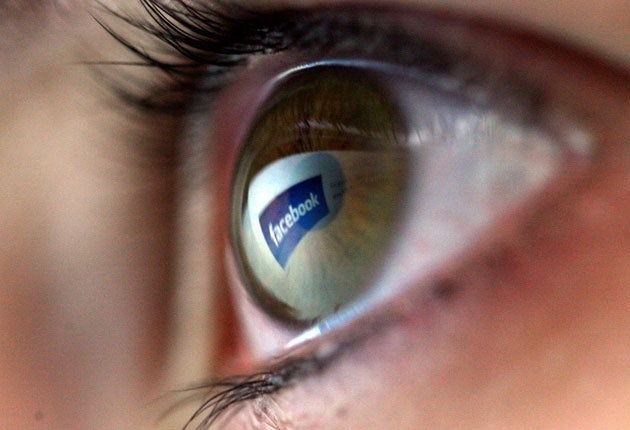
Anyone for a spot of Facebook bashing?
Thanks to questionable horror stories and half-baked research it is easy to believe that when Mark Zuckerberg sent his brainchild live in 2004, he unleashed a monster that has been wreaking havoc on society ever since.
For example, according to some unnamed American psychologists, over half of Facebook users now suffer Facebook Addiction Disorder, or FAD, characterised by withdrawal anxiety and wasted hours spent posting updates and poking friends. According to another survey, when they do get their fix, Facebook junkies risk destroying personal relationships.
Then there was the "Facebook cancer threat" – based on a review that's since been widely discredited. The NHS advised: "People who use social-networking sites should not be concerned."
As well as becoming the world's second-biggest website, Facebook has achieved the honour of becoming the most divisive presence in cyberspace. Millions couldn't live without it, others believe it is the devil's work.
No matter your view, it has over 500 million users who spend on average an hour a day scrutinising some of its 60 million daily updates and it has changed the way humans interact.
Until recently, the anthropological impact of Facebook had never been seriously studied. Consequently, scare stories abound and there has been little informed debate on the role it plays in society and few accurate predictions of how it may develop.
Earlier this year, Daniel Miller, Professor of anthropology at University College London, finalised a year-long study into the phenomenon which forms the basis of the book, Tales From Facebook. The research has been used to predict how the site will evolve and the evidence suggests that for Facebook, the future is grey.
Miller says: "We assume that Facebook is something we should associate with the young, but my evidence suggests that this is entirely mistaken.
If there is one obvious constituency for whom Facebook is absolutely the right technology, it is the elderly. It allows them to keep closely involved in the lives of people they care about when, for one reason or another, face-to-face contact becomes difficult... Its origins are with the young but the elderly are its future."
Previous research into Facebook tended to fall into the pop-psychology bracket or concentrated on specific subjects. One study by Ilana Gershon, of Indiana University, detailed Facebook's role in the structure of relationship breakdowns.
Miller's study was wide-ranging and followed the intimate Facebook habits of up to 200 people, logging the way they used the site and the impact it had on their wider relationships. He says: "It is the first anthropological study of Facebook and the first large-scale study of how it affects people. To really understand the impact of a phenomenon like Facebook you need to spend at least a year interacting with people and trying to see how it fits into the broader context of their lives.
"Facebook has become such an integral part of modern life that anthropologists have to take it seriously. It is impacting on the core thing we study, which is social relations."
He argues that Facebook is now so deeply entrenched in the routine of its users that if it were to disappear, it would cause serious problems.
For many, Facebook has become more than a web portal, he says. He defines it as a "meta-friend", a place where users log on to feel some form of engagement with a wider social life and where the relationship with the site is becoming less about the "friends" users have and more about their links to the site itself.
Rather than survey users in an established Western city such as London, Paris or New York, the study group was based in the Caribbean state of Trinidad and Tobago, a location that was chosen because traditionally Trinidadians have been shown to adopt new technology quickly and confidently without the "shock-of-the-new" reaction more traditional societies display in the face of change.
Miller also says Trinidadians are expert at adapting to new technology and are often ahead of the curve when it comes to finding new uses for it.
Also, taking Facebook users as a proportion of the total population with internet access, Trinidad has the second-highest Facebook penetration in the world after Panama.
The study overturns many myths, not least that the form of social contact promoted on the site devalues "authentic" friendships. Miller found that Facebook helped strengthen them.
The study also debunks the myth that Facebook is a home-wrecker. Inevitably, the site fuels the temptation for some people to contact former lovers or childhood sweethearts, in the main its transparent network structure means that it is difficult for users to keep secrets on Facebook. Evidence suggests Facebook actually reduces affairs.
Miller found that users were more wary of becoming involved in covert relationships because the chances of being exposed or found out by a Facebook friend were deemed too great. In fact, in relation to privacy, Facebook has had a redefining effect on the concept of public and private space. Although there are legitimate concerns about the degree to which Facebook has eroded personal privacy, on the whole, users are aware of the implications of giving themselves a public profile and judge that the benefits of being involved in the Facebook community outweigh the negatives of being excluded.
Miller says: "Facebook marks a radical change in the way we use the terms 'private' and 'public'. In the past 'private' meant talking to someone one-to-one and the public domain meant broadcasting out to an audience. What Facebook does is put all the private relationships into one place, which is neither private nor public."
As Facebook transforms our relationship with public and private, it also updates the notion of community, becoming a simulacrum of the neighbourhoods lost in the West over the past 50 years – a place where people can keep abreast of the lives of their online neighbours. It has facilitated the cultural shift described by social-network academic Barry Wellman as the change in perception from "spatially defined communities to relationally defined communities".
Miller argues that the Facebook-led community revival has also reacquainted users with the negative attributes of close-knit networks. "There are criticisms of modern life – that we have become too individualistic, too isolated and that because of this people are more likely to get lonely," he says.
"Politics says we are deprived of wider community so it's not surprising that when people have Facebook they are using it to get involved with people more widely.
"However, there is also a strong negative side. In the communities of the old days everyone knew each other's business and people lost privacy. Now, because Facebook allows for closer relationships, what comes with that inevitably is a similar loss of privacy and loss of personal autonomy."
So what will Facebook become? The evidence suggests it will evolve into a benign social facilitator. Its early promise as a mechanism for social change and political activism will, Miller says, remain largely unrealised because it is predominantly used on an intimate social level. Most of his study group showed no interest in activism and avoided political discussions on Facebook.
The real revolutions will occur on a small scale. An example is the way Facebook has affected how we mourn. Prior to Facebook, death was dealt with in a formal religious way. Facebook now allows an informal platform where users are not bound by convention and can leave varied and individual responses to a person's death.
As Miller says: "This is the kind of area where Facebook is very important and where it will develop. We will look for things which are missing or which do not fit in with modern sensibilities and use the site to fill in the gaps."
Join our commenting forum
Join thought-provoking conversations, follow other Independent readers and see their replies
Comments
Bookmark popover
Removed from bookmarks