You say you want a voice recognition revolution
Twitter influenced regime change in 2011, BBM was blamed for riots, but the big news was an app to let you to talk to your phone
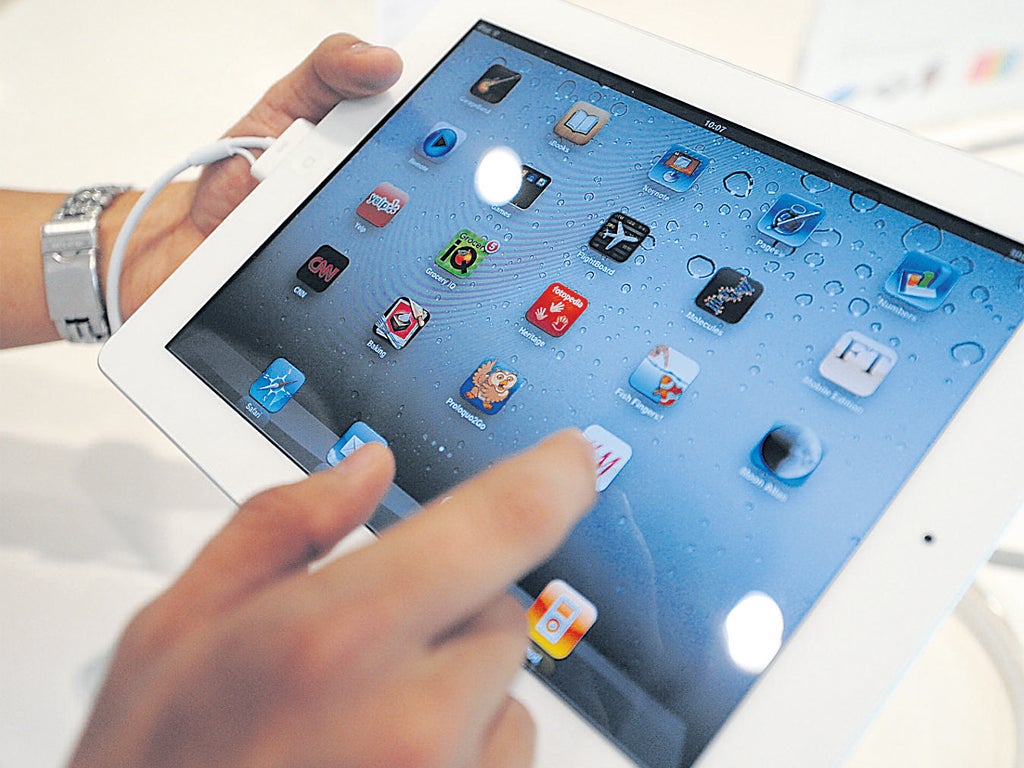
The petals are still fresh on the memorials for Steve Jobs but his empire lives on; no future phone, tablet or computer can be designed without his influence. However, that is not just because he was a pioneer of fantastic products. Apple has also distinguished itself this year by tying up hundreds of vague software ideas in patents and suing anyone it thinks infringes them, which is one of several reasons why all the big technology companies are locked in furious patent court battles with each other.
Brilliant products and ruthless business was always how the Cupertino giant worked and it has been incredibly successful with it. In summer 2011, Apple became the most valuable company in the world, sliding ahead of the oil giant Exxon. It turned in a cool quarterly profit of $7bn in July and at one stage held more cash assets than the US government did.
Sales of the iPad 2 and iPhone 4S raced ahead of predictions with shortages everywhere, and a piece of voice-recognition software called Siri, the distinguishing feature of the new iPhone, has received critical rave reviews.
In the wider world, technology showed it can disrupt politics and society just like it disrupted media and communications. The use of Twitter in Arab Spring revolutions took everyone by surprise, not least Twitter. Meanwhile Blackberry's instant messaging service, BBM, was blamed for allowing people to organise the looting sprees during the London Riots in August. From offline unrest to online troublemaking, it's been a disorderly year, with hacking hitting the headlines and arrests as Scotland Yard detained teenagers with alleged links to LulzSec and Anonymous.
Siri and natural user interfaces
It arrived late, and debuted just days before its maker died, but despite looking exactly the same as the old one and offering little more than a tarted-up camera and a faster chip under the shell, the iPhone 4S wowed the critics with a little voice recognition app called Siri.
Called a virtual assistant, it lets you control, dictate to and search your phone by just talking to it. Most endearing of all is its ability to answer questions instead of just pulling up web results. Eric Schmidt, Google's executive chairman, called Siri's intelligent question-answering one of the biggest threats to Google's search dominance. This app is both useful and a sign of greater things to come: it's an advanced natural user interface that is very intuitive to use. It also learns from you so gets better as you use it. Look out for the Siri-fication of other gadgets because these trends will shape computing significantly in the next decade.
The Twitter revolution
Hundreds of thousands of words have been expended on whether the uprisings known as the Arab Spring were Twitter revolutions or just revolutions. Twitter, Facebook and other, simpler kinds of online messaging certainly played a part in orchestrating the regime changes that have swept the Middle East in the past year. Nervous despots blocked the internet as a first line of the defence. An Egyptian couple named their daughter Facebook. It's certainly made everyone think about the power of online messaging.
Just as unpredictably, BBM, designed to help stockbrokers trade market information quickly and securely, was blamed for enabling the three days of violence and looting that spread across London in August. Prime Minister David Cameron's response was to threaten to take Blackberry messaging and other social networks down in the case of civil unrest, a move that would be unprecedented in Britain. The subsequent 'riots trials' meted out harsh punishments for online crimes as well as actual ones: in the most extreme instance, a 22-year-old man was sentenced to four years in jail for setting up a Facebook page called "The Warrington Riots".
Mobile, mobile, mobile
Maybe the August looting sprees helped bump these figures up but, however they got them, 43 per cent of Britons now have smartphones. Far fewer have tablets but both areas are growing fast.
The outlook isn't so good for the makers and sellers of normal computers; demand for laptops and desktops is flatlining in both the UK and the US as people buy only to replace old machines. This market saturation led to the astonishing announcement in the summer that the world's largest PC maker would stop making PCs; Hewlett Packard has since reneged, sort of, but the fear at the heart of the industry remains. People will still buy PCs but the days of easy sales are over.
Phones got faster and prettier as bigger chips and brighter screens worked their way into new handsets. Meanwhile, Microsoft tried to prove it could compete against iPhone and the Google Android phones by collaborating with Nokia, but we're still waiting to see if this slow-burn relationship will save either of these ageing tech giants.
Social networks
Facebook's spate of updates in September had users complaining of eye strain as its timeline split into a flickering hyperactive status update bar and a more static brand-and-page-focused central news feed. Openly aiming to become the hub of its users' online media consumption, Facebook has sucked in music content through a partnership with Spotify and news content through link-ups with news sites, such as that of The Independent.
The introduction of "automatic sharing" brings us a little closer to Mark Zuckerberg's ideal world; and means that when you listen to a song or click on a news article, Facebook will automatically tell everyone what you've done. The involuntary share feature has raised some feeble protests and people have also complained about the resulting torrent of extra information. However, you can opt-out and the 800 million people now on Facebook know it will take more than some dubious data juggling to wean them off a network that has all their friends and favourite photos on it.
Once again, Google tried to do social. With an invite-only beta period that got geeks in guestlist agony, Google + launched, got lots of people excited, then opened up to everyone and sort of fizzled out. Four months after the launch, people have stopped pointing out that nobody is doing anything on there. It may resurrect itself but, for the meantime, it looks like another dud in Google's long list of attempts to understand how people interact with each other.
Twitter has gone from strength to strength despite, or perhaps because of, ditching its original founding team in the early part of the year, and its celebrity factor works strongly in its favour.
Gadgets
On the gadget side, we've had a variety of tablets, large and small, ones with 3D screens and ones with detachable keyboards, most based on Android, although none as popular as the iPad.
Lady Gaga brought us sunglasses that take photographs and Japanese company Sharp made a dreamily pretty, ultra-high def TV, at 26 times the resolution of a standard high definition. TV makers still want you to buy 3D TVs and white good makers are still set on putting computer chips into the dishwasher.
Health gadgets are a big growth area as sensors get cheap and care systems inch online. Little gadgets the size of a wristwatch can measure heart rate, movement and even blood sugar, then wire all the information off to a doctor in graph form. It's not just the medical profession that is interested; health fanatics who like graphs about themselves are keen on this stuff, such as Jawbone's Up wristband, which measures calorie expenditure and the quality of your sleep.
The innovation, and the money, seem to be in making and selling software and apps, whether that is successful games like Angry Birds or retro camera filters like Instagram.
The legal clampdown
2011 was also the year when the law got to grips with technology, or at least started trying to. It's not just indiscreet Facebookers that have felt the cold hand of justice, it's the companies behind the internet too; Google was slapped with a privacy lawsuit curtailing its Streetview photography in Germany, and in the UK, internet provider BT has been forced to block websites that allow file-sharing.
Tech companies have tangled themselves in lawsuits of their own accord by suing each other in complicated patent infringement claims. Samsung and Apple, in particular, are locked in bitter legal battles in Australia, Germany, the US and South Korea. Whether or not the patent lockdown will stifle innovation as insiders claim, it's certainly costing them in legal fees.
Finally, far outside the law and probably stuck in a suburban bedroom listening to death metal, are the hackers. 2011 was the year the hackers made the headlines. Long-running collective Anonymous took on much more high-profile targets than ever before and an oddly moral tone, emerging as a sort of erratic global political movement. Short-lived offshoot LulzSec wreaked havoc across Sony PlayStation Network online and News International sites. It also hacked Britain's Serious Organised Crime Agency before packing up as two teenagers were arrested and charged in connection with the attack. Why they do it is up for debate but it's likely to keep coming.
Top tech tips for 2012
Machine learning
The smartest machines might be programmed to learn, rather than just to do. In a shift towards machine learning, it's not just about how much it "knows" but how quickly and easily it can learn and apply its knowledge. This is the philosophy that IBM scientists have applied to behind Watson, the latest supercomputer, and at a simpler level to iPhone app Siri.
Maps
Apple has been buying up mapping companies including Swedish start-up C3, which produces high-res 3D images. Expect the next flashy Apple software reveal to be some kind of exciting map. Where the Kinect and Siri led in natural user interfaces, expect a lot more to follow. Moving away from the mouse and the keyboard and interacting with computers should just get easier as developers work on more and more intuitive ways to interact with computers. Expect computers controlled by gesture, the sound of your voice, or even just a tweak of your eyebrow.
Web video
Online video has so far been just TV stuck on the computer, but projects like Mozilla Popcorn are making videos more connected and interactive. Popcorn opens video timecode, letting you slip in links to web content. It embeds links and web content in the video, letting the viewer make choices and pull in things outside the video into the frame.
China
Gadgets won't just be made in China, they'll start to be made for China as the country booms and demand for consumer goods explodes. Expect the further rise of Chinese brands and a new focus on energy-efficient, affordable handsets as handset makers target growing markets in developing countries.
Join our commenting forum
Join thought-provoking conversations, follow other Independent readers and see their replies
Comments
Bookmark popover
Removed from bookmarks