Nintendo: Still a lot to play for?
After announcing its first public loss, is this game over for the console giant - or will its new Wii come to the rescue?
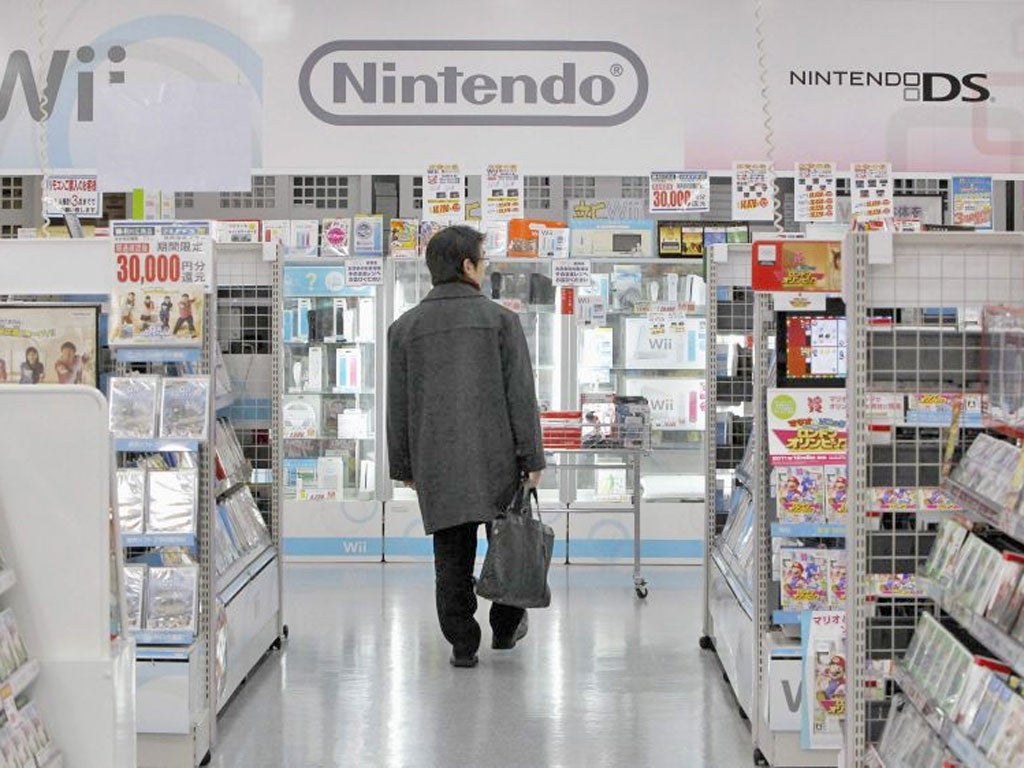
In every Super Mario Bros game, a key task for the titular Italian plumber has been to collect coins. Get a 100 and you get another chance after you die. Unfortunately, in real life, coins aren't just hanging in the air above gormless Koopa Troopas. But that's not stopped Nintendo coining it in in the past.
From the Nintendo Entertainment System in the 1980s, to the living room-bashing release of the Wii in 2006, the firm, which started out as playing card company in Kyoto in 1889, has made billions from selling software, hardware and even cuddly Mario merchandise.
But yesterday, the firm announced that, for the first time since the company went public in 1962, it had made a loss of £329m, compared to a 2011 profit of £591m.
The reasons are myriad, but include the fact that sales of the Wii have slowed down while its latest handheld device, the innovative 3DS performed poorly. Nintendo even reduced its price by 40 per cent in an attempt to revive sales.
Does that mean the day has come for gaming's most famous company?
Most likely not, but Nintendo finds itself stuck between two markets. A decade ago it walked away from hardcore gaming after its GameCube was bullied out by the Xbox and PlayStations. It did so to focus on casual gamers – those who play occasionally rather than daily, like, says Jeff Ryan, author of Super Mario: How Nintendo Conquered America, they would with "a board game".
The problem, Ryan explains , is that, not long after the Wii redefined family gaming, the rise of smartphones brought casual gaming to everyone's pocket. "All of a sudden," says Ryan, "anyone who had a mobile device could play. Nintendo always made money because you needed to buy their hardware at 40 bucks a game. If you're looking at the smartphone games you can find a 50p game and it may not be as good as a Nintendo game, but is [Nintendo's] really 40 times better?"
Dave Neal, a reporter for technology news site The Inquirer agrees that the 3DS, which was released in the UK last spring, is going to find the handheld gaming market tough to thrive in. "I can remember queuing up in Dixons to play a Game Boy," says Neal, "but with titles like Angry Birds and Draw Something available for free, it's hard to find a reason to buy and carry around separate hardware, regardless of whether it has Mario Kart on it."
But despite a troubled year financially – 2011 saw Nintendo's stock price plummet – Nintendo still has two aces up its sleeve.
The first is a new Wii console. The Wii U features HD output and a tablet-like controller with its own touchscreen that will allow users to take their games on the move. It's a departure from other mainstream gaming consoles and one that might, like the Wii did in 2006, give Nintendo a real jab in the arm.
But will those busy with Angry Birds buy it? "In America it's rumoured to be $350 at least," warns Jeff Ryan, "the Wii originally launched at $250 and Nintendo was making the better part of $100 profit on that from day one."
"It will have to come bursting out of a box with a lot of fireworks if it is going to make an impact," says Neal.
Nintendo's other golden bullet is its most valuable asset: its software. Decades after his debut, Mario remains a great sell. And the popularity of games like Mario Kart and Mario Galaxy ensure that hardware sales stay steady.
"They always have a 'break glass in case of emergency' option," suggests Ryan, "they could always make games for other consoles. If they started to make Zelda games for the PS3 and Mario games for the Xbox that would keep them in business for the next 30 years."
Sega, Nintendo's rival in the 1990s gaming boom, took a similar approach after the failure of their Dreamcast machine and still operates as a software firm. For the planet's largest console maker to make that move would be both unlikely, drastic and for many, a tragedy.
But maybe that's what they said when they stopped making playing cards and focused on computer games.
Bookmark popover
Removed from bookmarks