Privacy implications have Google running scared
Take a photograph, press search, and Google's new technology could put a name and biography to the face - had the search engine not blocked it
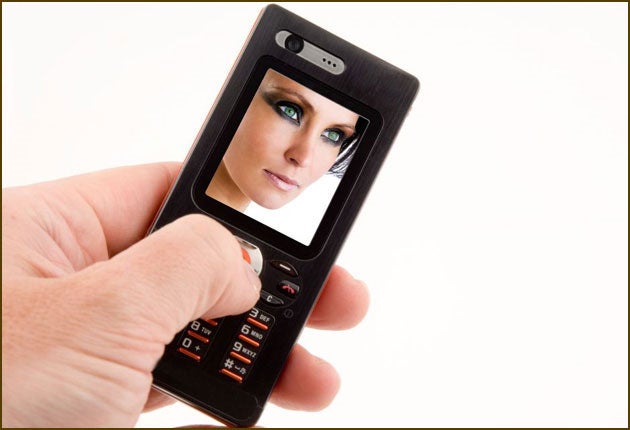
An internet service launched last week by Google to help cameraphone users to identify strangers in the street has been blocked because of alarm over its threat to personal privacy.
The new service, called Goggles, is a picture search which uses images rather than words to trawl the web . By taking a picture of an object and clicking "search", owners of smartphones can recognise landmarks, identify a species of plant or animal, or obtain tasting notes for a bottle of wine.
Users focus their phone's camera on the object, and Google compares elements of that picture against its database of images. When it finds a match, it provides the name of the object pictured and a list of results linking through to the relevant web pages and news stories. Goggles is claimed to be able to recognise tens of millions of objects and places and is growing all the time.
But the most controversial aspect of the new visual search tool is its capacity to allow users to take a photo of a stranger to find out more about them. With millions of people having an online presence, complete with photos, on websites such as Facebook, it is possible to use the search tool to identify people, obtain contact information, and learn about their tastes in music, their friends and their background.
Google has now confirmed that it is blocking this use of Goggles until the implications have been fully explored. Marissa Mayer, the vice-president of Google's search product and user experience, said: "We are blocking out people's faces if people try to use Google Goggles to search for information about them. Until we understand the implications of the facial-recognition tool we have decided to make sure we block out people's faces. We need to really understand how this tool affects people's privacy and we cannot change that decision until we do."
Angela Sasse, professor of computer science at University College London, who is researching public perceptions of privacy, said Goggles created unease because it left people with fewer hiding places. "People manage their relationships by selective disclosure," she said. "Only people with certain mental-health conditions disclose everything all the time. These systems [such as Goggles] lose that. You might go somewhere on the assumption that you won't be recognised. But if people find out who you are they can see where you have been. We have seen this problem on Facebook where people have uploaded pictures from a party forgetting that their bosses can see them too." She added people were prepared to accept risks attached to new technology, including a loss of privacy, provided they could see the benefits. But some developments got the thumbs down. When Facebook started broadcasting what people were buying, there was a backlash as the public judged the intrusion as a step too far.
Professor Sasse said Goggles could potentially be used as a marketing tool. When surveillance cameras identified the face of someone who regularly passed by, the business might send them details of a special offer. "People tend to have a strong reaction to that," she said. "But you could have an opt out so people could choose whether the system would be allowed to recognise them or blocked from doing so."
Google has said it has the technology to recognise faces as well as millions of other objects but admitted the service is limited. Sceptics say existing face-recognition programmes are still basic and the capacity to discriminate different faces restricted.
Professor Sasse added: "There does seem to be a certain threshold of accuracy for face recognition that has not yet been reached. At present, you need a full-face shot. The scary thing is that the next generation [of software] will be able to use a large number of images snapped from different angles so this technology is going to get more accurate."
If Goggles proves successful, it would mark a breakthrough in the use of the mobile internet. It has a database of more than 1 billion images and can recognise landmarks, CD covers, logos, barcodes, books, shop fronts and business cards. It is less good at identifying the natural world, but that is expected to improve with time. It is available on phones run by Google's mobile-operating system Android, and later introduced to other smartphones
Vic Gundotra, Google's vice-president of engineering, said: "Google Goggles works well on certain types of objects. It is our goal to be able to identify any image. We want to work on the issues of user opt-in and control. We have the technology to do the underlying face recognition, but we decided to delay that until safeguards are in place."
Privacy: Google's track record
*Google has been criticised before for ignoring privacy concerns. The human rights watchdog, Privacy International, rated the company "hostile to privacy", the lowest rating awarded out of 20 companies assessed. It said every corporate announcement from Google had "some new practice involving surveillance". It also said Google was leading a "race to the bottom" among internet firms, many of which did little to protect their users. Google's Streetview, which provides a panoramic view of every street, has been criticised on similar grounds. Privacy advocates say Streetview has shown men leaving strip clubs, protesters at an abortion clinic and sunbathers in bikinis. Google allows users to flag inappropriate or sensitive imagery for the company to review and remove.
Join our commenting forum
Join thought-provoking conversations, follow other Independent readers and see their replies
Comments
Bookmark popover
Removed from bookmarks