Is depression actually good for you?
Experts now believe that mild to moderate depression may be good for us – and even help us live longer. Rebecca Hardy explains how to reap the benefits
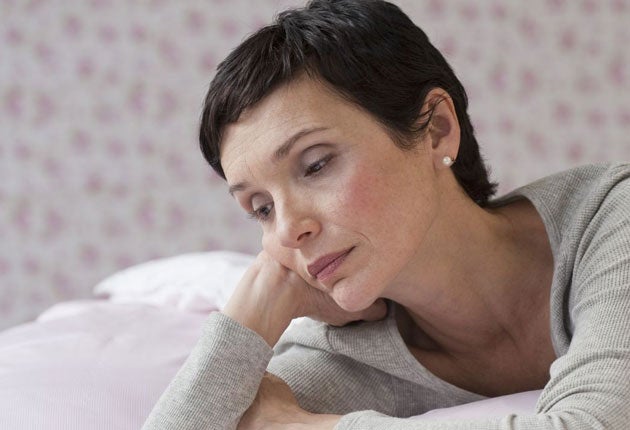
We constantly hear how depression is blighting our lives, but some experts have an interesting, if controversial, theory: depression can be "good for us", or at least a force for good in our lives.
To anyone in the grip of depression, which can vary from mild to severe, this may sound absurd – offensive even. Clinical depression – a very different animal to "unhappiness" or "feeling low" – is a disabling, frightening illness that can ruin people's lives and shake them to their core, but experts say that, for some people at least, there can be benefits.
"If you have depression, which, by definition, is a paralysis of motivation, it will be hard to see any positive outcome," says Marjorie Wallace, founder and chief executive of SANE, who had depression herself. "But I believe that people who go through it come out stronger. It can act as a catalyst to survival because you have looked over the precipice and seen the abyss."
This may sound like wishful thinking, but the argument has been aired before: two years ago Professor Jerome Wakefield from New York University caused a stir when he argued in his book The Loss of Sadness: How Psychiatry Transformed Normal Sorrow Into Depressive Illness that if we embrace depression it can motivate us to change our lives for the better, helping us to learn from our mistakes and appreciate what we want. There is also research: one Dutch study suggested that people seemed to cope better with life's trials after depression, with improved averaged ratings of vitality, psychological health, social and leisure activities, occupational performance and general health. Meanwhile, a 2002 study from Duke University found that women who had had depression were more likely to live longer, fuelling speculation that the mildly depressed might learn to cope better and avoid harmful situations.
Other experts cautiously agree: "Depression can end in suicide, so it is not to be taken lightly," says Bridget O'Connell from Mind, "but many people say it helps them evaluate what is important. There is often a sense of 'I know I can survive', which gives self-belief and resilience." This can act as a wake-up call, encouraging people to change stressful patterns or situations. "They may find a job with shorter hours, or they may move in or out of cities."
According to Dr Paul Keedwell, a pyschiatrist and expert in mood disorders at Cardiff University, depression can do this by "taking off the optimistic sheen". In his book How Sadness Survived he argues that this has an evolutionary basis, as depression can benefit us by "putting the brakes on" and removing us from situations that cause chronic stress. "Though depression is horrible and no one would choose to go through it, it can help us be more realistic. And because it's so painful, we dig deeper and find out how not to go through it again." Antidepressants can help, adds Keedwell, "but if you carry on doing the same thing you did to get depressed, these antidepressants aren't going to work."
Tamra Mercieca, a performance coach and author of The Upside of Down, is one person who, after having suffered with depression all her life, which led to repeat suicide attempts, decided to make big life changes. These included stopping working shift work ("one of the major causes of depression"), seeing a life coach (to work through the negative thinking) and daily exercise (to boost endorphins). She also had weekly acupuncture and laughter clinics and made sure she was eating healthily and doing what she loved (in her case, writing and drumming).
She now says she feels thankful for her depression. "In overcoming the illness, I gained skills that have helped for other obstacles. I had negative beliefs I needed to work through: I was a perfectionist and nothing I did was good enough, but now I have a very positive relationship with myself. Depression has helped me to help others. Seeing how effective neuro linguistic programming, time-line therapy and therapeutic hypnosis were in my recovery, I am now a performance coach, helping people overcome depression."
According to Wallace, many people who have experienced depression go on to be more empathetic. "It can also make them more aware of other dimensions to their lives which are not so reliant on everyday measures of failure and success."
Others, however, feel there are dangers in presenting depression in this way. Journalist Linda Jones, who regularly blogs on mental health (in Breaking the Silence), and has experienced depression herself ("a debilitating agony"), thinks that people may think it applies to everyone with depression "and that people with depression need to be more resilient, which plays into a stereotype that to suffer from depression you may be weak in the first place. I'm not and nor are millions of others, we have just been ill. Depression hasn't made my life better, it has made it worse. I am resilient, hardworking and focused anyway. When someone tells me this makes my life better, I question if they understand the depths I have fallen to."
Says Wallace: "Not everyone can feel any benefit from depression. It can depend on the length and severity, or some people may not respond to treatment. But there are others for whom it has been a turning point."
O'Connell agrees that we need to be careful in interpreting the research. "Some people self-report that they feel better after depression, but after a bad episode they are bound to say that in comparison to how low they felt during the illness." There is also the recurrence rate, which can be as high as 75 per cent for people who have had severe depression in the psychiatric service, but in general is much lower than that. "People may feel better for a while and then have another bout."
What all experts agree on is that getting good support is crucial to recovery: "The most important thing for recovery and future resilience is the support of family and friends," says O'Connell. And for anyone struggling with a loved one who is depressed? "Keep the communication open so they feel they can talk, but try to get support yourself as it is distressing watching someone you love struggle. There is a positive side, however. Most people do recover, most don't have recurrent episodes, and, anecdotally, many people say they emerge more resilient and able to take control of their lives."
Join our commenting forum
Join thought-provoking conversations, follow other Independent readers and see their replies
Comments