Life after death: Donating your body for research
It can help doctors improve the quality of life for millions. So why don't more of us do it? Anna-May Nagle reports on the cadaver conundrum
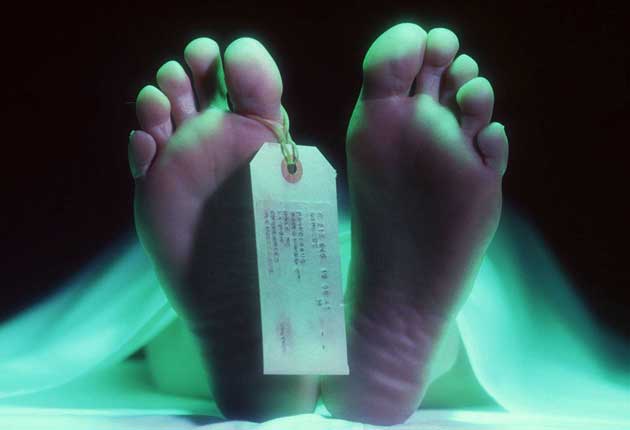
It's not just high street banks that are running dry. Britain's brain banks are perilously low on supplies, according to a report last month from UK research scientists. More donors are urgently needed if the causes of, and new treatments for, neurological diseases including dementia, autism and Alzheimer's are to be found.
Healthy brains are needed, not just those with disorders, to discover cures for brain-related diseases. Dr Payam Rezaie of the Neuropathology Research Laboratory at the Open University describes the current situation as "dire" and says that thousands more brains are needed to support research.
Tomas Revesz, Professor of Neuropathology at University College, London, says: "The brain is so complex that there is no ideal simulated alternative for essential research into neuro-degenerative diseases. And, unlike other organs, the brain cannot be fully investigated when a patient is alive without the potential for fatal damage."
For most of us, giving blood is as altruistic as we get in medical terms, but donating your brain or even your entire body to medicine is much appreciated by the UK medical community.
I know this because my two daughters, Molly and Martha, are second-year undergraduates at medical school. They have both said that they have learnt a great deal more from their dead "patients" than the live ones. They regularly practise their anatomy skills on cadavers (dead human bodies) and – with no sense of irony – say that these sessions bring their subject "to life". They joke that being a cadaver is the only sure way of getting into medical school as the application system becomes more demanding.
Martha describes her first experience in the anatomy laboratory, which took place in the second week of her first year, and the gratitude she felt. "Anticipation of the smells worried me most," she says. "It turned out to be no worse than the chemistry labs in school. You forget about yourself very quickly once you are in there. I was awestruck that the person lying there had donated themselves so I could learn."
Molly recalls her first anatomy class, also in the early weeks of training: "Several of us excused ourselves because we felt faint or nauseous. The teacher was very understanding and thought we were reacting to the atmosphere in the lab and the sight of our first cadaver. Truth was that the previous night had been the close of rag week. We'd had one helluva party and most of us had almighty hangovers."
Rag week antics give rise to one of the biggest myths about abuse of cadavers. Tales abound that bodies are made up, dressed up and toted round to pubs, clubs and parties. Professor Anthony Firth, head of anatomy at Imperial College, London, rubbishes these suggestions. ''I've never come across a student treating a cadaver with anything but respect. We would expel any student who used a body inappropriately, and they'd also be liable to prosecution." Martha agrees that no medical student would ever attempt to move a body for non-legitimate reasons: "It would be a shocking breach of trust. Besides, anatomy areas are very secure and under constant supervision."
My husband claims he wants a Viking longboat funeral. The arrangements would be left to me should I survive him, and as we live in the shadow of Wembley Stadium, fulfilling his final request would be a challenge too far. Inspired by my daughters' accounts of the value of body donors to their training, I thought I might "surprise" their dad by ditching the longboat idea and donating his body to medical research. But no can do. Only mature donors able to make informed decisions about their own bodies would be considered. Under the rules of the Human Tissue Act 2004, donors must offer themselves by completing a detailed form, which requires both their signature and that of at least one other responsible witness.
The first point of contact for anyone interested in body donation is the Human Tissue Authority, which refers potential donors to regional centres who handle permission forms and receive bodies after death. Arrangements for potential brain donors differ, and the nearest brain bank should be first point of enquiry.
Generally, only bodies that are outside the normal range for weight or height would be rejected. Sufferers of notifiable diseases, such as CJD, viral hepatitis or HIV, make unsuitable donors because they pose a health risk to morticians, anatomists and students.
Currently, about 600 people each year in the UK choose to donate. Bodies are never sent overseas. Most cadavers are used in teaching hospitals, but some will be also be welcomed by biomedical research organisations or institutions for anthropological investigation and, very rarely, by licensed art colleges.
Donors must be aged at least 17, although in practice they are rarely under 25 and most are much older. Equal numbers of men and women donate, but certain cultures and faiths do not permit donation, including Orthodox Jews. A representative from the Jewish Joint Burial Society explains: "Orthodox Jews believe their body is sacred and therefore must be buried intact in the form it was created."
Body donations are always a gift. Professor Firth of Imperial College states firmly that "any payment would be illegal", although medical schools will arrange and meet the eventual cost of cremations, which are always individual and carried out with dignity. Perhaps the credit crunch might result in a rise in donations in order to save on funeral costs.
Body donation is voluntary. Ghoulish tales abound of grave-robbing and the use of prisoners and unclaimed bodies for medical experimentation. Professor Firth says: "Historically, yes, these things happened. However, bodies of executed criminals have not been used in the UK for a couple of centuries and unclaimed bodies ceased to be used after the First World War."
Louise Evans is anatomy donations co-ordinator for the London and South East Committee of Anatomists. She organises an annual ecumenical service of thanksgiving for donors, where family and friends of the deceased meet students and anatomists. She says: "It's a very moving service that reflects the deep appreciation of the medical community for the gift they have received from these individuals." My daughter Martha adds: "We treat our cadavers with total respect. It borders on reverence. I would urge people to consider donating. Their generosity will save lives."
Human Tissue Authority: 020-7211 3400; www.hta.gov.uk
Join our commenting forum
Join thought-provoking conversations, follow other Independent readers and see their replies
Comments