Rethinking mental disorders
Is promiscuity an illness? What about childhood tantrums? As psychiatrists set out to redraw definitions of mental disorder, controversy is inevitable. By Claire Prentice
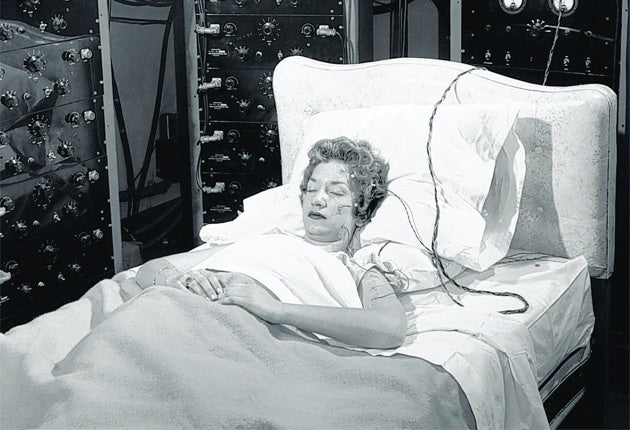
Where exactly does the difference lie between extreme human behaviour and a psychiatric illness? The question is being asked because as a US encyclopaedia of psychiatry is rewritten for the first time in more than a decade, controversy is already raging about what goes into it, and what gets thrown out.
Critics say that the revised edition of the Diagnostic and Statistical Manual of Mental Disorders (or DSM, as it is commonly known) will lead to an explosion of healthy Americans being prescribed powerful drugs. Patients' rights groups are angry that it will lead to more people being stigmatised as mentally ill. "The conditions that we grew up thinking were in the normal spectrum of human behaviour – sadness, disappointment, anger – are now considered a psychiatric or psychological disorder. It has become part of a national epidemic," said Alex Beam, a newspaper columnist and author of Gracefully Insane, a book about the history of McLean psychiatric hospital in Massachusetts.
The controversy over the DSM, which is published by the American Psychiatric Association (APA), shows just how political mental illness has become in America. And with good reason. At stake is not just the mental health of a nation, but also billions of dollars for insurance companies, doctors, researchers and pharmaceutical companies. The most serious claim made by critics is that psychiatrists are increasingly churning out new syndromes at the behest of their funders in the pharmaceutical industry.
The claim is rejected by the APA, which insists that those with a vested interest, such as drug and insurance companies, have no influence on the process. The DSM is arguably the most influential mental health publication on the planet. It is used by doctors, psychiatrists, nurses, researchers and insurers all over the world.
First published in 1952, it is at the heart of mental health research, planning, policy and treatment in the US. The definitions included in the new edition – the first complete revision since 1994 – will determine who gets diagnosed as mentally ill, who receives powerful drugs, who is confined to a psychiatric institution instead of being imprisoned, and if and how much insurance companies will pay for treatment. DSM diagnoses are routinely used in US court cases, employment background checks and child-custody cases. Pharmaceutical companies also use the manual as a guide to which psychiatric conditions exist, and for which they can develop drugs.
Proposed additions to this, the fifth edition of the manual, include: "hypersexual disorder" for those experiencing severe problems with sexual fantasies, urges or behaviours; "temper dysregulation with dysphoria", which refers to children throwing acute temper tantrums; and "psychosis risk syndrome", a condition attributed to eccentric or marginalised teenagers. In the past, the DSM has been mocked for proposing to include conditions such as nicotine addiction, road rage and pre-menstrual tension.
Dr William Narrow, research director of the task force working on the new edition, DSM-V, says it will lead to more effective treatment of the mentally ill. He said, "The revisions will help mental health professionals to make more accurate and consistent diagnoses."
Critics include Dr Allen Frances, the editor of the previous edition of the manual, who described the new proposals as "reckless". In an editorial in Psychiatric Times, Dr Frances described the proposals as "a wholesale imperial medicalisation of normality that will trivialise mental disorder and lead to a deluge of unneeded medication treatment – a bonanza for the pharmaceutical industry but at a huge cost to the new false-positive 'patients' caught in the excessively wide DSM-V net.''
Even small changes in wording can have serious implications. If requirements for diagnosis are too stringent, some who need help will be left out. If they are too loose, healthy people will receive unnecessary, expensive and possibly harmful treatment. Dr Frances describes how his panel inadvertently contributed to three "false epidemics": attention deficit disorder, autism and childhood bipolar disorder. He says: "We felt comfortable that our relatively modest proposals wouldn't cause problems, but evidence shows that our definitions were too broad and captured many 'patients' who might have been far better off never entering the mental health system."
The DSM contains a detailed listing of every psychiatric disorder recognised by the US healthcare system and defines how each is to be diagnosed. Its most recent edition, the 943-page DSM-IV, lists more than 300 separate disorders. The proposed revisions are the result of more than a decade of work by hundreds of experts across the US.
Some observers say that the ever-widening DSM net, along with the routine advertisement on American television and in glossy magazines of powerful drugs to treat conditions such as attention deficit disorder and schizophrenia, help to promote a widespread belief that many rare disorders are more commonplace than they are. "There has been a real push back against the DSM this time around," says Beam. "People think a lot of these pills that are paid for by government or insurance companies aren't necessary. There's a flood of soft money for drugs. We're awash in drug money for these nebulous syndromes."
Many healthcare professionals say there have not been sufficient advances in research to merit an entirely new edition. Dost Öngür, clinical director of the psychiatric disorders division at McLean Hospital, says, "We could have lived another five or seven years without a new edition." He describes the growing numbers of people diagnosed as mentally ill as part of a wider "sociological trend".
Controversially, the editors of the new edition propose creating a new, all-encompassing category which they dub "autism spectrum disorder". High-functioning people with Asperger's disorder argue that they should not be in the same category as those with severe autism who cannot carry out basic day-to-day tasks such as dressing themselves. And the category dealing with eating disorders is likely to be expanded.
Critics say the new definition of "binge eating disorder" as one eating binge per week for three months would apply to most Americans. But the new binge eating category has been welcomed by some specialists in the field, who said the expanded definition should lead to better diagnosis of the condition, more research and more treatments being covered by insurance companies.
The proposed changes have been posted on the internet, at dsm5.org, so that members of the public can comment during the public consultation period, which lasts until 20 April. In May, field trials begin and are to last for 10 months. Then we will find out which way madness lies.
Join our commenting forum
Join thought-provoking conversations, follow other Independent readers and see their replies
Comments
Bookmark popover
Removed from bookmarks