Want to live longer? Carry on laughing
A good chuckle doesn't just cheer us up. Doctors are discovering that it can ease pain and even help fight disease. Go on, have a giggle, says Roger Dobson
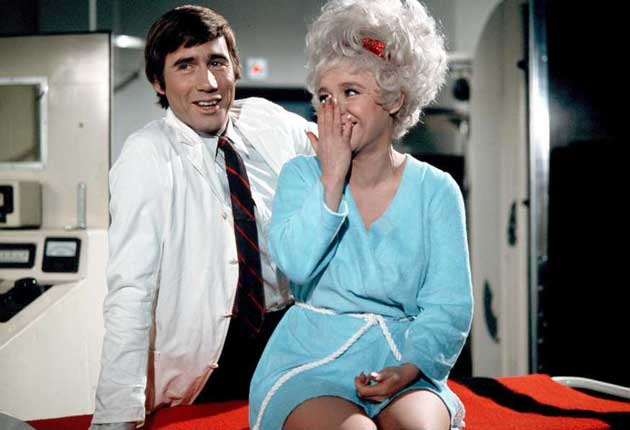
Laughing at Charlie Chaplin can be a serious business. Chortling at a funny film may seem to be an activity with few consequences for health, but research shows that it does more than exercise the 20 or so face muscles involved in laughing. When researchers showed a group of mothers with babies diagnosed with eczema, Chaplin's Hard Times or a weather documentary, those who laughed at the funny film had higher levels of melatonin in their breast milk. And when their babies were fed the melatonin-rich milk, they had fewer allergic reactions.
"Our results show that laughter of mothers may be helpful in the treatment of infants with eczema," say the doctors at the Moriguchi-Keijinkai Hospital in Japan, who carried out the study.
The study is among the latest research to show that laughter, humour and happiness play a key role in good health and longevity, and can positively affect diseases and conditions as diverse as high blood pressure, flu, heart disease, arthritis and diabetes. As NHS nurses start attending laughter workshops to encourage them to lighten up and make hospital stays a more pleasant experience for patients, research is increasingly showing the value of laughter and humour.
The concept that laughter is good for you is also being used in therapy to improve quality of life, provide some pain relief, encourage relaxation, and reduce stress. Some centres now provide some kind of humour therapy – one in five National Cancer Institute treatment centres in the US offer it – and it can involve watching films, listening to tapes, reading books or attending humour workshops. It can also be combined with exercises, such as yoga.
But can it do more than ease stress and act as a distraction? Can laughter actually affects the progression of illness, boost the immune system, and reduce symptoms of diseases such as rheumatoid arthritis?
It has long been accepted that low mood, including depression, can have a negative effect on physical health. Patients who are depressed at the time of heart bypass surgery, for example, are more than twice as likely to die during the following five years. Stress chemicals triggered by being made redundant or getting divorced can also double the likelihood of death from heart disease or stroke.
Now research is showing that laughter and humour can have a positive effect on health and longevity. Just how is not clear, but studies are throwing up some clues. Happiness and laughter have been shown to increase natural killer cell activity in blood and free radical-scavenging capacity in saliva, as well as lowering levels of the stress hormone cortisol. It is also thought that laughter causes the release of special neurotransmitter substances in the brain, endorphins, that help control pain. And there are more direct physical effects of laughter, including increased breathing, more oxygen use, and higher heart rate.
Some research suggests that laughter can boost the immune system. When researchers at Japan's Osaka University Graduate School of Medicine showed a 75-minute funny film to a group of men and women, they found that that blood levels of natural killer cells activity increased by 26.5 per cent.
Happiness also boosts the immune system. A study at Birmingham University found a link between higher levels of antibodies to flu and being in a happy marriage. Those with the highest marital satisfaction had the higher antibody responses to a flu vaccine after four weeks. A second study the University of North Carolina shows happiness in a marriage was linked to lower blood pressure, and fewer stress hormones.
A study from the Foundation for Advancement of International Science, also in Japan, showed that laughter seems to lower levels of a protein involved in the progression of diabetic nephropathy, a kidney disease that occurs as a result of diabetes and which is the leading cause of kidney failure. Levels dropped substantially and immediately after watching a comedy show. "The beneficial effects of laughter on preventing the exacerbation of diabetic nephropathy are strongly suggested," say the researchers.
But one of the most important findings on the effects of laughter is its impact on inflammation, which plays a key role in a wide range of diseases, from arthritis to cancer, and which is a component of many age-related chronic diseases that often cause disability. Research reported in the Oxford University Press medical journal, Rheumatology, showed that blood levels of key inflammatory compounds dropped considerably after patients with rheumatoid arthritis watched a humorous film.
The researchers recorded amounts of what they call "mirthful laughter" and found that levels of interleukin 6, a cytokine that plays a central role in inflammation, dropped significantly in the arthritis patients, but not in a healthy comparison group. The anti-inflammatory effects have also been shown to last for 12 or more hours after the laughter has subsided.
Pain can be eased by laughter too. When researchers at the University of California exposed children aged between seven and 16 to a pain experiment, where they put their hands into very cold water, those who watched a funny video and laughed were able to tolerate more pain.
While the mechanisms involved in the effects of laughter on immune and other body systems are poorly understood, some effects have more straightforward explanations. Laughter is thought to trigger changes in breathing patterns that may have a therapeutic effect for patients with chronic lung disease. In some of the latest research at University Hospital Basel in Switzerland, doctors have been testing the idea that laughter can reduce hyperinflation in patients with chronic obstructive pulmonary disease, which has been estimated to effect up to 900,000 people in the UK. Results show that humour therapy reduced hyperinflation in patients who have severe COPD.
Dieters, too, may be unlikely beneficiaries of the direct physical effects of laughter. Researchers at Meharry Medical College, Nashville, have gone to some lengths to calculate the energy expended in a laugh. With the help of four funny film clips, a calorimeter, a heart rate monitor, and digitised audio data for counting the number of laughs, they worked out that the energy loss from laughter was the equivalent of from 0.79-1.30 kJ/min (0.19-0.31 kcal/min). "Genuine voiced laughter causes a 10 to 20 per cent increase in energy use and heart rate," they say.
That means, it's suggested, that 15 minutes of jollity a day – or half an episode of Only fools and Horses – could be enough to laugh away the effects of a small chocolate bar.
Join our commenting forum
Join thought-provoking conversations, follow other Independent readers and see their replies
Comments