What the web is teaching our brains
Spending hours on the net isn't only changing the way we work, shop and socialise. A leading neurologist says it is subtly re-wiring the way we think and behave – often for the better. By Anastasia Stephens
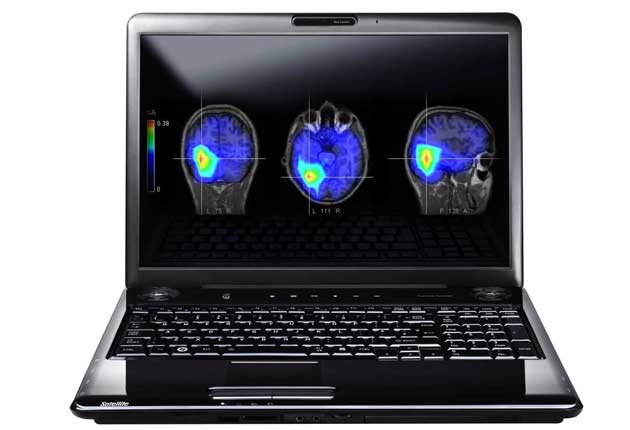
Most of us in the developed world now have relationships with computers – and access to information and entertainment – that we could not have dreamt about even a decade or so ago. We spend our days sifting emails and browsing the internet, then relax by tweeting or networking online and playing computer games, sometimes all at the same time.
All this, according to Dr Gary Small of UCLA, is changing us. Dr Small, one of America's leading neurologists, has written a book, iBrain – Surviving the Technological Alteration of the Modern Mind, that describes what he believes is the profound impact of new technology on our brains and behaviour. His research indicates that internet use and web-browsing has a marked effect on our brains, which, he argues, are much more changeable than most of us think, especially in the case of young people.
Repeated daily actions such as web research and browsing direct the growth of neurons and connections within the brain, affecting thinking and behaviour. While the internet enhances our brain function in some ways – his study found it boosted decision-making and complex reasoning in older people – it can also lead to memory loss. Some research suggests there may be links between excessive computer use and conditions such as attention deficit disorder, depression and anxiety in younger people.
But the news is not all bad. Research at UCLA has revealed that just one hour of internet use per day can measurably boost brain function.
"As our brain is plastic and remoulds itself in accordance to our daily activities, prolonged computer use can have a profound effect on the way we think, feel and behave," says Professor Small. "We can learn to react more quickly to visual stimuli and improve many forms of attention. We develop a better ability to sift through large amounts of information rapidly and decide what's important and what isn't. In this way, we adapt to cope with the massive amounts of information appearing and disappearing on our mental screens from moment to moment."
However, some researchers fear prolonged computer use could damage social skills. A Stanford University study found that for every hour we spend on our computers, traditional face-to-face interaction time with other people drops by almost 30 minutes. With less face-to-face contact and body language, we may begin to misinterpret others. Our human relationships may suffer, with areas in the prefrontal cortex which respond to facial expression becoming less developed. Decision-making may suffer, too.
"Qualitatively, high-speed decisions are not the same as the type of decision that you slowly contemplate and make over time," says Professor Small. More pondered decision-making has "a depth that speedy thinking cannot grasp".
Benefiting most from computers and technology is all about balance: "It's common sense. You should aim to balance internet time with real social time as much as you can. If you work all day at a computer, make sure you mix with real people in the evening, rather than using social-networking sites on the internet or playing computer games."
And "If you never use computers, then start," Professor Small recommends. "As we found, even an hour a day can vastly improve your information processing skills, even in people aged 55 to 60."
Internet research
What it does: Boosts the ability to integrate and process information as well as enhancing decision-making skills.
Using rapid spurts of directed concentration for internet research enhances our ability to focus our attention, analyse information and make instant decisions. Assessing these skills, Professor Pam Briggs at Northumbria University found web surfers spent two seconds or less on any particular website before moving on to the next. She found they sifted information accurately, despite operating at high speed, stopping only at sites that contained relevant information.
These "high-speed" research skills can be learnt at any age and actively enhance brain function. Professor Gary Small compared the brains of middle-aged people who rarely use the internet to those of experienced internet users, as they conducted web searches for an hour each day.
With the inexperienced users, "After five days, areas of the prefrontal cortex that control our ability to make decisions and integrate complex information had become markedly more active," says Professor Small. "These areas were fairly inactive at the beginning of our experiment. But after five days they were as active as regular internet users. This indicates that brain function can change and improve with internet use quickly, even when you are older."
General browsing
What it does: Encourages the use of continuous partial attention and multi-tasking, which can impair cognition and cause irritability
Hopping from one subject to the next on the web without a specific goal can both be both stimulating and engaging – but also stressful and may lead to "computer fatigue".
"When people browse the web, they often enter a state of continuous partial attention," says Professor Small.
"In this, a person might be simultaneously clicking on websites, replying to an email, or speaking on the phone. This enhances multi-tasking skills, but the problem is that the brain enters a heightened state of stress.
"As a result, many people who have been working on the internet for several hours report making mistakes and feeling fatigued, irritable and spaced-out. Over time, we know that continual exposure to stress hormones can impair cognition and alter neural circuitry in brain regions that control mood and thought," he explains.
To counteract all this, Professor Small recommends taking regular breaks away from the screen. Looking at people who are suffering from such computer fatigue, researchers at Harvard University found that a quick 20-30 minute nap had the effect of improving computer performance significantly.
Playing computer games
What it does: May improve multi-tasking skills, memory and peripheral vision. Can lead to antisocial behaviour.
Previous research has convincingly shown that excessive use of computer games can cause stress, and even lead to violence, by causing adrenalin surges. It has also been shown that in young people it can impair the development of the frontal lobe, which is the part of the brain that usually inhibits anti-social behaviour.
But not all games are equal, and the news is not all bad. Looking at volunteers who played computer games for eight hours a week, neuroscientist Paul Kearney at Unitec, New Zealand, found that multi-tasking skills were enhanced two-and-a half times.
Meanwhile research at Rochester University in the US found that video-game playing, which requires an overall awareness of the video screen, can improve peripheral vision. "Computer games exercise a range of neurological functions, such as performing goal-oriented tasks, using spatial awareness and engaging reflex reactions," explains Professor Small. "Played regularly, all these functions are likely to improve."
Specialised computer games, such as Nintendo's Brain Age and Brain Fitness Program, have been specifically designed to enhance memory and cognition. Doctors nowadays recommend memory-boosting exercises such as these as a way of staving off age-related diseases such as Alzheimer's.
Building a blog or website
What it does: Building a blog or your own website improves frontal lobe function, reasoning and memory.
"As you learn to build a site or blog, brain areas that are needed for making logical connections as well as medium to longer-term functional memory are challenged and enhanced," explains Professor Small.
"Your memory is improved by learning and remembering how to construct a site or blog ,and will be enhanced the more you actually use and update your site," he adds. To keep these brain functions active, add to your skill levels by learning new web-building functions and updating your site.
Sorting email
What it does: Boosts information-processing functions in the brain's frontal lobe. Can also cause stress.
"By sorting through email on a daily basis we develop a better ability to sift through large amounts of information rapidly and decide what's important and what isn't," says Professor Small. "In this way, we are able to cope with massive amounts of information appearing and disappearing on our mental screens from moment to moment." While this helps with information processing, we are also at risk of email burnout – a state of stress triggered by feeling overloaded. "This is similar to computer fatigue and can be prevented by taking regular breaks," says Professor Small.
Using emoticons
What it does: Exercises brain centres linked to emotion and social connection; particularly beneficial to those who use computers for long periods.
Using abbreviations or smiley faces in email correspondence has been found to stimulate the gyrus – the same area of the brain that is activated by one-to-one emotional contact. "Neuroscientists at Tokyo Denki University, Japan, discovered that when volunteers viewed emoticons during an MRI scan, their right inferior frontal gyrus was activated," says Professor Small.
"This area is linked to emotional contact rather than reasoned or rational thinking." Sending and receiving emoticons, he says, is important as it can, perhaps rather ironically, help to offset feelings of isolation that can be caused by excessive computer use. Using emoticons may also help to keep areas of the brain that need emotional connection active and healthy.
Tweeting and chatrooms
What it does: Enhances peripheral attention, helps to boost self-esteem and protects the hippocampus.
Using virtual chatrooms, tweets or instant messaging to keep up with friends, virtual friends and virtual lovers keeps us feeling connected, which in turn bolsters self-esteem.
"Neuro-imaging studies suggest that this sense of self-worth may protect the size of the hippocampus, an area of the brain which allows us to learn and remember new information," says Professor Small."However at some point the sense of control and self-worth generated through virtual relationships breaks down.
"Firstly, internet relationships seem intimate but they are not, and people can suddenly cut you off. Also our brains are not built to maintain connections for extended periods via computers."
The key to maintaining true connection and self-esteem, he says, is balance. "Be careful not to use virtual relationships as a substitute for real-life experiences. Aim to maintain a balance by ensuring you have enough 'real-person time' away from the computer."
Join our commenting forum
Join thought-provoking conversations, follow other Independent readers and see their replies
Comments
Bookmark popover
Removed from bookmarks