Cocaine abuse doubles in four years
Record numbers of young people seek help to give up their addiction to the drug
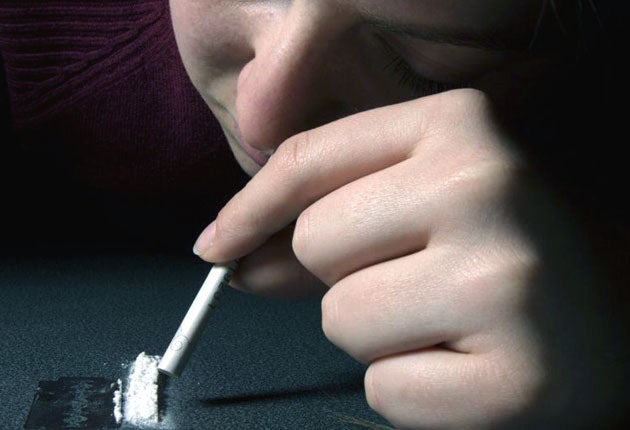
The number of young people seeking help for cocaine abuse has almost doubled in four years, with the drug increasingly being seen as part of everyday life.
From 2005 to 2009 the number of under-25s who sought help to get off cocaine rose from 1,591 to 2,998 after recognising how dependent on it they had become. The rise in cocaine use came despite a significant fall in heroin and crack addiction identified by data from the NHS's National Treatment Agency for Substance Misuse (NTA).
Paul Hayes, the NTA chief executive, said the country may have "passed the high-water mark" for heroin addiction and hailed it as the end of the "Trainspotting generation".
However, he said the rise in cocaine use was a worrying trend that presented a "significant challenge", especially as it was "becoming more normal" among younger pub and club goers to take the drug alongside alcohol.
"Most of the increase in powder cocaine use is as part of a lifestyle rather than necessarily the consequences of the problems associated with poverty, crime and social dislocation," he said.
"What seems to be happening is that for people who engage in normal late adolescence, early-20s night-clubbing, pub-going, cocaine use is becoming more normal among that population. It's become an adjunct to alcohol or cannabis use."
But he was heartened that a "dramatic generational shift" was being seen with heroin use, with young adults more willing to get treatment before their problems became virtually insurmountable. "Young people are very savvy," he said. "They have seen the consequences of using heroin for earlier generations. It's no longer seen as having any glamour attachment to it at all. Problem drug use associated with heroin and crack appears to be declining among 18- to 24-year-olds coming into treatment. This means we may have passed the high-water mark for heroin addiction in this country.
"Treatment is the first step on the road to recovery, and while there are increasing numbers of the older Trainspotting generation still entering treatment, more are also coming out the other side, free of their dependency."
Dr Ken Checinski, of the drug information and advice service Frank, said: "Cocaine isn't a safe party drug – it's addictive, cut with all sorts of chemicals, and when used over several hours, or in large doses, increases blood pressure, body temperature and pulse rate."
Norman Lamb, the Liberal Democrat health spokesman, said: "The sharp increase in the number of young people taking cocaine is a serious cause for concern. "This Government has been obsessed with trying to look tough on drugs while failing to deal effectively with the drug-taking culture in this country."
A record 207,580 adults were being treated for drug addiction in 2008-09, the majority being white British males.
The NTA said 191,695 (92 per cent) of these were in treatment for 12 weeks or more, the minimum time thought to be needed for users to gain at least some of the support and skills which might eventually free them from drugs.
Heroin and crack accounted for 83 per cent of cases (172,624) in which adults were receiving treatment in 2008-09 while cocaine accounted for 6 per cent of cases (12,354) and cannabis also accounted for 6 per cent (13,431).
There are an estimated 330,000 heroin and crack users in England.
Martin Barnes, chief executive of DrugScope, said he was encouraged that fewer young people were becoming involved with heroin but, with the recession likely to increase unemployment and poverty, added that it could be "premature" to say numbers had peaked.
City high-flyer: 'It gave me the same high as closing a big deal'
Neill Junor, a former City equities analyst, was among those driven to rock bottom by a mix of cocaine and alcohol before he managed to give up the drug.
His marriage had ended, he had lost a £1m-a-year career and he was on the verge of killing himself before he could bring his six-year binge to an end.
"I'd go to dinner parties where the host was chopping up a big line of coke on the cheese board," he told Bloomberg. "Cocaine is London's middle-class dirty secret."
He found the will to confront and beat the drug after finding himself wandering through Richmond Park trying to decide which tree to hang himself from.
He said he had "burned through everything" he had touched but the realisation of just how low he had sunk enabled him to find a way back. "I knew there was a choice – and the choice was to hang from that tree or not," he said.
Mr Junor now runs a chicken farm in Dorset and has remarried and has a daughter. He said the attraction of cocaine was that it provided leisure-time highs to match those provided by his work in the City.
"It's the same rush from doing a deal and doing cocaine," Mr Junor said. "The adulation from doing a deal spills into going for a beer and then a party – it's an amorphous blob of energy."
Brendan Quinn, the chief executive and a specialist nurse in recovery treatment at The Causeway Retreat, said: "More and more people are coming in, putting their hands up and saying: 'I've got a problem and I need help'."
Join our commenting forum
Join thought-provoking conversations, follow other Independent readers and see their replies
Comments