Created by genetic engineering, a mosquito that can't catch malaria
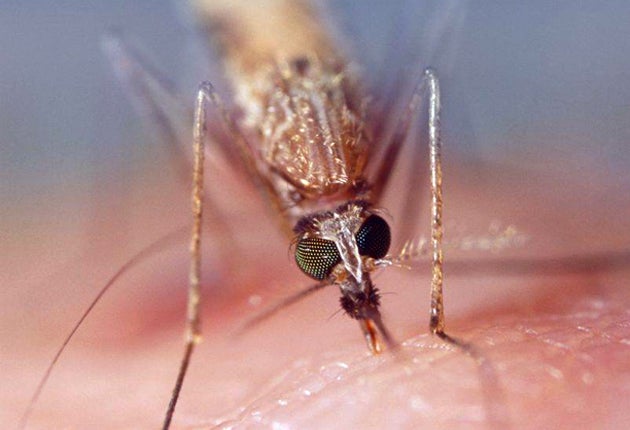
A novel weapon in the battle against malaria has been developed by scientists: the malaria-proof mosquito.
Researchers at the University of Arizona have created a genetically modified insect that is incapable of transmitting the disease to humans.
The advance could lead to the release of modified mosquitoes into malarial regions of the world to prevent the transmission of one of the world's biggest killers.
Malaria infects an estimated 250 million people a year and causes nearly a million deaths, mostly among children under five.
Michael Riehle, an entomologist who led the research said: "We were surprised how well this works. We were just hoping to see some effect on the mosquitoes' growth rate, lifespan or their susceptibility to the parasite, but it was great to see that our construct blocked the infection process completely."
The development potentially provides a new method of tackling the disease. Most efforts rely on controlling mosquitoes by spraying insecticide and using bed nets, or on treating victims with anti-malarial drugs.
Not all mosquitoes transmit malaria – only the female anopheles, of which there are about 25 species. They feed on blood and each time they bite an infected human or animal they ingest malaria parasites. These later migrate to the salivary glands and the disease is passed on in the next bite.
To break this life cycle, the Arizona scientists inserted a gene to enhance the action of the enzyme Akt which is involved in the mosquito's growth rate and immune function. The aim was to ramp up Akt function to help the insect's immune system fight off the malaria parasite, and to cut its lifespan, because mosquitoes only become capable of transmitting malaria towards the end of their lives.
"In the wild, a mosquito lives for an average of two weeks. Only the oldest mosquitoes are able to transmit the parasite," Dr Riehle said. "If we can reduce their lifespan, we can reduce the number of infections."
Studies showed that modified mosquitoes carrying two copies of the altered gene had lost their ability to transmit malaria altogether. However, to be effective in the battle to control malaria, the modified mosquitoes must be given an advantage over natural populations of the insects so that they can compete with and, over time, displace them. At present they exist only in high security laboratories with no chance of escape.
Dr Riehle said this was the hardest task. "It is going to be the most difficult to realise," he said, which is why it had been left to last.
Chris Drakeley, director of the Malaria Centre at the London School for Hygiene and Tropical Medicine, said: "Advances of this kind are very welcome because they help us understand the biology of the disease. But they are still a long way from helping with control. To do that they have to test if the fitter mosquito can drive out the existing ones. And then they would face ethical and community acceptance challenges – if you tell people you plan to introduce a new mosquito they are liable to respond 'not in my village'.
"It is still early days [for the malaria-proof mosquito]. We are considerably more advanced with the development of malaria vaccines. But we will need a variety of tools in the toolbox to tackle the disease everywhere – from urban India to the African savannah."
Join our commenting forum
Join thought-provoking conversations, follow other Independent readers and see their replies
Comments
Bookmark popover
Removed from bookmarks