Do the dangers of codeine outweigh the benefits?
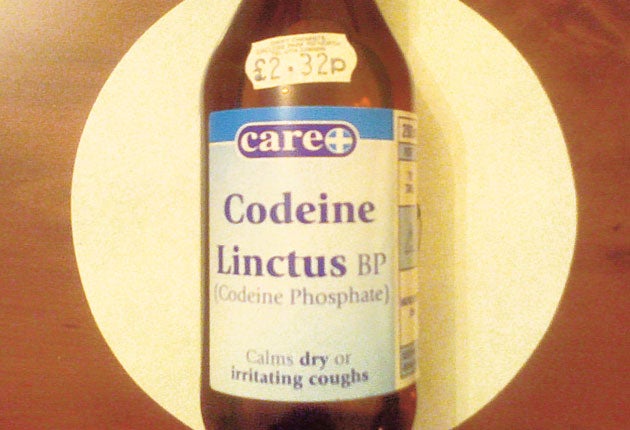
Scientists have raised serious concerns about the widespread use of one of the world's most common painkillers after studies showing that codeine may be unsafe, ineffective and potentially addictive for the millions of people who take it regularly.
The Government's independent watchdog on the safety of medicines has withdrawn codeine-containing cough mixtures for children after hard-hitting criticism by two Canadian experts suggesting that the drug should be phased out in painkillers meant for either children or adults.
The Medicines and Healthcare products Regulatory Agency (MHRA) issued its warning about cough medicines containing codeine after receiving fresh advice from its committee of independent experts on the Commission on Human Medicines. The Independent has learnt that the commission had advance notice of a forthcoming editorial in a Canadian medical journal denouncing the widespread use of codeine in painkillers, especially for children.
Some 27 million packs of codeine-containing painkillers are sold over the counter each year in Britain, with a further 20 million prescriptions being issued to people suffering from severe pain resulting from chronic conditions such as arthritis and migraine. Some estimates suggest as many as 30,000 people may be addicted to the drug.
Growing concern about codeine, which has been used as a painkiller for about 200 years, has emerged from recent DNA studies showing that people with different genetic make-ups respond very differently to the opiod drug, which is inactive until it is broken down inside the body into highly addictive morphine.
The variability of people's response to painkillers containing codeine, combined with its potentially addictive nature when taken regularly, led Professor Noni MacDonald of Dalhousie University in Halifax, Nova Scotia, and Professor Stuart MacLeod of the University of British Columbia in Vancouver, to ask whether the time has come to phase out the drug completely.
In an explosive editorial published in the current issue of the journal of the Canadian Medical Association, MacDonald and MacLeod said that the public perception of codeine as a safe drug is fostered by its widespread availability in many over-the-counter painkillers, sold in Britain as well-known brands such as Nurofen Plus, Solpadine Max and Panadol Ultra as well as generic products.
"However, recent advances in our understanding of pharmacogenetics raise serious concerns about the safety of codeine, including emerging evidence that the narcotic can cause death even at conventional doses. Has the time come to phase out codeine altogether?" they asked.
Scientists have already identified some genetic factors that significantly affect the rate at which codeine is broken down into morphine by the liver. These genetic factors vary within the general population, making the response to codeine highly unpredictable from one person to the next, MacDonald and MacLeod said. "All of these genetic variations can have potentially serious clinical consequences. The wrong combination can result in toxic levels of morphine, even at conventional doses of codeine. For infants and young children in particular, this can be deadly because age appears to be a key factor in susceptibility to adverse effects of morphine," they said.
"Clearly, pre-testing all patients for genetic variants before recommending codeine would be expensive and impractical. A more logical solution might be to restrict access to codeine for infants and young children, the apparent highest risk group," they added.
On 4 October, the day that the editorial was published by the Canadian Medical Association, the MHRA wrote to medical authorities in the UK warning that its experts have advised that all over-the-counter liquid cough medicines containing codeine should no longer be used in children under the age of 18, following fresh advice from its independent committee of experts.
The MHRA said its review of liquid cough medicines containing codeine had found there were serious safety concerns due to differences in the way codeine was metabolised into morphine, as well as little evidence the cough medicines actually worked. "Overall, the risks of [over-the-counter] cough medicines for children containing codeine outweigh the possible benefits," the MHRA said.
The agency added that any generic cough medicines containing Codeine Linctus should now be banned for use by children under the age of 18. Branded products included in the ban on children's cough medicines are named as Pulmo Bailly, Galcodine Linctus and Galcodine Paediatric Linctus, the agency said.
The MHRA refused to comment on the reasons behind the ban and did not allow The Independent to interview the scientists on the Commission for Human Medicines who decided to issue the new advice. However, it is understood that some of the scientists on the Commission were made aware of the scathing editorial written by MacDonald and MacLeod, who are both eminent paediatricians of world repute.
The two scientists said that a more direct approach to codeine is now needed by banning its use altogether and turning to the administration of morphine – at least in hospitals – which is the active ingredient of codeine and is easier to control the appropriate dose as a painkiller.
Stephen Tomlin, a consultant pharmacist at the Evelina Children's Hospital at Guy's and St Thomas' NHS Foundation Trust in London, said the variable nature of codeine's effectiveness has been known about in children for years and there are grounds for reviewing its wider use as a painkiller.
Sheila Kelly, chief executive of the Proprietary Association of Great Britain, which represents manufacturers of over-the-counter medicines, said: "There has already been a long, drawn-out discussion of codeine. If its value as a pain reliever had not outweighed the risks then it would have been withdrawn and the point is that codeine still has a value as a pain reliever."
Join our commenting forum
Join thought-provoking conversations, follow other Independent readers and see their replies
Comments