Doctors call for total NHS ban on homoeopathy
BMA conference tables seven motions against public funding of 200-year-old 'unscientific' practice
Doctors will this week call for a total ban on all homoeopathic treatment on the NHS.
Hundreds of delegates to the British Medical Association's conference are expected to support seven motions all opposed to the use of public money to pay for remedies which they claim are, at best, scientifically unproven and, at worst, ineffective.
Critics of the 200-year-old practice also want junior doctors to be exempt from working at homoeopathic hospitals because it goes against the principles of evidence-based medicine. Sugar pills and placebos have no place in a modern health service, they say, especially as the NHS must find £20bn in savings over the next few years.
But supporters claim homoeopathy helps thousands of patients with chronic conditions such as ME, asthma, migraine and depression who have not responded to conventional medical treatments. The British Homoeopathic Association (BHA) points out that less than 0.01 per cent of the massive NHS drug bill is spent on homoeopathic tinctures and pills.
Nevertheless, the conference will also hear calls for homoeopathic remedies to be banned from chemists unless they are clearly labelled as placebos rather than medicines. The over-the-counter market is worth around £40m a year, and rising, according to Mintel, the consumer research organisation.
The increasingly vocal dissent follows a report from MPs on the influential science and technology select committee earlier this year, which also urged the NHS to cease funding homoeopathic treatments due to a clear absence of scientific proof about its efficacy. The MPs criticised current licensing and labelling regulations which "lend a spurious medical legitimacy" to homoeopathic products which are no more than sugar pills.
But supporters of homoeopathy are passionate and are unlikely to take this lying down.
David Tredinnick, the Tory MP and outspoken supporter of complementary therapies, tabled an early day motion last week calling on the Government to reject calls for a centrally driven ban and instead allow local services and clinicians to continue making decisions. A protest will take place outside the BMA conference in Brighton on Tuesday.
Homoeopathy works on the principle of "like cures like", so patients are treated with diluted substances that would cause the same symptoms in a healthy person. More than 55,000 NHS patients are seen through four homoeopathic hospitals every year, while thousands more are treated by dually trained GPs. This costs the NHS an estimated £10m, a tiny fraction of the overall £80bn health budget. But this is too much for some.
Dr Gordon Lehany, a psychiatrist and chair of the BMA's Scottish junior doctors committee, who has proposed one of the motions calling for the ban, said it was wrong to spend even a few million pounds of public money on useless homoeopathic treatments when new cancer drugs were being rejected on the grounds of cost. He said: "We're not saying homoeopathy shouldn't happen, just that it should not be funded on the NHS. While placebos can work, they are not medicines, there is no active ingredient, and so if people want to access these expensive sugar tablets, they have to find the money themselves."
Cristal Sumner, the BHA's chief executive, said: "While we are in the grip of new financial austerity measures, the BMA is launching an attack on a field of treatment that helps thousands of people in a cost-effective way. Patients have been able to access homoeopathy on the NHS since its inception. It is an important treatment choice for both patients and doctors."
The patient: 'It saved my life. Isn't that worth something?'
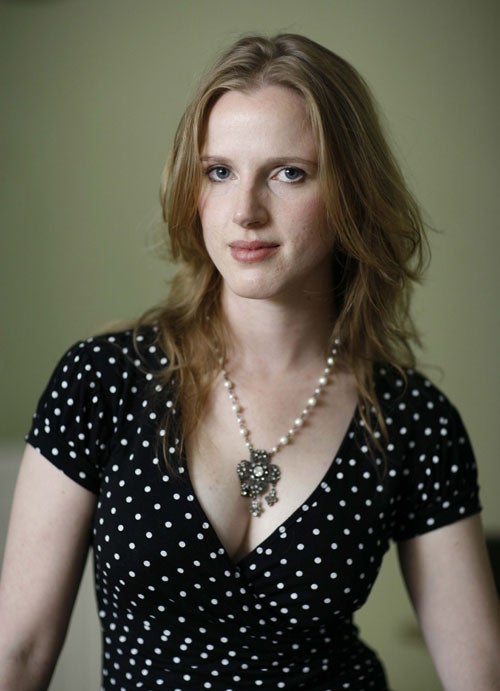
Helen Llewelyn, 31, from Haringey, north London, suffered from chronic physical pain and depression as a result of endometriosis which conventional medicine, including surgery, failed to help. She was referred to the Royal London Homoeopathic hospital in 2007.
"My homoeopathic treatment includes two medicines for physical pain and one for my mental state. I saw a homoeopathist three times and it worked. I come from a very scientific background; I'm certainly not someone drawn naturally to homoeopathy. I didn't think the medicines would work but they did. I thought anti-depressants would work but they didn't. So I don't put a lot of merit on the placebo argument. To say that funding for homoeopathy on the NHS is a waste is extremely short-sighted. It will save thousands on useless medicines. More importantly, it saved my life. Isn't that worth something? I would still be clinically depressed otherwise. It made me much more productive in society."
Pavan Amara
Join our commenting forum
Join thought-provoking conversations, follow other Independent readers and see their replies
Comments