Official warning: Measles 'endemic' in Britain
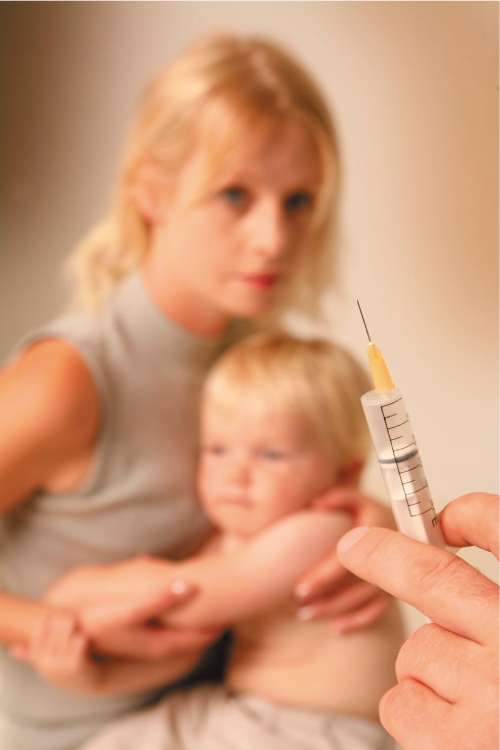
Measles has become endemic in Britain, 14 years after its spread was halted in the resident population, the country's public health watchdog says.
The Health Protection Agency (HPA) warned that the number of unvaccinated children was now large enough to sustain the "continuous spread" of the potentially lethal virus in the community. It blamed a failure by parents over the past 10 years to give their children the measles, mumps and rubella (MMR) vaccine.
This has resulted in vaccine rates falling below the level necessary to prevent the disease becoming established in the general population.
Figures published yesterday show cases of measles in London reached a new peak last month, exceeding last year's monthly record set in August 2007, and are continuing to rise.
There were 95 cases confirmed in the capital and 35 in the rest of England and Wales bringing the total for the year to 461. A 17-year-old victim from West Yorkshire died from the disease in the first fatality since 2006. In another case a doctor working in a hospital cancer ward contracted measles prompting the Department of Health to write to all hospitals telling them to ensure that all staff working with vulnerable patients have documented immunity to the disease.
Measles causes fever, and can have serious complications including pneumonia and encephalitis (swelling of the brain). Fifty years ago the illness killed 500 children a year in the UK but vaccination almost eliminated the disease. Last month's death was only the second in more than a decade.
The HPA, which published the latest figures in its weekly report, said the rise in measles cases in London was linked to an outbreak at a secondary school which had spread to neighbouring schools and nurseries in the capital. It was also the source of clusters in Cornwall and South Yorkshire.
The report said: "Due to almost 10 years of sub-optimal MMR vaccination coverage across the UK, the number of children susceptible to measles is now sufficient to support the continuous spread of measles.
"Health services should exploit all possible opportunities to offer MMR vaccine to children of any age who have not received two doses. Greater awareness of the increasing measles incidence by health professionals and the public is essential to control the spread of infection."
Elizabeth Miller, head of immunisation at the HPA, said: "In 1994 we interrupted the spread of measles in the UK so that it ceased to be endemic. Since that time the only cases we have had have been as a result of importation and spread from those imported cases. Now we have reached a point where there are a sufficient number of susceptible [unvaccinated] children in the population to sustain spread of the disease. We are concerned there may be a return to pre-1994 levels where there was sustained spread. It is quite disturbing."
Vaccination rates against MMR vary widely across the country and are especially low in London. In the last quarter of 2007, the rate stood at 71 per cent for children at age two (first dose) and 50 per cent at age five (second dose) compared with the 95 per cent coverage needed to maintain herd immunity and prevent endemic spread.
Nationally, vaccination rates against MMR fell from 92 per cent a decade ago to 79 per cent in 2004, at the height of the scare over the vaccine's supposed link with autism. They have since recovered to 84 per cent at age two (75 per cent at age five) but are still well below the target level of 95 per cent.
Professor Miller said: "Vaccination rates are on the increase but we have the problem of the legacy of the unvaccinated children over the past six or seven years. People do need to realise that measles is a highly infectious disease and if your child is not vaccinated and exposed to the virus there is a high probability that it will find susceptible children."
Measles was the single most lethal infectious agent in the world until a vaccine was developed in 1963. In the early 1960s, the disease claimed six million lives yearly in the developing world with about 135 million cases. Today the global death toll has been cut to below 350,000 and the World Health Organisation believes it may be possible to eliminate the disease.
In the UK, cases fluctuated between 160,000 and 800,000 during the 1950s and 1960s, with an epidemic every two years, until the measles vaccine was launched in 1970. In 1987, the year before it was superseded by the triple MMR jab, there were 86,000 cases of measles. Vaccination rates against MMR rose to 92 per cent in the early 1990s and the annual number of measles cases fell. But confidence in the vaccine was dashed by publication of a paper in The Lancet in 1998 by Andrew Wakefield and colleagues from the Royal Free Hospital, linking the jab with autism.
Controversy over the link continued for eight years but is now widely accepted to be without substance. Dr Wakefield and two of his former colleagues have been charged with serious professional misconduct over their research in a case before the General Medical Council which is expected to conclude later this year.
Measles, which is accompanied by a rash, is one of the most infectious diseases known and is spread through direct contact or through droplets in the air when an infected person coughs or sneezes. It is most infectious before the rash appears.
About 90 per cent of people who have not been vaccinated, or have not had measles, catch the disease if they live in the same house as someone with it.
Join our commenting forum
Join thought-provoking conversations, follow other Independent readers and see their replies
Comments
Bookmark popover
Removed from bookmarks