The man who gave away his kidney to a total stranger
Altruistic organ donation has risen by 50 per cent in the past year. Jeremy Laurance asks one donor what made him go through such a process
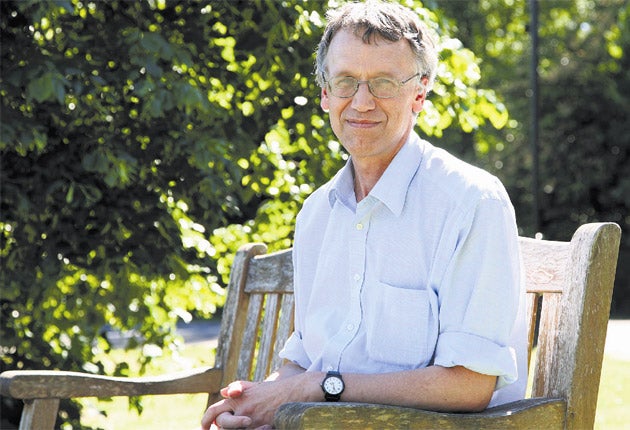
There can be few more potent symbols of the new caring age in which we are supposed to be living, post-credit crunch, than that of the man who voluntarily gave up one of his organs so that a perfect stranger might live.
Paul Vandenbosch, a father of four aged 54, donated a kidney to a woman whom he did not know and has never met to save her from kidney failure, spare her the ordeal of dialysis and help to restore her to health and a normal life.
As an act of generosity, it would be difficult to beat. Donating blood is a generous act, but this is of a different order. It involves a significant amount of pain and a lot of disruption – preparing for the operation and recovering from it. Nor is it without risk, though this is probably lower than most people think. It is altruism of the purest kind.
Yet altruistic kidney donation – to a person with whom the donor has no connection – has leapt 50 per cent in the past year, according to latest figures from the Human Tissue Authority, published yesterday.
The numbers are still small – 10 in 2007-8 rising to 15 last year – but the practice was only approved in 2007, and the upward trend is unmistakeable. This is good news for the 8,000 people currently on the waiting list for a transplant, fewer than half of whom will receive a replacement organ this year because of the shortage of donors.
It was his first-hand awareness of the devastating impact of kidney disease that started Dr Vandenbosch, a GP in Surrey, thinking about becoming a living donor. As a junior doctor in the 1970s, his first job was on a renal ward – an experience that has never left him – and he has cared for many kidney patients in his practice since. "The turning point came when I asked a man my own age about the impact a transplant had made. 'It's like winning the lottery' he said, before adding, 'No, it's better than that because no amount of money could have made me feel well again.' "
Once he started to think about, the feeling that he should go ahead grew. "It is difficult to say why the feeling became so strong. When you try to do beneficial actions you think about your own situation. I am fit and healthy, prosperous, with a supportive family. I am very conscious of my own good fortune. That is probably part of the motivation."
Although he is a church-goer, he describes himself as a "not very active member" and says it was not so much his religious belief as secular considerations about the good that he could do that led him to his decision. "There are lots of questions surrounding charitable donations, even about giving money to charities such as Oxfam, which I do, over how the money is used. People argue that it may not be very effective. But it is very difficult to argue that giving your kidney is not beneficial. Someone can potentially get an enormous benefit from your donation, against a small risk."
His medical training helped him judge the risks. "As well as being more aware of the impact of kidney disease I was also in a good position to assess how hazardous it was. Or particularly how hazardous it wasn't. I looked into this with some care and found the chances of coming to grief over a year from any other cause were considerably greater than from the operation. I think people have an exaggerated idea of the risk. If people were able to assess it and to anticipate how much pain and disruption was involved they might be more willing to donate."
His wife and family backed his decision without being particularly enthusiastic. "They were supportive, they felt it was in character. No one said I was mad," he said.
He admits the pain was significant – "I was quite sore" – but he recovered quickly, was out of hospital in three days and back at work in a couple of weeks. Four months after the operation – in April last year – he went on a cycling holiday with no other sign or symptom of the operation than the scar.
The most difficult part was the time required to go through the necessary assessments – physical and psychiatric. "Going up to the hospital, being checked over – that was the bit that bugged me most. Especially the psychiatric assessment. Someone may have a bizarre disorder like body dysmorphism [excessive concern with a physical defect] which means they should be shunted away but I felt it was a bit intrusive. My brother-in-law recently started riding a large motorbike and he didn't have to undergo a psychiatric assessment, though his wife might have thought it appropriate."
Most organs for transplants are taken from people who have died but every year more and more people agree to donate organs while they are alive. The number of living kidney donors rose to 927 last year and they now account for more than one in three of all kidney transplants. The vast majority involve donations from relatives and, to a lesser extent, from friends. There are also "paired donations" where a couple who are unable to donate to each other, because of a poor tissue match, effectively swap organs with another couple in the same position.
Dr Vandenbosch has never met the woman who now carries his kidney, and has no particular desire to do so. "I am glad to have heard from her that she got it and that she is doing well. She sent me a card and she is fine. But I don't need her gratitude to make me feel what I have done is worthwhile. I don't need her to give me a hug. It is an internal action, that I have done something altruistic.
"One of the questions you are asked in the assessment is to prepare for the possibility that it may not work. Your kidney may be rejected and end up in the incinerator."
The shortage of donors is a constant theme in transplant surgery. More than 1,000 patients are expected to die this year before an organ becomes available. Yesterday, leaders of the main religious faiths appealed to their followers to support a campaign to increase the numbers on the organ-donor register.
The aim of the campaign is to clarify what each religion teaches about organ donation and remove uncertainty. The campaign is supported by the Anglican and Roman Catholic churches and leaders of the Jewish, Muslim, Sikh and Hindu communities.
Altruistic living donation is still in its infancy, but it could have a significant impact. Vicki Chapman, policy director at the Human Tissue Authority, said: "It is remarkable to see an increase in the number of people who want to donate a kidney to someone they do not know. We expected to see a small number of cases when we first started approving this type opf transplant but we did not expect to see the number rise so significantly after just one year."
The HTA has to approve all transplants involving living people, following an independent assessment, to ensure both donor and recipient understand what is involved and that the risks have been properly explained. It also has to satisfy itself that no money has changed hands – in some countries there is an active trade in organs for transplant.
Dr Vandenbosch said: "I very much hope I can encourage others to think about altruistic donation. Kidney patients are the single largest group awaiting transplants and there are enough potential living donors around. It doesn't have to be a great many to make a big difference."
"My feeling is that if people were able to assess the risks and how much pain and disruption was involved they would be more willing to donate. It is not such a big deal."
Join our commenting forum
Join thought-provoking conversations, follow other Independent readers and see their replies
Comments