The pill for almost every ill: aspirin cuts risk of cancers
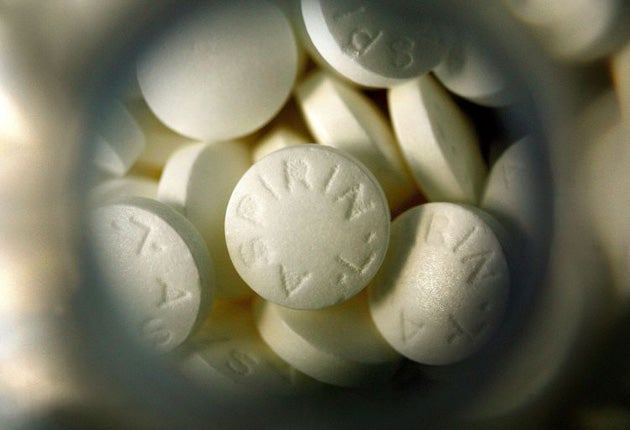
It is not yet a panacea for all ills, but it is getting close. Yesterday, researchers announced the first proof that aspirin can cut the risk of a range of cancers by up to 50 per cent.
It is already taken by millions to protect against heart attacks and strokes and has an established role in preventing diabetes, dementia, pregnancy complications and pain. Scientists stopped short of recommending it be added to the water supply but declared it was "the most amazing drug".
The latest positive findings on cancer had shifted the balance in favour of mass medication of the population, but it was still too soon to recommend everyone take it, they said.
The study of eight trials involving 25,000 patients taking a low daily dose of aspirin to ward off heart disease found the humble drug reduced deaths due to all cancers by more than a fifth (21 per cent).
If a new medicine were launched tomorrow with a similar sized effect it would be hailed as a miracle cure. But instead of being priced at tens of thousands of pounds a head, aspirin costs 1p a tablet.
After five years on the drug, cancer death rates fell further – by a third overall and by half (54 per cent) for cancers of the digestive tract (including oesophagus, stomach and the bowel).
The benefit did not improve with higher doses of aspirin but increased the longer it was taken. It was also greater in older people because of the higher incidence of cancer. Over 20 years, the reduction in risk ranged from 10 per cent for prostate cancer to 60 per cent for oesophageal cancer.
The findings, published in The Lancet, follow an earlier report in the journal last October showing that low doses of aspirin cut the risk of bowel cancer by a third.
Peter Rothwell, Professor of neurology at the University of Oxford, who led both studies, said the benefit of taking aspirin was consistent across all the trials, "suggesting that the findings are likely to be generalisable".
He takes a daily aspirin himself but advised others against doing so, except with the advice of their GP.
"These results do not mean that all adults should immediately start taking aspirin, but they do demonstrate major new benefits that have not been previously factored into guideline recommendations."
The problem with aspirin is that in a small number of people it is an irritant to the stomach causing indigestion, nausea and sometimes bleeding. Thousands of people end up in hospital every year with bleeding and ulcers caused by aspirin and similar painkillers. The risk, though small, has to be set against the likely benefit and has prevented its wider use.
It cuts the risk of heart disease and stroke and has been prescribed for decades to people who have had one heart attack in order to prevent a second. But because of the bleeding risk it is not recommended as a preventive measure against a first heart attack.
With the added benefit against cancer, the balance may now need to be reassessed. Professor Rothwell said: "Previous guidelines have rightly cautioned that in healthy middle-aged people the small risk of bleeding on aspirin partly offsets the benefit from prevention of strokes and heart attacks, but the reductions in deaths due to several common cancers will now alter the balance for many people."
Aspirin thins the blood making it harder to form clots which could cause a heart attack or stroke, providing protection against these conditions. Its impact on cancer is less well understood. As an anti-inflammatory, it may curb the spread of the disease by reducing inflammation, which is a key factor in cancer development.
A further theory is that an aspirin helps replace a missing constituent from our diet. Plant salicylates, similar to the active ingredient in aspirin, have reduced since we started growing crops with pesticides and fertilisers. The daily pill may help restore the body's natural balance.
If people are going to take a low dose 75mg daily aspirin, to gain the maximum lifetime benefit they should start in their late 40s or early 50s and continue for 20 to 30 years, Professor Rothwell said. After five to ten years the results suggest overall deaths from all causes (including internal bleeds) would be 10 per cent lower, and the benefit would grow as the years advanced.
Previous studies suggest aspirin also protects against breast cancer, but the researchers said more data was required to confirm this and its effect in other cancers of women. Further work was also necessary to identify any late worsening of cancer deaths beyond 20 years. Professor Rothwell said: "Perhaps the most important finding is the proof of principle that cancers can be prevented by simple compounds like aspirin. Chemoprevention [for cancer] is a realistic goal."
The conditions aspirin treats
* Arthritis
* Bladder cancer
* Bowel cancer
* Brain cancer
* Breast cancer
* Dementia
* Diabetes
* Fevers
* Gum disease
* Headaches
* Heart disease
* Lung cancer
* Migraines
* Oesophageal cancer
* Pain
* Pancreatic cancer
* Pre-eclampsia
* Prostate cancer
* Stomach cancer
* Strokes
Join our commenting forum
Join thought-provoking conversations, follow other Independent readers and see their replies
Comments