UK fat alert: 26 million will be obese by 2030
Government urged to act to prevent looming national health emergency
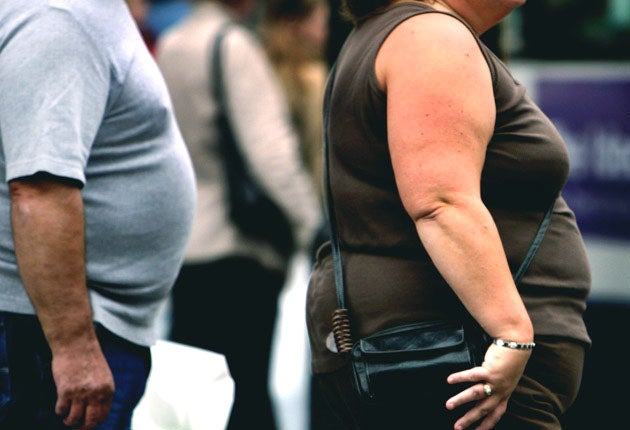
The obesity crisis is being driven by a food industry bent on maximising profits – but governments are failing to intervene to protect the health of their populations, leading scientists say today. In the UK, the fattest nation in Europe, the number of obese adults is now forecast to rise 73 per cent over the next two decades, from 15 million to 26 million, resulting in more than a million extra cases of diabetes, heart disease and cancer. Despite the increased burden on families, the economy and the NHS, ministers have failed to implement preventive policies because of fears about being branded the "nanny state".
Click HERE to view graphic (124k jpg)
A series of research papers published in The Lancet ahead of next month's United Nations meeting on non-communicable diseases, which is expected to single out obesity as the world's greatest challenge, says the drivers of the pandemic have been known for 40 years but governments have turned a blind eye and insisted it is a matter of individual responsibility.
No country in the world was successfully tackling the threat as leaders feared the wrath of electors if they slapped extra taxes on unhealthy foods or restricted car use.
But the consequences of doing nothing would be worse, researchers said. Professor Steven Gortmaker, of the Harvard School of Public Health, said assessments of 20 proven interventions for curbing obesity showed that eight would save costs as well as improve health, ranging from a tax on unhealthy food and drink to restrictions on marketing to children and schools programmes to boost healthy eating.
Traffic-light labelling to highlight unhealthy foods was among the most effective and cheapest ways of reducing consumption, but more attention was given to drugs and surgery.
"A one-cent-an-ounce tax on sweetened beverages would bring in $1.5bn (£920,000) a year in California, reduce obesity rates, reduce disease and lower healthcare costs," Professor Gortaker said. "So why don't people do it? It may be because there is a $50bn industry to counter that tax."
He criticised the UK Government's approach based on collaboration with the food industry to agree voluntary measures. There was no evidence that relying on the industry to exercise "corporate responsibility" would work. "We have not seen much effect of those initiatives," he said.
Targeting children was the most cost-effective option because "kids are born small" and need less intervention than adults who may have gained 40 or 50kg over a lifetime. "Unfettered marketing to children who can't distinguish fact or fantasy should be regulated," he said.
Professor Klim Mcpherson, epidemiologist at the University of Oxford who co-ordinated The Lancet's series and co-authored the Government-commissioned Foresight Report on obesity in 2007, said ministers understood the threat but feared nanny-state accusations. "They don't want to be labelled with that particular insult," he said. Governments raised taxes when they needed to, even at the risk of unpopularity, but in this case raising taxes could save money for communities.
"People would not throw governments out if they understood what the issues were. Any politician who called for a tax on sweetened drinks for children would not put their re-election chances at risk," Professor McPherson said. Professor Boyd Swinburn, of the World Health Organisation Collaborating Centre for Obesity Prevention in Melbourne, Australia, said: "We are facing an obesity and chronic-disease crisis. All countries are affected except the very poorest. The dominant cause has been the increase in food consumption driven by changes in food supply.
Policy interventions are the most effective but governments have been very slow to act." Terry Jones of the UK Food and Drink Federation said: "The Lancet fails to recognise the lengths to which the UK food and drink industry has gone to help improve the health of the nation.
"The UK has been ahead of the game for a long time in reducing salt, energy and fat in their products with a 9 per cent reduction in the amount of salt and fat consumed by households since 2006." The Health minister Anne Milton said: "Tackling obesity is a priority. We have no current plans to impose a 'fat tax', but we are working with food companies to reduce fat, sugar and salt and ensure healthier options are available."
Join our commenting forum
Join thought-provoking conversations, follow other Independent readers and see their replies
Comments