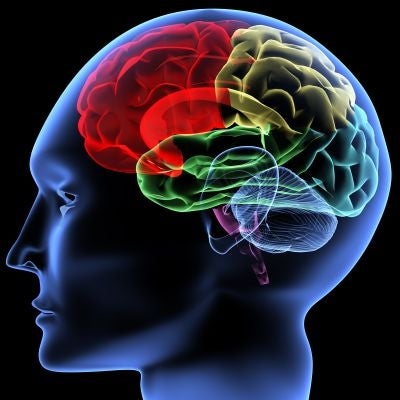
Scientists on Sunday said they had discovered a bouquet of proteins that play a critical role in the development of more than 130 brain diseases.
Their study also highlights a surprising link between these disorders - including Alzheimer's and Parkinson's - and the evolution of human behaviour, they said.
The human brain is a labyrinth of millions of specialised nerve cells interconnected by billions of electrical and chemical pathways called synapses.
Within these synapses are proteins that combine together, forming a molecular machine known as the post-synaptic density, or PSD, which is believed to disrupt synaptic functioning, causing disease and behavioural change.
Reporting in the journal Nature Neuroscience, Seth Grant of Britain's Wellcome Trust Sanger Institute led a team that extracted PSDs from synapses of patients undergoing brain surgery.
"We found over 130 brain diseases involve the PSD - far more than expected," said Grant. "The human PSD is at centre stage of a large range of human diseases affecting millions of people."
Besides common and debilitating neurodegenerative disorders, these include epilepsies and childhood development diseases such as autism.
The PSDs identified so far come from combinations of 1,461 proteins, each encoded by a separate gene.
"We now have a comprehensive molecular playlist of 1,000 suspects," noted Jeffrey Neobels, a professor at Baylor College of Medicine in Texas, commenting on the study.
"Every seventh protein in this line-up is involved in a known clinical disorder, and over half of them are repeat offenders."
The findings open several news paths toward tackling these illnesses, including better diagnosis, the authors said.
To help accelerate this goal, the researchers have released all their data into the public domain, and created the first-ever "molecular roadmap" for human synapses showing how proteins and diseases interconnect.
"We can also see ways to develop new genetic diagnostic tests and help doctors classify the brain diseases," Grant said.
Unexpectedly, the study also revealed the proteins in PSDs have deep evolutionary roots and play an indirect role in cognitive behaviours such as learning and memory, as well as emotion and mood.
Compared with other gene-encoded proteins, the PSD proteins evolved much more slowly.
"The conservation of the structure of these proteins suggests that the behaviours governed by the PSD and the diseases associated with them have not changed much over many millions of years," Grant said.
It also shows that the synapses in rodents are more similar to humans than previously thought, suggesting that mice and rats are good models for examining human brain disease, he said.
Brain disease and disorders are the leading cause of medical disability in the developed world, according to the UN's World Health Organization.
mh/ri/gk
Join our commenting forum
Join thought-provoking conversations, follow other Independent readers and see their replies
Comments