King Tut died from sickle-cell disease, not malaria
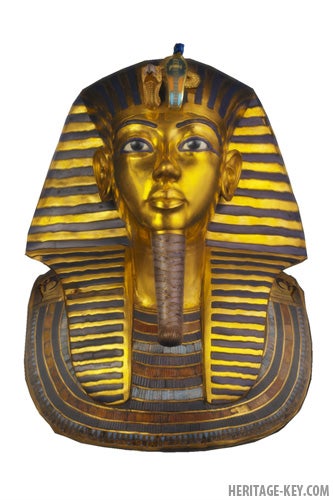
King Tutankhamun died from sickle-cell disease, not malaria, say experts. A team from Hamburg's Bernhard Noct Institute for Tropical Medicine (BNI) claim the disease is a far likelier cause of death than the combination of bone disorders and malaria put forward by Egyptian experts earlier this year.
The BNI team argues that theories offered by Egyptian experts, led by antiquities tsar Zahi Hawass, are based on data that can be interpreted otherwise. They say further analysis of the data will confirm or deny their work. Hawass' claim, published in the Journal of the American Medical Association this February, and followed by a swarm of accompanying television shows, claimed King Tut suffered from Kohler's disease, a bone disorder prohibiting blood flow, before succumbing to malaria.
Multiple bone disorders, including one in Tutankhamun's left foot, led to the Kohler's diagnosis, while segments of a malarial parasite were found via DNA testing. Yet the BNI team claims the latter results are incorrect. “Malaria in combination with Köhler's disease causing Tutankhamun's early death seems unlikely to us,” say Prof Christian Meyer and Dr Christian Timmann.
Instead the BNI team feels sickle-cell disease (SCD), a genetic blood disorder, is a more likely reason for the Pharaoh's death aged just 19. The disease occurs in 9 to 22 per cent of people living in the Egyptian oases, and gives a better chance of surviving malaria; the infestation halted by sickled cells.
They say the disease occurs frequently in malarial regions like the River Nile, and that it would account for the bone defects found on his body.
“The genetic predisposition for (SCD) can be found in regions where malaria frequently occurs, including ancient and modern Egypt.” says Meyer. “The disease can only manifest itself when a sickle cell trait is inherited from both parents: it is a so-called 'recessive inheritance'.” A family tree for the Pharaoh suggested by Hawass himself appears to back the BNI team's case.
The relatively old age of Tutankhamun's parents and relatives – up to 50 years – means they could very well have carried sickle-cell traits, and could therefore have been highly resistant to malaria. The high likelihood that King Tut's parents were siblings means he could have inherited the sickle cell trait from both and suffered from SCD.
“Sickle-cell disease is an important differential diagnosis: one that existing DNA material can probably confirm or rule out,” conclude Timmann and Meyer. They suggest that further testing of ancient Egyptian royal mummies should bear their conclusions in mind.
King Tut's young demise has long been a source of speculation. As well as malaria, recent decades have seen scholars argue that he was murdered, and that he died from infection caused by a broken leg.
Video: King Tut's mummy cloned – using 3D printing technology
Join our commenting forum
Join thought-provoking conversations, follow other Independent readers and see their replies
Comments
Bookmark popover
Removed from bookmarks