How to summon up a bit of interest and get a reasonable return on your capital
The Bank of England base rate was cut for the fourth consecutive month on Thursday, taking it down to an all-time low of 1.5 per cent – a drop of 70 per cent in only three months. While that spells more great news for those with existing tracker mortgages – and may also help to bring down the cost of remortgaging and first-time buyer loans – the sharp fall in rates is leaving savers with fewer and fewer options if they want their savings to simply keep pace with inflation. And for those who rely on the interest from their savings to provide them an income, the fall in rates is proving a real headache.
Although few banks have passed on this week's 0.5 percentage point cut to savers yet – experts predict it's only a matter of time before savings rates fall even further. After rates were cut by 1 percentage point last month, many banks and building societies left their rates unchanged for a few weeks, before sneaking through the cuts over the Christmas holidays.
By the beginning of this week, the average savings account was paying an interest rate of only 1.48 per cent, with more than a third of accounts paying 1 per cent or less. Given that inflation is still riding up at around 4 per cent, the majority of savers are now seeing their savings decrease in value each month, relative to the cost of living.
So where can you turn if you're determined to make your money keep pace with inflation? It depends on your attitude to risk, how long you can afford to tie your cash up for, as well as how much you've got to invest. But there's no need to accept sub-standard returns.
No risk
Technically speaking, there's no such thing as no risk. After all, even if you keep your money under your mattress, there's still a chance that you could be burgled – and even if you aren't, the value of your money will still be eaten away by inflation.
However, there are a number of places where you can put your cash, which are as good as guaranteed, and which promise to beat inflation. Perhaps the most attractive are National Savings & Investment's index-linked savings certificates. These promise to pay inflation (as measured by the retail prices index), plus 1 per cent. To get the full return, you'll need to keep your money tied up for at least three or five years. However, they have the benefit of allowing you to withdraw your cash at any time, and you'll still get an above-inflation return if you hold your money in the account for at least one year. Best of all, the returns on index-linked savings certificates are tax-free, and your money is 100 per cent guaranteed by the UK government.
With the retail prices index at 3.1 per cent, these products are potentially offering a guaranteed annual return of over 4 per cent – not bad at all in the current climate. However, economists expect inflation to fall rapidly over the coming months, meaning that the absolute returns will start to look much less attractive. For more information about these products, visit www.nsandi.com.
Another ultra-safe haven for your money is UK government bonds, or gilts. However, two-year gilts are yielding less than 2 per cent, which at current inflation levels represents a negative real return. But if inflation plummets as economists predict, even these returns may start to look worth chasing. To find out more about buying gilts, visit www.dmo.gov.uk.
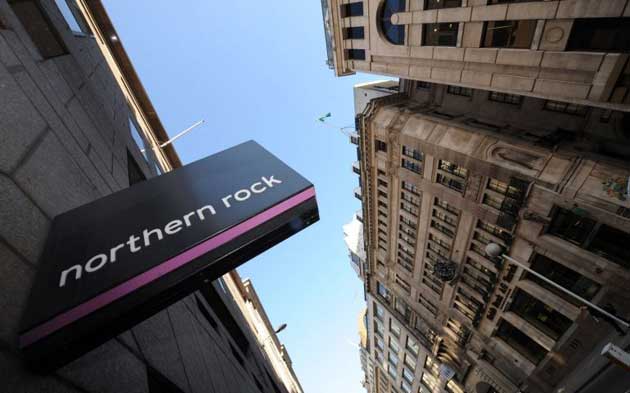
Finally, Northern Rock, another government-owned bank, is paying 4 per cent on its cash ISA accounts, fixed until the end of 2009. That beats inflation now, and will look increasingly attractive. It also, of course, has a full government guarantee behind it. The downside is that you're limited to putting in £3,600 into your cash ISA during each tax year.

Get a free fractional share worth up to £100.
Capital at risk.
Terms and conditions apply.
ADVERTISEMENT
Get a free fractional share worth up to £100.
Capital at risk.
Terms and conditions apply.
ADVERTISEMENT
Low risk
Although most banks and building societies have cut their savings rates back, there are some that are still offering quite attractive above-inflation returns. But tend to be lesser-known institutions, which are marginally higher risk than opting for a high-street giant such as HSBC or Abbey.
ICICI, the Indian bank, for example, is offering a one-year fixed-rate bond paying a rate of 4.65 per cent. If you've less than £50,000 to invest, you can sleep easy knowing that your deposit will be guaranteed by the UK Financial Services Compensation Scheme. However, in the event that ICICI were to go bust, it could take you several weeks or months to get your money back. Although ICICI is relatively financial secure, its credit rating shows that it could be at risk if credit conditions suddenly deteriorated again. So, if you put more than £50,000 with ICICI, you should understand that you are taking a small risk of losing some of your money.
Anglo-Irish Bank offers a one-year bond paying 4.6 per cent, and this bank has the full backing of the Irish government. However, in the event of a severe financial shock, some question whether the Irish government would be able to stand behind its promise to support its country's six largest banks. You should also bear in mind that Anglo-Irish is not covered by the UK Financial Services Compensation Scheme. Instead, it is covered by the Irish government's compensation scheme, which guarantees 100 per cent of the first €100,000 (£91,000) of your savings. However, in the unlikely event that Ireland found itself embrioiled in an Icelandic-style financial meltdown, there is a remote chance that it would not be able to stand-by such a guarantee in full.
Moderate risk
If you're willing to take on a little more risk, there are some quite impressive returns to be made in the corporate bond market, where strong companies with excellent credit ratings are still offering relatively high yields on their debt. According to Richard Woolnough, manager of M&G's Corporate Bond fund, yields on investment-grade companies (those with credit ratings of BBB or above) are suggesting that the UK economy will contract by as much as 15 per cent over the next few years. Or, to put it in other terms, the prices of corporate bonds have sunk so low as to suggest that one in three investment grade companies will go bust over the next five years – the kind of scenario which has not been seen since the Great Depression.
However, Woolnough points out that given the proactive measures being taken by governments around the world, it is unlikely that the current recession will be anything like as bad as that of the 1930s. Interest rates are being cut sharply, and public money is being spent to try to reinvigorate the world's largest economies – measures that were not taken at such an early stage in the depression of the Thirties.
Brian Dennehy of the London-based financial advisers Dennehy Weller, agrees with Woolnough's assessment of the outlook, and believes investors with a low or moderate appetite for risk – and in search of an inflation-beating return – should consider placing money in Woolnough's M&G Corporate Bond fund or Jupiter Corporate Bond fund – both of which are currently yielding around 5.3 per cent.
Dennehy says that the other place to look, if you're hungry for income but don't want to take on too much risk, is UK equity income funds. These are funds that invest in companies with strong dividends, and which aim to grow their income stream for investors every year. In this sector, Dennehy picks out the Newton Higher Income and Liontrust First Income funds, both of which are yielding just over 6 per cent at the moment.
He warns, however, that investors should be careful at chasing yield levels that are too high. "If a fund was showing a yield of 9 per cent, you might want to worry," he says. "But you've only got to look down the constituents of the FTSE 100 to find some cracking yields for some very big businesses. So I think a yield of 6 or 6.5 per cent from Newton and Liontrust – fingers crossed – should be sustainable."
Higher risk
If you're willing to put a greater proportion of your capital at risk, there are many more options for trying to achieve above-inflation returns. If you're in the market for a higher risk income-generating product, you could consider some of the bond funds that are investing in the banks. Dennehy mentions Artemis Strategic Bond Fund, and New Star's Strategic bond fund, which yield just under 8 per cent, but have quite high exposure to risky bank debt – which may or may not prove to be worth the paper it's written on.
For those in the market for super-high risk, there's also the high-yield bond market to consider. High-yield bond funds invest in sub-investment grade companies – many of which are offering hefty double-digit yields.
However, Dennehy believes it is still too early to venture back into this very risky market for most investors. If you'd prefer to stick with equities, Dennehy suggests considering the Newton Asian Income Fund. "There might be some volatility over the next 12 months, but if you take a long view – and consider the dynamism of Asia and the lack of debt in Asia – that's where I'd be buying," he says.
Another higher risk option is to invest directly in some higher yielding individual shares. British bank stocks are currently promising to pay extraordinarily dividends – with some offering double-digit yields. Lloyds TSB, for example, is offering a prospective yield of around 20 per cent, while Barclays is offering a potential yield of around 13 per cent. However, with the credit crunch not yet behind us, you should be aware that there could be a considerable risk to your capital in these stocks. However, stocks such as AstraZeneca and BP, which present much less risk to your capital, are also offering relatively attractive yields of more than 5 per cent.
Yield deals: Tips for inflation-busting returns
Low risk
National Savings & Investment's index-linked savings certificates, paying retail price index plus 1 per cent. Northern Rock's one-year fixed-rate cash ISA account, paying 4 per cent.
Moderate risk
M&G Corporate Bond fund, yielding 5.4 per cent. Jupiter Corporate Bond fund, yielding 5.3 per cent, Newton Higher Income fund or Liontrust First Income, yielding over 6 per cent.
Higher risk
Newton Asian Income fund – around 6.3 per cent. Artemis Strategic Bond fund – 7.8 per cent. AstraZeneca shares – a prospective yield around 5.2 per cent. Lloyds TSB, – around 20 per cent.
Join our commenting forum
Join thought-provoking conversations, follow other Independent readers and see their replies
Comments
Bookmark popover
Removed from bookmarks