Protest at Anglo's Alaskan quest
Top jewellers are refusing to use gold from a proposed mine because it threatens a major fishing ground
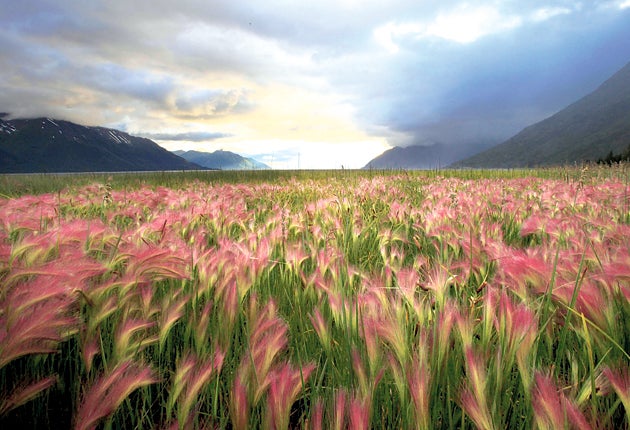
Fifty jewellers with billions of pounds in sales and stores around the world have pledged to boycott Anglo American's planned Pebble project in Alaska, saying they will not use gold from the proposed mine as it threatens Bristol Bay, the world's most important fishing ground for wild sockeye salmon.
Anything from 10 million to more than 30 million sockeye – the third most abundant species of Pacific salmon – are caught each year during the span of a few weeks of intensive fishing, according to the National Oceanic Atmospheric Administration in the United States.
Earthworks, a non-profit group campaigning against the Pebble mine, says that if it goes ahead, the project – a partnership between Anglo and Canada's Northern Dynasty Minerals – "would destroy salmon spawning habitat in a designated fishery reserve and jeopardise the commercial fishing industry and the livelihoods of the Alaska native communities in the region".
The jewellers' pledge is backed by the likes of Tiffany & Co, Goldsmiths, Mappin and Webb and, most recently, John Hardy, Fraser Hart, Ingle & Rhode and Boucheron, which supplies jewels to the royal family.
"There are some special places where mining clearly does not represent the best long-term use of resources," said Tiffany & Co's chief executive Michael Kowalski.
"In Bristol Bay, we believe the extraordinary salmon fishery clearly provides the best opportunity to benefit southwestern Alaskan communities in a sustainable way." That view was reiterated by Fraser Hart's chief executive, Noel Coyle, who said that "in some areas, mining of precious metals presents too great a risk to communities and the environment. Bristol Bay is such an area," he added.
The latest signatories to the pledge were announced yesterday, against the backdrop of Anglo's ongoing "Get the full story" campaign, which publicises the miner's contributions to the communities where it operates. On Bristol Bay, the FTSE 100-listed group says that, to begin with, the project is focused on copper. Gold, it says, is a by-product; much in the way that platinum mining in South Africa often throws up nickel and other minerals. Its data on exploration drilling up to May last year points to around 24 million tonnes of contained copper and 1,400 tonnes of contained gold.
And though Earthworks claims that the project only makes sense when gold, which is currently trading at record highs, is factored in, Anglo maintains that focus is on copper.
"The economics of the resources are based on copper. Obviously you can't extract only the copper, so the gold represents the upside to those economics," said Anglo spokesman James Wyatt-Tilby.
The resource is large nonetheless, with a graph on Northern Dynasty's website showing Pebble as the world's top undeveloped gold deposit.
Anglo also says that, while it has spent around $290m (£160m) on the project so far, it has yet to come up with a mine plan, as the project remains at the exploration stage.
The pre-feasibility study is next. Only then will the project proceed to the licensing and permitting stage, which Anglo says is likely long to be a long process as the regulations governing the region are the most stringent in North America. In any case, the company says it will not build the mine if it is not supported by the local community. Anglo's chief executive Cynthia Carroll has publicly stated as much.
To back up this up, the miner promises an independent process, run by the Colorado-based not-for-profit Keystone Centre for Science & Public Policy, to engage with and gauge the views of local stakeholders.
In April, it received support from chief executives of native corporations – for-profit corporations set up by the US Congress to settle land claims and improve the welfare of native Alaskans – closest to the planned project.
They wrote to Ms Carroll, saying that their minds had not been made up, as they had not yet seen a development plan. "The national environmental groups who have rallied against Pebble haven't even had the courtesy to give us a call. We have one of the highest rates of unemployment in the state of Alaska in our backyard," they wrote, adding that it was "easy to glamourise the commercial fishing industry".
"We've all been associated with the fishing industry since our first conscious memories. Many of us have also faced extremely tough financial realities and had to sell our commercial permits in order to survive... We need cash in order to survive," they added. "Cash basically comes from two sources – the government or a job. We prefer to have jobs so our people can increase their standard of living and hold their heads high."
The regional Bristol Bay Native Corporation, however, is against the plans and has passed a resolution opposing the project, according to Earthworks, which also questions the independence of the Keystone Center, as it will be paid for by the Pebble Partnership. Nunamta Aulukestai, an association of nine Alaskan native village corporations in Bristol Bay, is also opposed to the Pebble mine.
"Salmon is life. It has sustained our economy and our people for generations," said Bobby Andrew of the Nunamta Aulukestai association.
"The support from jewellers is important to us because jewellery demand represents 80 per cent of the global mine production of gold."
Environmental minefields
Anglo American is not the first company to attract protests in its search for commodities. Nor is it attracting criticism for the first time. Back in 2008, the company faced protests against its plans for a platinum project in Robert Mugabe-led Zimbabwe. The miner said it had a responsibility to protect the wellbeing of its employees and contractors, and was in compliance will local and international laws. The Unki project, as its known, is on track to be commissioned before the end of this year. Anglo's peer, Rio Tinto, also has an interest in the country. The FTSE 100-listed group owns a majority stake in an open-pit diamond mine in southern Zimbabwe.
In Alaska itself, there has been much controversy over whether to drill for oil in the Arctic National Wildlife Refuge, a vast wilderness in the north-western reaches of the state. Not too far away in Canada, the oil giants Shell and BP have faced protests over plans to extract oil from tar sands, a heavy mixture of bitumen, water, sand and clay found beneath prime forests in the province of Alberta. The resource – also known as oil sands – forms the world's second-largest proven oil reserves after Saudi Arabia's. However, its production generates up to four times more carbon dioxide than conventional drilling.
In India, Vedanta Resources faced objections to its record as protesters campaigned against its plans for a bauxite mine in Orissa. The mine, critics said, would destroy the local environment and devastate the Dongria Kondh tribe, which has lived in the region for generations. In the end, the miner failed to win clearance for the project.
Join our commenting forum
Join thought-provoking conversations, follow other Independent readers and see their replies
Comments
Bookmark popover
Removed from bookmarks