A lot of bottle
A blend of traditional craftsmanship and modern marketing has struck Champagne gold.
As far as most people are concerned, there are only a few brands of champagne from which to make their choice. Though less well known houses win favour from experts, the safest bet is to choose Bollinger, Laurent-Perrier or some other famous name when choosing bubbly, especially when it is a gift.
However, there are thousands of producers of the highly-prized wine, most of them small. The 34,000 hectares of vineyards designated Champagne are divided among 12,400 estates, meaning that the average estate amounts to just 2.8 hectares, although 10 per cent of the total area of Champagne vineyards is accounted for by 48 estates.
The Cattier Champagne house, although it employs fewer than 20 people and is not one of the most well-known names, has one of the bigger holdings in the area – 31 hectares, built up over a history dating back to 1763 – not long after sparkling wine production began in the region, around Reims during the 17th century.
Based in the village of Chigny-les-Roses, Cattier is a great example of how a small company can punch above its weight by being innovative, distinctive and, above all, bold.
The family has long been prepared to expand. Current chairman Jean-Jacques Cattier admits that when the company bought a neighbour's cellar space a while ago, some people wondered how they were going to fill the space. Now, with the oldest bottles in storage dating back to before the Second World War, he says he is running out of room. Not that this is due to lack of demand. Last year, the company sold more than a million bottles of its champagne, with 56 per cent going to 65 countries around the world, including China, Congo and other more obvious markets. This figure puts the company 43rd on the list of 1,406 champagne exporters last year, it says.
Cattier Champagnes are increasingly being found on the wine lists of some of the world's leading restaurants, including some in France, the most competitive market of all, says commercial director Philippe Bienvenu.
But what is really putting the company on the map is a special edition, of which the first bottles were shipped just two years ago. Cattier is more wedded to traditional techniques than many houses, but it reserves special attention for its Armand de Brignac, a blend that was created by Mr Cattier's mother in the 1950s.
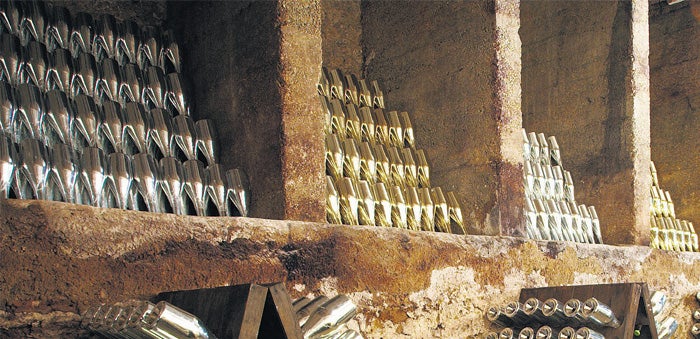
The process starts with selecting only the best chardonnay, pinot noir and pinot meunier grapes harvested in the company's own vineyards and bought from other growers. Once the grapes are pressed, the juice is bottled and stored in a special part of the company's cellars, which are 119 steps – more than 30m – underground, where the temperature is constantly less than 10C. While there, it is subjected to long-established, traditional techniques, including "remuage", a process for sifting out the sediment that collects in the bottlenecks, that involves turning each bottle slightly by hand every day over the course of a month.
After this has been completed, the bottles are partially frozen and the sediment is ejected in a process called "degorgement". At this stage a liqueur, made according to a secret family formula, is added.
And this is not the end. To show how special the wine is, it is transferred to metal bottles of a type originally designed by the French fashion designer André Courrèges and embossed with pewter labels, showing the ace of spades. This symbol both harks back to the company's heritage, since the ace of spades is part of the French monarchy's insignia, and also creates a brand that is memorable in countries where the name "Armand de Brignac" might be hard to pronounce.
This and lavish packaging appears to have captured the imagination of the celebrity world, with many famous names in the entertainment and sporting worlds apparently prepared to pay £250 a bottle. Indeed, the interest it has created has surprised Mr Cattier. "When I first created it, I couldn't imagine the success we are having," he says.
It is hard to say whether this level of interest will continue amid the current economic uncertainty. But Cattier has another development on the way. Having introduced a rosé version of Armand de Brignac in a pink bottle to go with the gold-bottle brut and silver-bottle Blanc de Blancs, to capitalise on the growing demand for pink champagne, it is using the exclusive grapes from a small corner of its vineyards to create an even more exclusive champagne, Armand de Brignac Clos Yons. This is due to begin shipping in about 2012.
Fittingly for a company that prides itself on its blending, it is all about mixing old-fashioned methods of production with modern marketing.
Join our commenting forum
Join thought-provoking conversations, follow other Independent readers and see their replies
Comments
Bookmark popover
Removed from bookmarks