Does creationism have a place in the classroom?
Secondary schools are being lobbied by a new group that attacks Darwin's theory of evolution. Some teachers are planning to adopt the creationist materials, others are fighting them. Nick Jackson reports
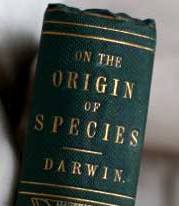
A creationist group, Truth in Science, has targeted thousands of secondary schools in the UK with an information pack that is being used by believers and unwary teachers to bring religious dogma into science classrooms.
It is falling on fertile ground. In January a poll revealed that less than 48 per cent of Britons believe in the theory of evolution, 39 per cent believe in creationism or intelligent design by God as a better explanation, and more than 40 per cent believe that these theories should be taught in schools. Truth in Science claims to have received hundreds of responses from teachers saying they plan to use the packs.
Ridiculed in the scientific community and condemned by the US courts as a religiously motivated movement, you would expect advocates of intelligent design to be keeping a low profile. But believers in the supernatural creation of life on earth look stronger than they have for many years in the UK. Which is why scientists are so concerned about what looks like the beginning of a new "soft power" offensive by creationists here.
How can they get away with it? Intelligent design has been denounced by scientific bodies across the world as religion masquerading as science, and Truth in Science's pack has been condemned by the Royal Society and the Department for Education and Skills. However, the Government cannot control what resources schools use and Truth in Science has cleverly exploited an apparent loophole in the national curriculum, which encourages teachers to discuss and criticise scientific theory, to argue that the Government supports the teaching of the intelligent design "controversy".
Some teachers welcome the opportunity to give exposure to intelligent design. Nick Cowan, former head of science and now a chemistry teacher at the Blue Coat School, a grammar school in Liverpool, wants the packs used in lessons there. "Darwinism is a religion," says Cowan, a creationist and head of the Christian Institute, a charity devoted to the promotion of Christian faith in the UK. "The debate between evolution and intelligent design is not a debate between science and religion, it's between religion and religion."
The pack has also been met with outright scorn. Graham Wright, head of science at North Bridge House, an independent school in north London, says the pack sent to him went straight into the bin. But he is concerned that some well-meaning teachers, convinced by talk of changes in the national curriculum, will include the pack in lessons. "If I showed this to children, of course they would be convinced," he says. "There's no doubt about that at all."
Other schools are being more open-minded. Before receiving the pack, Maria Fidelis, a state-funded Roman Catholic convent school in Camden, north London, did not teach intelligent design. Now they plan to use the videos.
Ann Marie Horrigan, a chemistry teacher, reviewed one of the DVDs for the school. Before looking at it, the department was suspicious, but Horrigan was impressed. "I thought it was excellent," she says. "I'd recommend it. The graphics were excellent. We'll probably teach it at A-level."
The pack, seen by The Independent, consists of two DVDs and a leaflet. In the leaflet, Truth in Science claims that the Government and the national curriculum encourages students to study intelligent design as a criticism of Darwin.
But the Department for Education and Skills says that while students are encouraged to consider alternative scientific theories of evolution, intelligent design is not one of them, for the simple reason that intelligent design is not science. "We wouldn't endorse these packs," says a spokesperson. "The fossil record is evidence of evolution. Creationism and intelligent design are not scientific theories."
The Royal Society agrees. "The theory of evolution is supported by the overwhelming majority of scientists, based on evidence acquired through experiment and observation," says Professor Michael Reiss, director of education. "It would therefore be misleading for school pupils to be given the impression that there is scientific controversy."
Truth in Science claims that "the theory of intelligent design is the current number one alternative to Darwinism as a scientific theory of origins", despite the fact that it has not yet produced any original scientific research. It is only the first misleading statement of many in the research packs, says Chris Hyland, a biology PhD at Leeds University and anti-creationist activist who has reviewed the packs. He has found 21 factual errors, misrepresentations, and flawed arguments in the DVDs. "They show fancy graphics," he says. "But there's no positive evidence put forward in support of design."
Central to the argument is the figure of Dr Michael Behe, a biochemist convert to intelligent design. In the DVDs he argues his theory of irreducible complexity, the claim that some organisms are too complex to have evolved. Last year Dr Behe had to admit in a US courtroom not only that such organisms could be the result of evolution, but that intelligent design had the same scientific legitimacy as astrology. Hyland is worried. "The packs are done in a way that if you look at it and don't understand the subject well it could be quite convincing," he says.
In the DVDs, the bacterial flagellum, a tiny molecular motor, is put forward as an example of this discredited irreducible complexity.
Hyland is disturbed, as are other scientists, by the fact that an argument, dressed up in scientific language but with no scientific credibility, is being sold to schoolchildren. "Key Stage 4 is not the place for new theories that are not that accepted," he says. Peer review does not count if it is done by 14-year-olds.
Professor Andy McIntosh, head of Truth in Science and a thermodynamics professor at Leeds University, defends the initiative. He claims his organisation is first and foremost a scientific, not a religious one. "We're not flat earthers," he says. "We're just trying to encourage good scientific discussion. We want to see an open discussion of these matters." He blames intelligent design's failure to achieve academic respectability on a cabal of evolutionists at the top of the scientific hierarchy.
If this really is about opening up scientific debate, then where is the harm? The strategy of teaching the "controversy" of intelligent design is very familiar in the US. When a Pennsylvania school board tried to introduce the controversy last year it was slammed by the courts. "The tactic is at best disingenuous, at worst a canard," said US federal judge Judge Jones, a Republican and a Christian. "The goal of IDM [the intelligent design movement] is not to encourage critical thought, but to foment a revolution that would supplant evolutionary theory."
The controversy in the US has largely been fomented by the Discovery Institute, a non-profit educational foundation funded by evangelical Christians. The DVDs distributed by the British company feature several prominent members of the Discovery Institute. In 1999 a leaked Discovery Institute fundraising document revealed the group's aim to be to defeat scientific materialism and its "destructive" moral, cultural, and political legacies.
And Professor McIntosh's comments on scientific discussion sit uneasily with remarks he made in the Evangelical Times in 2004, around the time he was setting up Truth in Science. Then he said that he could not accept any other account of the origins of life than the creation recorded in Genesis. Getting creationism into schools was, he argued, the best way to convert non-Christians.
"How do we reach these complete outsiders?", he asked. "We have to define and declare these biblical concepts from square one. That is why creation becomes important, because it immediately declares God's ownership of the world and ourselves." Truth in Science says these are simply Professor McIntosh's personal opinions.
Steve Layfield is another of Truth in Science's six directors and head of science at Emmanuel College in Gateshead. In a speech at the Second Conference of Creation Activists in 1998, Layfield gave advice to evangelical teachers who wanted to slip creationism on to the agenda without consulting parents, governors, or the Government. The speech ended with a quote from Corinthians: "We demolish arguments and every pretension that sets itself up against the knowledge of God, and we take captive every thought to make it obedient to Christ."
In 2000 Layfield explained why bringing God into the origins of life was so important to him. "A proper awareness of this show of Divine power inspires humility and awe-filled worship in all who are confronted by it," he said. Layfield was unavailable for comment. Truth in Science claims he has since changed his mind, but then the media was never part of the softly-softly tactics he advocated.
The British Humanist Association argues that this religious agenda in school science must be stopped. It is calling on the Government to make its position clearer to schools. As schools minister, Jacqui Smith denounced intelligent design's scientific credentials. Intelligent design is not part of the curriculum. But examination guidelines do encourage criticism of scientific theories that could be used to include teaching intelligent design.
The BHA wants Alan Johnson to get the message across that creationism has no place in school science. "The Government shouldn't be lax about this," says Andrew Copson, in charge of education at the BHA. "They need to tell teachers and change the guidelines to make this clear." Until the Government spells out its position, creationism looks like making a comeback.
Join our commenting forum
Join thought-provoking conversations, follow other Independent readers and see their replies
Comments