'Facebook generation' of teachers must be promoted
Only the young can engage with techno-savvy pupils, says expert
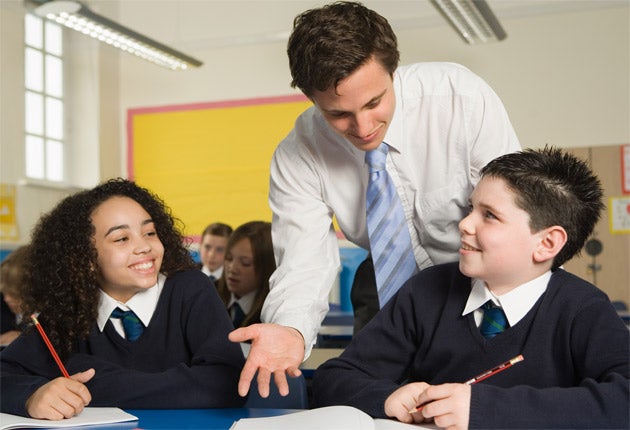
The "Facebook Generation" of young teachers should be appointed to top school posts to help pupils switch back on to learning, a former senior government adviser has said.
Twenty-somethings who have just started teaching represent the best chance of engaging today's pupils with school, said Professor David Hargreaves, a researcher with the Specialist Schools and Academies Trust and former head of the Government's exams watchdog.
Schools had to recognise that older heads and senior management had little understanding of "Generation Y" – people in their teens and twenties who were brought up with the internet. "The central problem of our time is not standards. It is actually about getting kids to engage with learning."
Professor Hargreaves was giving the last of a series of lectures staged by the Learning Skills Foundation and sponsored by The Independent.
He said schools had to give priority to creativity and innovation. Younger generations were "highly motivated" by the internet and became emotionally involved in activities online, but in the traditional classroom format, their motivation to learn was "variable".
Older teachers "don't know much about Facebook and don't know much about where young people spend their time," Professor Hargreaves said. "Generation Y teachers and students should be given opportunities in schools for extensive innovation. You should think about the promotion to leadership of 'Generation Y' teachers to do this work."
The best role that older teachers could adopt was to warn pupils to be careful about what they say on the internet. "Something said in private would be forgotten soon after but once their thoughts are on the web, they're there for ever."
Professor Hargreaves was supported in his lecture by Andrew Luxton, a teacher at priory Community school in Weston-super-Mare, north Somerset. He told how his school held "Twitter plenaries" in which pupils were asked to sum up the lesson using 140 characters.
"This is sent as a Tweet so that all those who subscribe can log on and get a collection of lesson summaries to help reinforce their learning. Reminders of exams, deadlines and useful hints can also be sent.
"Given that Twitter, YouTube, Facebook, wikis, forums and blogs are free to use, given that they teach valuable skills of communication, collaboration and co-construction, and given that their use is natural to and already employed outside of the classroom by our students, now is the time that they should be used for education where appropriate." Mary Bousted, the general secretary of the Association of Teachers and Lecturers, responded to Professor Hargreave's comments: "We do use technology to promote learning but ... the qualities needed for leadership are more than being in touch with the younger generation."
John Dunford, the general secretary of the Association of School and College Leaders said: "It is really important for schools to involve these young staff in the decisions they're making."
Younger teachers are more likely to be promoted in the next few years as the influx of teachers who qualified in the late 1960s and early 1970s approaches retirement.
Youth: Karis Arnold, 25, Music teacher, Essex
Pupils love using technology. We're encouraged to use it in lessons because it works. Leaving work for students to complete online so they can do it anywhere with internet access not only more readily engages them to do it but also makes it easier for me to mark.
Pupils enjoy emailing, using Powerpoint and interactive whiteboards and it's very important to make their education as much fun as you can.
The teachers that don't engage with these things tend to be the older ones, but it's not a hard-and-fast rule – technology only plays a part. There's still no replacement for enthusiasm, good assessment skills, creative lesson plans and setting challenging work.
I might be part of the "Facebook generation" but I'm not sure as it's wise to be "friends" with your pupils.
Experience: Barry Wellington, 57, History teacher, east London
In their private lives children have an unbelievable appetite for Facebook, Twitter, text messaging and other forms of communication. It is important that in school they're exposed to something different.
As a teacher you need a large vocabulary, an ability to broaden your pupil's language skills through your own. You need to enable them to engage with people in that way, not via a screen or a gadget. Most interaction in life is, after all, still face to face.
If you're enthusiastic and have a command of your subject, you don't need technology. You just need to have a relationship with your pupils, to engage with them, and be interested in them as people, and how they develop. Teachers of different ages and different types have different skills, and they all have a place – children like variety.
Twitter sounds impressive because it's up to the moment and catchy, but it's not the only way.
I was in my 20s once, too. What will happen to these 20-year-olds when they're in their 40s and 50s and new technology comes along? Will they be squeezed out?
Join our commenting forum
Join thought-provoking conversations, follow other Independent readers and see their replies
Comments