Schools told reading is top priority
Review of teaching says parents in poorer homes must read to children
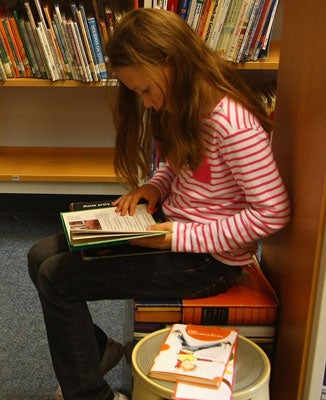
A drive to improve reading standards which includes encouraging parents to read to children will be outlined today in the most far-reaching review of primary schooling in 20 years.
Evidence shows that children from the poorest homes hear only 13 million words by the time they are aged four, 32 million words less than children from affluent households.
The figure, given to the government-ordered review of the primary school curriculum, has prompted a campaign to ensure parents spend more time talking to their children and that children struggling to read get more help.
The review will seek to remove "clutter" from the curriculum, reducing lesson time for subjects like history and geography in favour of a more themed approach that links subjects. And it aims to build on the strengths of primary pupils, particularly in technology, by teaching them secondary school topics like making podcasts and radio programmes and using the internet to share projects with other schools.
Sir Jim Rose, the former director of schools for Ofsted – the education standards watchdog – who is heading the review, wants to keep the spotlight on improving literacy and numeracy. He will back the reading recovery project, pioneered in New Zealand, where children with dyslexia and reading problems receive one-to-one coaching.
The inquiry, which issues an interim report for consultation today, is the most far-reaching government inquiry into primary education since the national curriculum was adopted in 1988. The review also calls for the recruitment of more specialists to teach older primary pupils in areas such as languages. Sir Jim says the technology skills of primary pupils are improving so fast that they can now cope with secondary school knowledge."Advances in technology and the internet revolution are driving a pace of change which we could not have imagined when the national curriculum was introduced."
Sir Jim is calling for summer-born children to start school in the September term after their fourth birthday, as research showed they perform worse in national curriculum tests, GCSEs and A-levels and are less likely to go to university. He acknowledges some parents may worry about "hothousing" their children too early and putting them in a class with older children and suggests they are given the option of enrolling their child at school part time at the start, for just 15 hours a week.
Sir Jim is anxious for children to receive lessons about healthy lifestyles and developing relationships. Headteachers have claimed more children are unable to communicate with classmates when they start school, or do basic things such as tie their shoelaces.
Ed Balls, the Children's Secretary, asked Sir Jim to steer clear of tackling the issue of national curriculum tests for 11-year-olds, but Sir Jim has already told MPs that the tests have been "the elephant in the room" that everybody wants to address. He wants to cut the time spent in the last two years of primary school teaching to the test.
Mick Brookes, general secretary of the National Association of Head Teachers, said the report would be "just fine words" if the issue of testing was not tackled. David Laws, the Liberal Democrats' children's spokesman, said: "The Rose review offers yet more change and instability in the primary curriculum when most schools feel all they need is more stability and freedom from government micro-management. What the primary sector really needs is additional investment in reducing infant-age class sizes.
The reforms are due to be introduced in September 2011.
Join our commenting forum
Join thought-provoking conversations, follow other Independent readers and see their replies
Comments
Bookmark popover
Removed from bookmarks